
Many organizations examine the cost of outsourcing human resources because they want a practical way to manage HR spending. Salaries, benefits, compliance work, and technology subscriptions increase yearly, and these changes affect how companies plan their budgets. Internal HR teams also deal with workload issues when they need to handle recruitment, payroll, employee records, and training at the same time. These tasks require time, accurate data management, and complete documentation.
The cost of outsourcing human resources gives companies another option for organizing HR responsibilities. It provides structured support, predictable fees, and access to trained specialists. This approach helps companies improve daily processes and reduce overhead. The following sections compare both models so organizations can find the setup that fits their goals and operational needs.
Understanding Direct HR Cost Differences
Companies study the cost of outsourcing human resources because they want clarity across salary expenses, technology needs, and compliance obligations. The items below outline the direct cost areas they evaluate.
1. Salary and Benefit Requirements
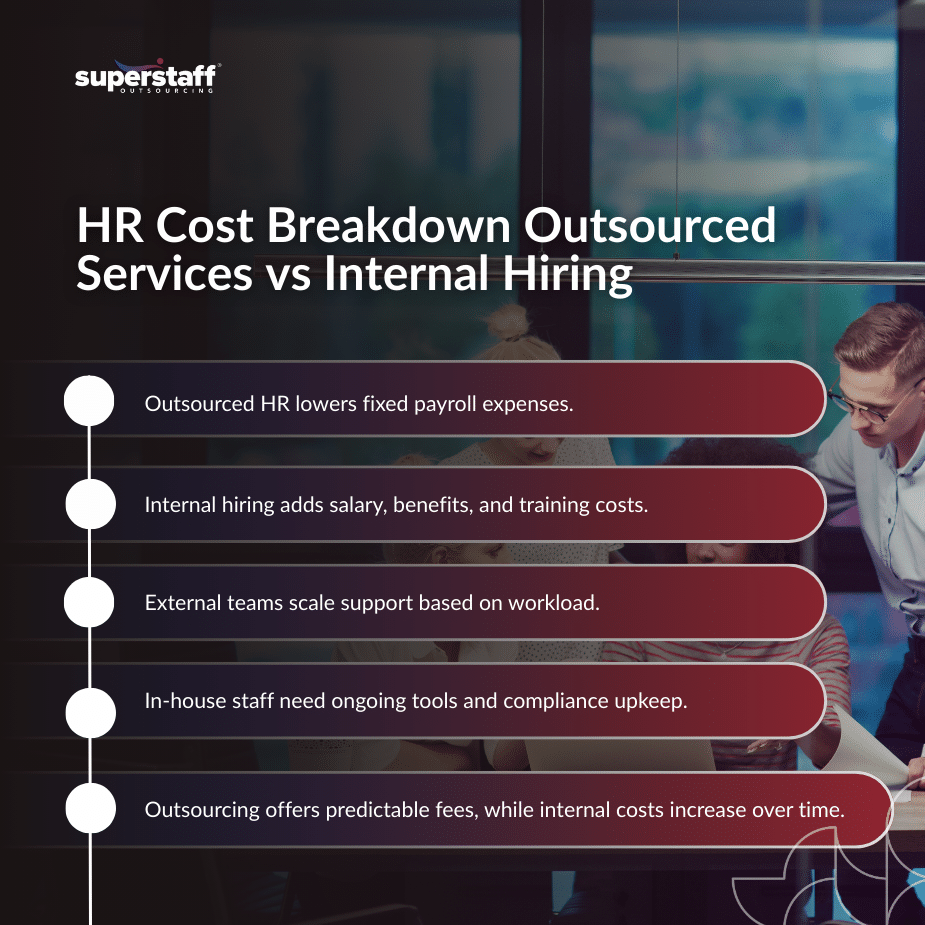
Internal HR teams need full salary packages, benefits, government contributions, and regular increases. These expenses continue every year and affect long-term financial planning. When companies use external HR services, the provider handles staffing costs, which reduces internal budget requirements.
2. Software and HR Technology Tools
HR departments rely on payroll software, compliance systems, records management tools, and reporting platforms. These subscriptions come with yearly fees and maintenance costs. Outsourcing shifts these technology costs to the service provider, which helps companies avoid additional software purchases.
3. Recruitment and Training Expenses
Building an internal HR team requires recruitment ads, interviews, screening, onboarding, and training programs. These steps take time and require dedicated resources. The cost of outsourcing human resources removes most of these tasks because providers already employ trained HR specialists.
4. Workspace and Equipment
Internal HR teams need desks, laptops, phones, and office supplies. These items add to utility costs and require regular updates. Human resource management outsourcing eliminates many of these expenses because external teams work from their own facilities and use their own equipment.
5. Certification and Compliance Requirements
HR staff must stay updated on labor rules, reporting standards, and specialized certifications. Companies must often cover training fees for this. Outsourced providers train their staff independently, which reduces long-term internal costs.
Comparing Indirect HR Costs
Indirect HR costs affect daily operations even if they do not appear directly on expense sheets. The cost of outsourcing human resources helps companies manage these hidden areas.
1. Administrative Workload
Internal HR staff often spend long hours on paperwork, documentation, and manual updates. These tasks reduce the time available for planning or employee support. Outsourcing distributes these tasks across trained teams, which helps reduce delays.
2. Compliance Risks
Errors in salary calculations, government reporting, or employee records can result in penalties. These penalties increase costs and create operational disruptions. External providers follow strict compliance processes, reducing the possibility of errors.
3. Delays in Employee Requests
When internal HR capacity is limited, employees wait longer for payroll corrections, record updates, or benefits questions. These delays affect productivity. Outsourced teams operate with set service schedules to maintain response times.
4. Productivity Impact
Slow HR processes affect managers and employees who depend on accurate data. When HR teams fall behind, daily tasks also slow down. The cost of outsourcing human resources helps companies avoid these delays because tasks are shared across larger support teams.
5. Data Accuracy and Reporting
Accurate documentation is important for payroll, benefits, and evaluations. Internal teams may struggle to keep records updated during busy periods. Outsourced providers use organized systems that ensure consistent record accuracy.
When Outsourcing Becomes the Cost-Efficient Choice
Organizations want to know when to outsource human resources instead of hiring in-house. Several operational situations make outsourcing a better fit.
1. Small to Mid-Sized Organizations
Smaller businesses do not always need full-time HR staff. The cost of outsourcing human resources gives them access to a complete HR team without paying multiple salaries or benefits.
2. Growing Recruitment Needs
When hiring volume increases quickly, internal teams may struggle to keep up. External HR services support large recruitment cycles without requiring new internal hires.
3. Limited Technology Budget
Companies avoid technology purchases because providers bring their own HR systems, tools, and data platforms. This reduces one of the biggest HR-related expenses.
4. High Compliance Requirements
Organizations in regulated industries must meet strict reporting rules. Outsourcing reduces risk because providers maintain updated compliance practices.
5. Expanding Operations
Growing companies need flexible HR support. Outsourced teams scale faster than internal teams, which helps companies handle new employees and locations.
When Internal Hiring Makes Sense
Some organizations find internal HR teams more suitable. These cases show when internal hiring becomes the more efficient choice.
1. Large Enterprises
Large companies have high HR activity every day. Full internal teams can manage the workload effectively, making the cost worthwhile.
2. Specialized Workforce Needs
Some industries require HR staff who understand specific job roles or technical environments. Internal HR teams may handle this specialized work better.
3. Established Internal Systems
If a company invested in strong internal HR systems, outsourcing may not lead to meaningful savings.
4. Frequent On-Site Support
Companies that conduct regular face-to-face HR activities may prefer in-house staff who can respond immediately.
5. Direct Control Preferences
Some leaders want full oversight of HR processes. Internal teams allow management to maintain direct involvement.
Common HR Tasks Companies Outsource
Companies often choose outsourcing to make daily HR work more organized. The cost of outsourcing human resources supports several key functions.
1. Recruitment and Sourcing
Providers assist with posting jobs, screening applicants, and tracking progress.
2. Payroll Processing
Outsourced payroll teams ensure accurate and on-time payroll cycles.
3. Employee Records Management
External partners update employee files, contracts, and documents.
4. Benefits Administration
Providers manage health plan updates, benefits inquiries, and enrollment tracking.
5. Training Coordination
Outsourced HR teams help create schedules, track attendance, and update training logs.
How Outsourcing Supports Daily Operations
The cost of outsourcing human resources provides support that improves consistency and workflow.
1. Organized HR Processes
Clear steps and documented procedures reduce delays and errors.
2. Accurate Documentation
Providers maintain correct payroll figures, benefits data, and employee information.
3. Predictable Spending
Monthly service fees give companies a steady cost structure.
4. Faster Employee Support
Outsourced teams handle employee concerns with dedicated support channels.
5. Detailed Reports
Accurate summaries help leaders make informed decisions.
Choosing the Right HR Outsourcing Partner
Organizations should review several areas before selecting a provider.
1. Documentation Clarity
Companies should look for providers that offer clear descriptions of each HR process.
2. Transparent Pricing
A clear breakdown helps companies understand the cost of outsourcing human resources.
3. Compliance Strength
Providers must show experience in handling industry regulations.
4. Reporting Quality
Companies should request sample reports to check accuracy.
5. Scalable Support
The provider should offer options that grow with business needs.
Steady HR Support for Practical Growth
The cost of outsourcing human resources helps companies manage payroll, records, compliance, and recruitment in a structured and cost-efficient way. Through external HR services and human resource management outsourcing, organizations strengthen their operations and maintain stable processes. SuperStaff offers trained specialists, organized workflows, and complete HR support that fits the needs of different business sizes.
Call us now to learn how SuperStaff can help streamline your HR operations and support your team effectively.