
Retail inventory used to be a background function. Today, it is a defining operational discipline. The brands that manage it well protect margins, meet customer expectations, and scale with control. The brands that do not feel the impact everywhere.
As sales channels expand and fulfillment expectations tighten, many U.S. retail leaders are reassessing how inventory work gets done. Increasingly, they choose to outsource inventory management to offshore teams in the Philippines. Not as a short-term fix, but as a deliberate operating decision.
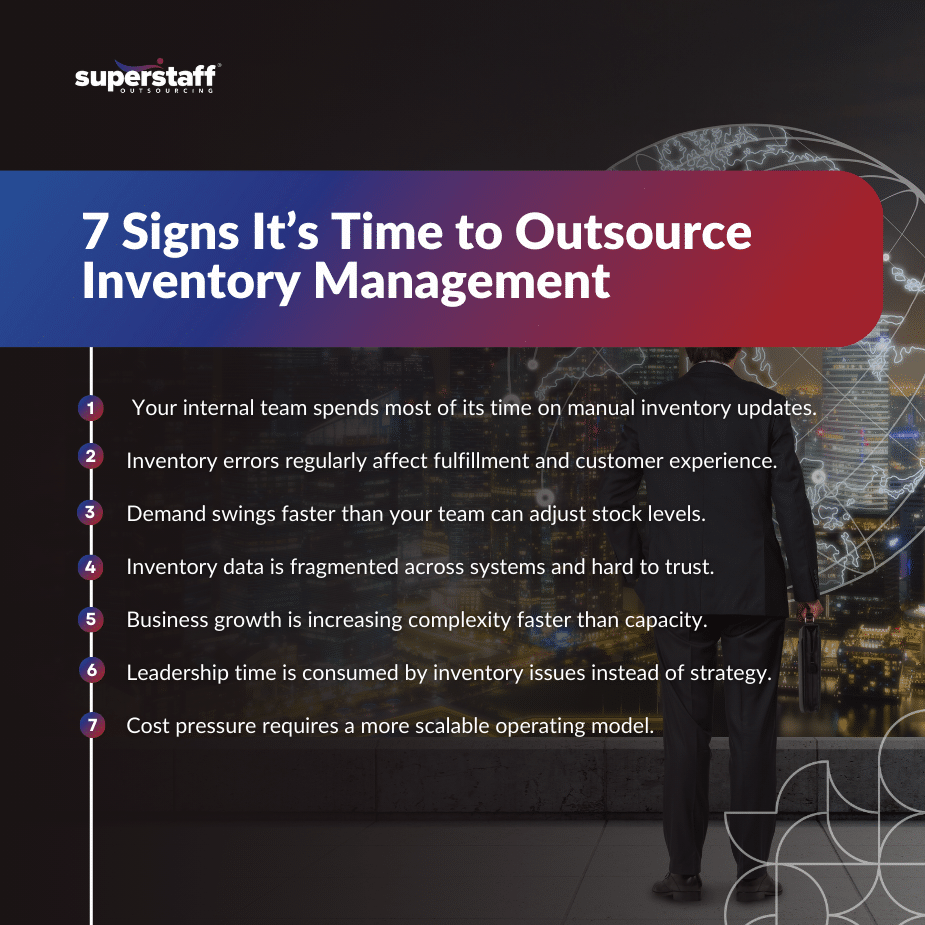
Below are seven clear signs your retail brand should outsource inventory management and why this shift may be the right move for your growing business.
1. Your Inventory Team Is Overwhelmed by Day-to-Day Execution
Inventory management starts as a manageable responsibility. Over time, it becomes a constant stream of updates, reconciliations, and follow-ups.
Teams manually adjust stock levels. They reconcile discrepancies across systems. They spend hours validating data instead of interpreting it. Strategic work keeps getting postponed.
When brands outsource inventory management, offshore teams absorb this execution layer. Daily updates stay current. Exceptions are flagged early. Internal teams stop chasing numbers and start making decisions again.
2. Inventory Errors Are Creating Downstream Problems
Inventory inaccuracies rarely stay isolated. They trigger a chain reaction across the business.
Orders get delayed or canceled. Customer service teams field avoidable complaints. Marketing campaigns promote items that are no longer available. Trust erodes quietly.
Retailers that outsource inventory management reduce these risks by assigning dedicated offshore specialists to accuracy and consistency. These teams monitor changes in real time, validate inputs, and reconcile mismatches before they escalate. Customer-facing teams feel the difference almost immediately.
3. Demand Volatility Is Exposing Process Gaps
Retail demand has become less predictable. Promotions spike traffic. Social media accelerates buying decisions. Seasonal trends compress.
Internal teams often struggle to keep up. Inventory decisions lag behind demand signals. Overstock and stockouts become recurring issues rather than exceptions.
When companies outsource inventory management, offshore teams provide continuous monitoring and structured support. They track movement across channels and flag anomalies early. This creates breathing room for better planning without inflating internal staffing.
4. Inventory Data Is Fragmented Across Platforms
Most retail brands operate on multiple systems. E-commerce platforms. POS tools. Warehouse management software. Each system tells part of the story.
Reconciling those views takes time and focus. Leadership ends up questioning reports instead of acting on them. Confidence in inventory data erodes.
Brands that outsource inventory management often use offshore teams to maintain alignment across systems. These teams validate feeds, maintain dashboards, and ensure reporting consistency. Decision-makers gain a clearer, more reliable view of inventory health without reengineering their entire tech stack.
5. Growth Is Increasing Complexity Faster Than Capacity
Growth should feel controlled. Too often, it feels destabilizing.
New SKUs increase catalog complexity. New sales channels introduce different fulfillment rules. New partners create additional coordination points.
Internal teams stretch thin. Processes become inconsistent. Errors increase just as volume rises. Retailers that outsource inventory management scale capacity alongside growth.
Offshore retail inventory outsourcing teams follow standardized workflows and adapt as complexity increases. Expansion becomes sustainable rather than reactive.
6. Leadership Time Is Being Pulled Into Inventory Firefighting
Inventory execution should support strategy, not dominate it.
When leadership meetings revolve around stock discrepancies, missed forecasts, and system issues, strategic momentum slows. Merchandising, pricing, and customer experience decisions take a back seat.
Choosing to outsource inventory management rebalances this dynamic. Offshore teams handle execution, monitoring, and reporting. Internal leaders regain the space to focus on strategy, planning, and long-term value creation.
7. Cost Pressures Demand a Smarter Operating Model
Retail margins leave little room for inefficiency. Building a large in-house inventory team in the U.S. is costly and slow.
Retail outsourcing in the Philippines offers a disciplined alternative. Skilled professionals. Strong process orientation. Cost structures that support scale.
Brands that outsource inventory management do not simply reduce expenses. They stabilize operations. They create predictability. They align costs with volume instead of fixed headcount.
Why the Philippines Is a Strong Fit for Inventory Operations
The Philippines has become a global center for operational outsourcing because its workforce aligns well with process-driven roles.
Inventory management requires attention to detail, consistency, and analytical thinking. Philippine teams bring all three. English proficiency supports clear communication with U.S.-based stakeholders. Cultural alignment reinforces accountability and follow-through.
When retailers outsource inventory management to the Philippines, offshore teams integrate smoothly into existing workflows. They align with U.S. retail calendars. They follow established reporting standards. They operate as extensions of internal teams, not detached service providers.
What Strategic Inventory Outsourcing Looks Like in Practice
Effective outsourcing is structured and intentional. It is not about handing off responsibility without oversight.
Successful models clearly define roles and accountability. Internal teams retain decision authority. Offshore teams focus on execution and visibility.
Common responsibilities include:
- Daily inventory updates and reconciliation
- SKU creation and data maintenance
- Monitoring stock thresholds and replenishment signals
- Preparing inventory reports and exception summaries
This structure allows brands to outsource inventory management while maintaining control and clarity. Offshore teams support the operation. Internal leaders guide the direction.
How Inventory Outsourcing Supports Better Decision-Making
Better inventory data leads to better decisions. When execution is consistent, insights become more reliable.
Offshore teams ensure that data is current and validated. Reports reflect reality. Trends surface earlier.
Retail leaders can then plan promotions more confidently. Adjust assortment strategies with less risk. Coordinate supply chain decisions with clearer inputs.
This shift from reactive to proactive decision-making is one of the most valuable outcomes when brands outsource inventory management effectively.
Long-Term Impact on Retail Operations
Inventory discipline compounds over time. Small improvements in accuracy and responsiveness create meaningful operational stability.
Customer satisfaction improves. Cash flow becomes more predictable. Internal teams experience less burnout.
Brands that outsource inventory management position themselves to grow without operational strain. Inventory becomes a strategic asset rather than a recurring challenge.
Outsource Inventory Management to the E-Commerce BPO Specialists
Inventory challenges do not resolve themselves. They grow alongside the business.
When execution becomes overwhelming, data loses reliability, and leadership attention drifts toward firefighting, it signals the need for a new approach. Many U.S. retail brands now outsource inventory management to build consistency, control, and scale.
SuperStaff supports retail companies with dedicated offshore inventory teams in the Philippines. Our teams operate with process discipline, transparency, and alignment to your business goals.
If your brand is ready to strengthen inventory operations without adding internal complexity, explore how SuperStaff can help you build a resilient inventory management model that supports sustainable growth.