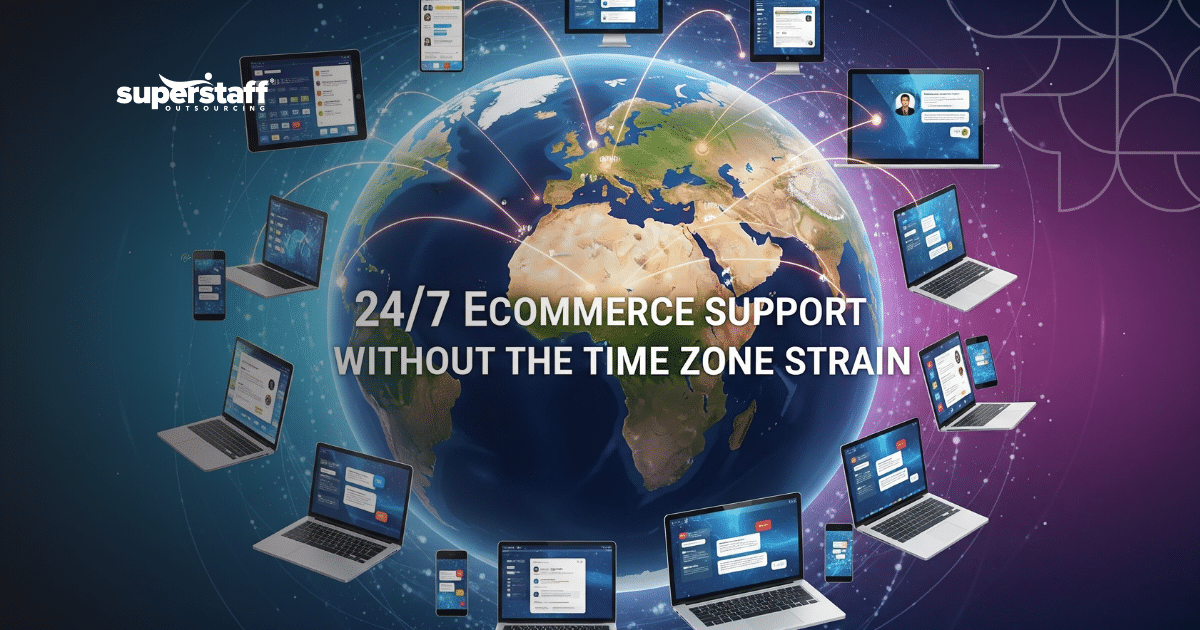
Online shoppers expect fast, accurate responses at any hour. Cart abandonment, delivery questions, payment issues, and returns do not follow office hours.
For growing ecommerce brands, meeting these expectations without exhausting internal teams has become a strategic challenge. An ecommerce customer service call center gives businesses a structured way to support customers around the clock while maintaining service quality and operational control.
Why 24/7 support is now a baseline expectation
Ecommerce runs continuously. Orders come in overnight. Issues surface during weekends. International customers reach out across time zones. Brands that respond slowly risk losing repeat buyers and damaging trust.
As volumes grow, internal teams often struggle to keep up. Hiring overnight staff locally increases costs and creates burnout. Many leaders turn to 24/7 call center services to maintain responsiveness without overextending their core teams.
A Colombia-based model fits this need well. Nearshore coverage aligns with U.S. business hours while easily extending into nights and weekends. This structure allows consistent service without dramatic scheduling strain.
Colombia’s workforce advantage for ecommerce support
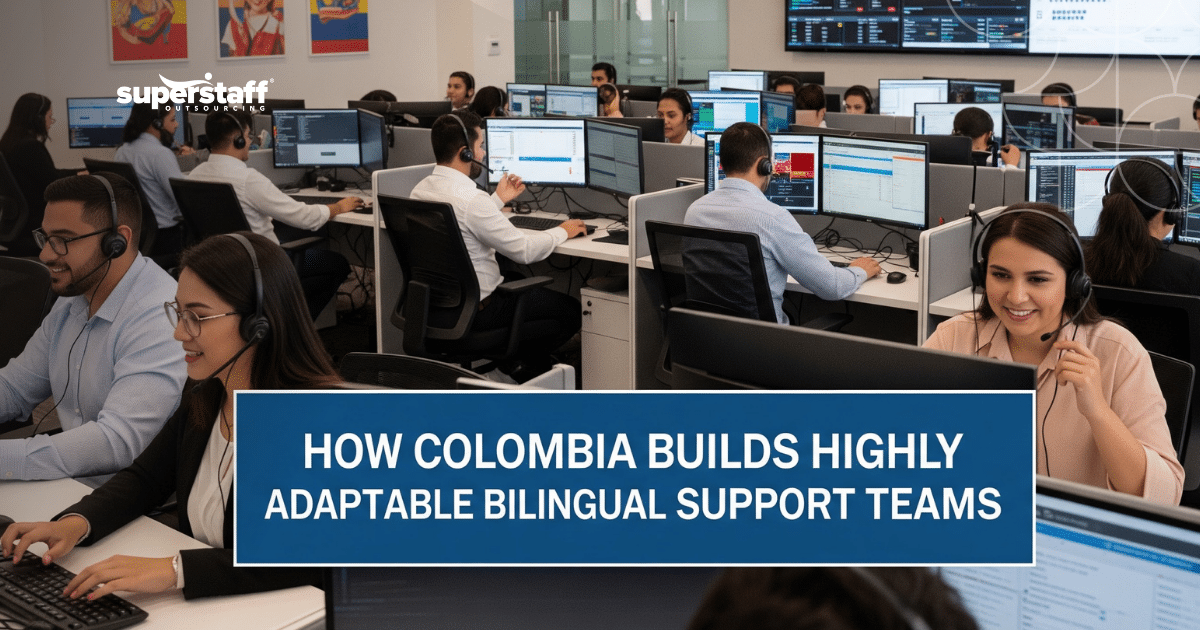
Colombia has developed a strong reputation in customer support operations. The workforce is experienced in voice and digital channels, with a growing concentration in ecommerce workflows. English proficiency and cultural familiarity with U.S. shoppers support smoother interactions.
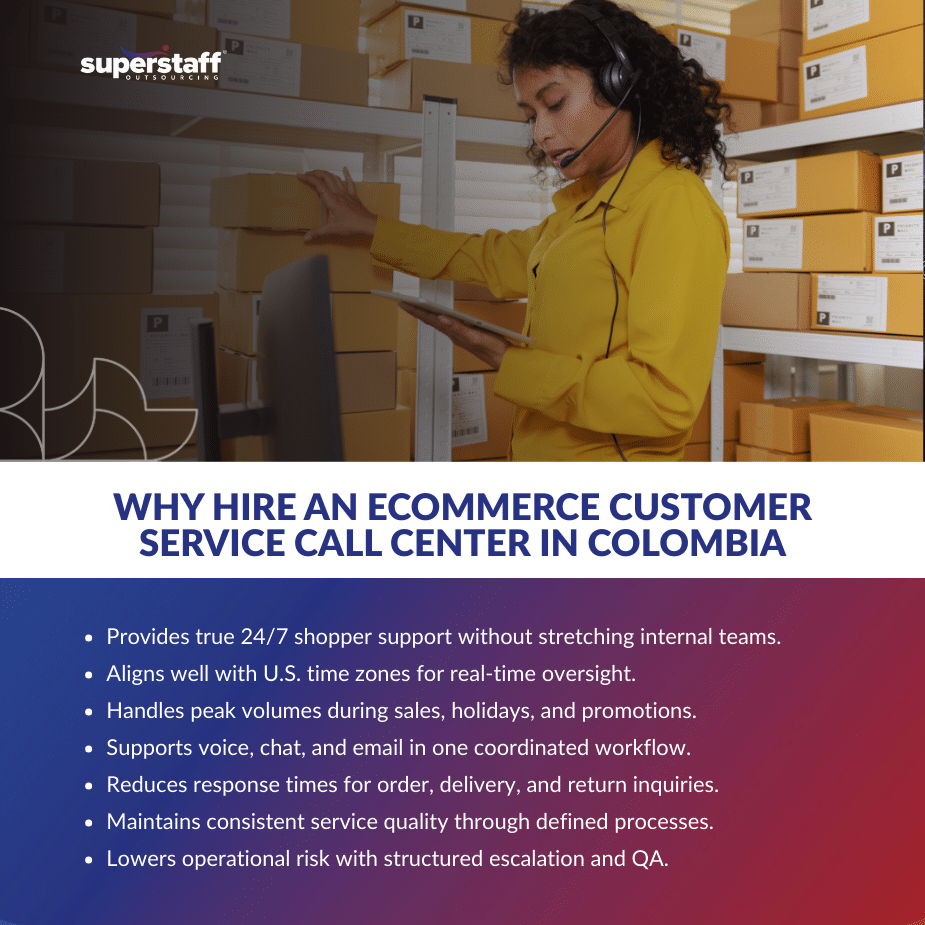
For brands using an ecommerce customer service call center in Colombia, this translates into agents who understand common shopper behaviors. They handle order tracking questions, refund requests, and product clarifications with confidence. As a result, conversations stay efficient and professional.
Colombia’s time zone alignment also simplifies oversight. Managers can review performance, conduct coaching, and resolve escalations during overlapping business hours.
Supporting high volume inquiries without service breakdowns
Ecommerce demand fluctuates. Promotions, seasonal peaks, and flash sales can quickly overwhelm small teams. A call center for ecommerce operations provides the flexibility to scale staffing based on demand.
Instead of scrambling to hire temporary staff, brands can rely on trained agents who already understand their systems. This stability reduces error rates during high volume periods.
With a mature ecommerce customer service call center setup, inbound calls, chats, and emails are routed through defined workflows. Service levels remain steady even as volume rises. Customers receive timely responses, and internal teams stay focused on growth initiatives.
Handling the full customer journey across channels
Modern ecommerce support goes beyond answering phones. Customers move between chat, email, social messaging, and voice depending on urgency. Colombia-based teams are often trained to operate across these channels seamlessly.
A structured call center for ecommerce support ensures consistent messaging across touchpoints. Agents access unified customer histories, order data, and policies. This continuity prevents customers from repeating information and improves resolution times.
When integrated correctly, an ecommerce customer service call center becomes an extension of the brand. Tone, escalation rules, and service standards remain aligned with internal expectations.
Reducing operational risk through process discipline
One overlooked benefit of outsourced support is process maturity. Experienced providers emphasize documentation, quality assurance, and performance reporting. These disciplines often strengthen operations that were previously informal.
In a Colombia-based ecommerce customer service call center, agents follow defined scripts and decision trees. Exceptions are escalated through clear channels. Quality reviews identify recurring issues and training gaps.
Over time, this structure reduces costly mistakes. Refund errors, misrouted orders, and inconsistent responses decline. Leadership gains clearer visibility into customer pain points and operational bottlenecks.
Cost predictability without compromising quality
Ecommerce margins are sensitive. Rising labor costs can quickly erode profitability. While cost is not the sole driver, predictable pricing remains important.
Nearshore 24/7 call center services in Colombia offer a balanced cost structure. Brands gain access to experienced agents without the overhead of U.S.-based night shifts. Savings can be reinvested into technology, marketing, or product development.
Importantly, quality does not have to suffer. With proper onboarding and ongoing training, a call center for ecommerce support delivers reliable service that meets executive expectations.
Supporting growth without losing customer trust
Growth introduces complexity. New SKUs, expanded shipping zones, and additional payment methods all increase inquiry types. Internal teams often become reactive under this pressure.
An ecommerce customer service call center provides a buffer. As complexity grows, agents are trained on new processes before issues escalate. Customers continue to receive accurate information, even during periods of rapid change.
This proactive approach protects brand reputation. Customers experience consistency, which builds long-term loyalty rather than short-term satisfaction.
Decision criteria executives should evaluate
Leaders evaluating the question “why choose a Colombia call center for ecommerce support” often focus on more than staffing levels. Strategic considerations matter.
Key factors include training depth, escalation handling, reporting transparency, and cultural alignment. Decision-makers should assess how providers manage quality assurance and adapt to evolving ecommerce platforms.
A mature ecommerce customer service call center partner contributes insights, not just labor. Trends in inquiries, recurring friction points, and customer sentiment become inputs for broader business decisions.
Integrating Colombia support with U.S. teams
Successful outsourcing depends on integration. Colombia-based teams perform best when treated as part of the broader organization. Clear communication channels, shared KPIs, and regular feedback loops are essential.
When alignment is strong, an ecommerce customer service call center enhances internal productivity. U.S. teams focus on strategy and innovation while offshore agents manage day-to-day inquiries.
This division of labor creates balance. Customers receive fast support. Teams avoid burnout. Leadership maintains control without micromanagement.
Long-term value beyond immediate coverage
While 24/7 coverage often initiates the outsourcing conversation, long-term value extends further. Consistent support improves retention. Structured reporting informs product and logistics decisions.
Over time, the ecommerce customer service call center evolves into a strategic asset. It supports customer experience goals while stabilizing operations during growth cycles.
Building sustainable support with the right ecommerce customer service call center
An ecommerce customer service call center in Colombia offers a practical path to continuous support, operational discipline, and scalable growth. For U.S. ecommerce brands navigating rising customer expectations, this model delivers responsiveness without sacrificing control.
SuperStaff supports ecommerce companies with trained customer service teams in Colombia and the Philippines. Our approach emphasizes process alignment, quality oversight, and seamless integration with your existing operations.
If you are searching for ways to strengthen your 24/7 customer support while protecting your brand, now is the time to explore SuperStaff’s ecommerce support solutions.