
Many employees want a work setup that lets them do well at their jobs while still having time for personal needs. When workplaces understand the benefits of work-life balance, they create an environment where people feel supported and motivated. A clear structure, fair schedules, and steady routines help workers stay focused and healthy. These positive habits lead to better performance and a more loyal team. The benefits of work-life balance also guide leaders in shaping programs that match what employees actually need. When people feel steady, valued, and heard, they stay longer and contribute more.
The Benefits of Work-Life Balance in the Workplace
Workplaces function better when employees have steady routines and fair schedules. This balance supports both personal well-being and job performance.
1. Better Focus and Productivity
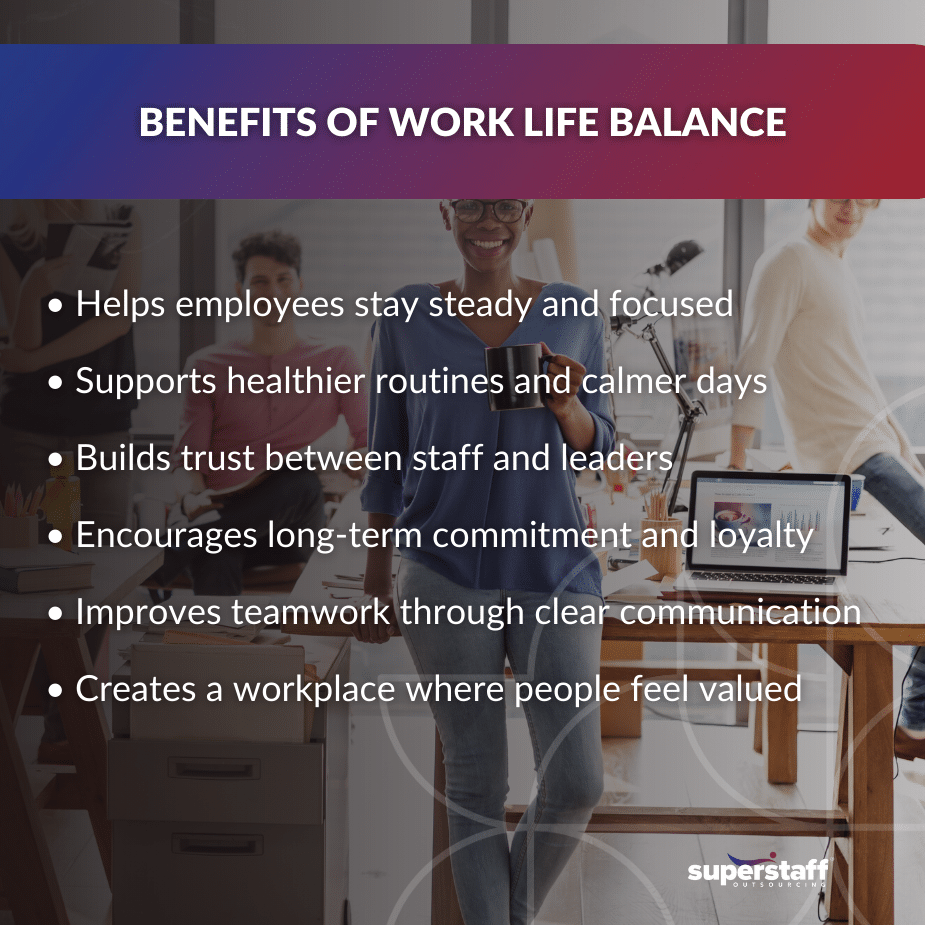
The benefits of work-life balance help employees stay organized and alert. When people have time for rest, they work with clearer minds and stronger focus.
2. Less Stress and Burnout
Healthy routines help reduce pressure at work. The benefits of work-life balance allow employees to stay calm and steady throughout the day.
3. Stronger Employee Morale
Employees feel appreciated when personal time is respected. This lifts their morale and strengthens teamwork.
4. Higher Motivation
The benefits of work-life balance give employees the structure they need to stay motivated. When people feel stable, they produce better results.
5. Healthier Team Culture
A balanced environment supports cooperation. Leaders who understand the benefits of work-life balance shape fair policies that help teams thrive.
How Workplaces Can Support Better Balance
Simple steps can help employees reach a steady and healthy routine that fits their needs.
1. Flexible Scheduling
Flexible time options help employees manage responsibilities at home and work. These options support the benefits of work-life balance.
2. Clear Workload Distribution
Fair task assignments help prevent overload. This makes it easier for employees to stay focused.
3. Encouraging Breaks
Short breaks help refresh the mind. This small habit supports the benefits of work-life balance and reduces stress.
4. Fair Remote or Hybrid Options
Remote or hybrid setups help employees manage personal duties without disrupting work quality.
5. Simple Wellness Ideas
Wellness ideas for workplaces, such as quiet spaces, stretch breaks, or healthy reminders, help create a calmer work environment.
Why Balance Improves Retention and Engagement
Balanced routines support a workplace where employees feel valued and are more willing to stay long term.
1. Better Employee Engagement
Stable routines help employees stay involved and focused. This supports employee engagement and retention in a steady way.
2. Stronger Loyalty
Employees stay longer when their time is respected. The benefits of work-life balance help reduce turnover and build loyalty.
3. Better Team Communication
Clearer conversations happen when employees feel rested and supported. This boosts teamwork.
4. Increased Trust Between Staff and Leaders
Fair scheduling builds trust. Employees feel understood when leaders support their well-being.
5. Stronger Retention Programs
Many workplaces use work-life balance programs for better employee retention. These programs help employees stay committed to the company.
Practical Ways to Strengthen Balance at Work
Small and realistic steps can help improve balance across roles and departments.
1. Set Realistic Deadlines
Fair deadlines help employees manage time and reduce stress. This supports the benefits of work-life balance.
2. Promote Healthy Communication
Open communication helps employees express concerns early, keeping the balance steady.
3. Provide Training for Managers
Well-trained managers can guide teams toward healthier routines, making the benefits of work-life balance more effective.
4. Offer Simple Wellness Support
Basic wellness support helps employees stay active and focused throughout the day.
5. Review Schedules Regularly
Regular schedule checks help prevent overload and support long-term balance.
Balance That Builds Better Workplaces
- Balanced routines support higher output
- Clear schedules reduce fatigue
- Fair policies help teams stay loyal
These points highlight how the benefits of work-life balance help employers and employees function better together.
Balance Shapes Stronger Teams
The benefits of work-life balance help build a workplace where people stay healthy, motivated, and committed. If your company wants to strengthen employee engagement and retention, balance is one of the strongest supports you can provide. SuperStaff can help you build practical solutions that fit your goals. Call us now to get started.