Construction companies today face tighter margins, rising labor costs, and increasing pressure to deliver projects on schedule. Many small and midmarket firms now look for structural ways to strengthen operations without overwhelming internal teams. This is where construction industry outsourcing builds measurable value. When construction firms delegate administrative, coordination, and financial tasks to specialized offshore teams, they gain the bandwidth to focus on jobsite execution, client expectations, and strategic project oversight.
Outsourcing helps firms simplify workflows, reduce errors, and accelerate communication loops. It also strengthens the connection between what happens on the field and what must be documented, billed, approved, or escalated. The result is a more stable operating model as project demands shift.
Why Construction Firms Now Need Operational Reinforcement
Construction work moves fast. Documentation often does not. Many delays occur because information is trapped between project managers, subcontractors, suppliers, and accounting teams. Gaps widen when in-house staff juggle multiple projects at once.
A dedicated offshore team helps close these gaps. They support daily processing, coordinate documentation, and maintain consistent follow-through. This improves the construction management workflow because data is updated on time, requests move faster, and teams avoid long backlogs.
Outsourcing also creates continuity. Many construction teams rely on seasonal or project-based staffing. When administrative work depends on fluctuating availability, delays become unavoidable. Offshore teams provide consistency and structure across every phase of construction.
Strengthening Project Controls Through Integrated Support
Midmarket construction firms increasingly look for integrated support that spans planning, estimating, scheduling, documentation, and billing. They no longer want fragmented solutions. They want a connected process that improves visibility and reduces bottlenecks.
Construction industry outsourcing supports this approach by organizing project controls into repeatable, scalable workflows. Outsourced teams can handle activities such as:
- Document tracking
- Submittal follow-up
- Vendor coordination
- Work order routing
- RFI logging and updates
These tasks demand accuracy and persistence. Offshore teams bring both. Their role is not to replace construction managers but to ensure managers always have the information they need, when they need it.
This creates a smoother working rhythm. Project teams focus on tasks that require field expertise, while offshore teams keep the administrative engine running in the background.
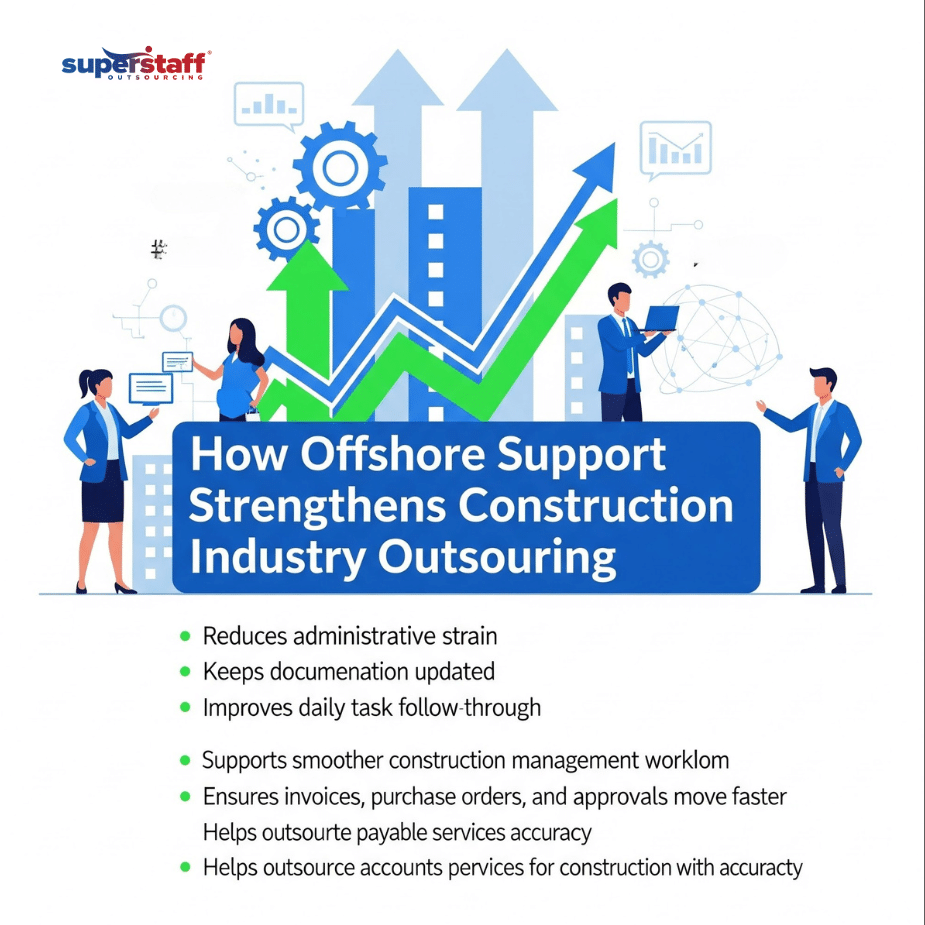
Improving Cost Accuracy and Financial Flow
Cost visibility is one of the tougher challenges for growing construction companies. Invoices stack up quickly. Approvals stall. Supplier records are incomplete. These issues affect cash flow and forecasting.
Many firms now outsource accounts payable services for construction because it is difficult to maintain accurate financial controls while juggling field operations. Outsourced AP teams ensure invoices are logged correctly, matched against purchase orders, verified for discrepancies, and routed to the right manager.
This accuracy directly impacts project health. It also reduces the strain on in-house accounting teams who must close books and prepare financial reports under tight deadlines.
Offshore finance support also connects the dots between budget tracking and workforce planning. Construction companies gain a clearer understanding of how costs shift throughout a project cycle. This allows leaders to take action before issues escalate.
Document Management That Keeps Projects Moving
Every construction project generates large amounts of documentation. Submittals, permits, compliance forms, material logs, receipts, progress photos, and change orders all require active tracking. When documents fall behind, so do schedules.
Construction industry outsourcing provides disciplined document management teams who maintain accuracy across all project files. They standardize naming conventions, update folders, follow change requests, and ensure the right documents reach stakeholders at the right time.
These tasks may appear small, but they protect against costly mistakes. They also support clearer communication with owners, engineers, and subcontractors.
A well-managed documentation flow strengthens accountability and speeds up review cycles. It also helps firms navigate audits or disputes more confidently.
Connecting Field Teams and Office Teams
Construction companies need a reliable bridge between onsite activity and back-office functions. Without it, misalignment grows. Schedules slip. Confusion spreads.
Offshore teams help reinforce connection points. They update trackers, pull reports, summarize field notes, and support communication between project stakeholders. This improves both transparency and decision-making.
When paired with systems that capture jobsite updates, outsourced teams help establish a consistent reporting structure. This also reduces administrative burden on supervisors, allowing them to focus on operations and safety.
Building Scalable Workflows for Growth
Construction demand fluctuates throughout the year. Firms must scale quickly when new projects come in and stabilize when workloads even out.
That level of agility is difficult to achieve through in-house staffing alone. Construction industry outsourcing provides the flexibility to scale support functions without long hiring windows or the risk of overstaffing.
This is especially valuable for growing firms that want to maintain service quality while pursuing larger or more complex projects. With offshore operational teams, companies gain access to structured, process-driven administrative support that grows with them.
It also strengthens the connection between field execution and business management. When workflows scale smoothly, leadership can plan with more confidence.
The Convergence of Project Management and Accounting Support
A major shift in the industry is the move toward unified operations teams that understand both project documentation and financial processes. This helps companies close visibility gaps and prevent misaligned data.
The scenario—construction project management and accounting outsourcing—illustrates how firms are integrating two historically separate functions into a more cohesive model. Offshore teams help construction companies maintain accurate documentation, track costs, and manage approvals in one workflow.
This alignment improves reporting and reduces the risk of financial discrepancies. It also clarifies responsibility across billing, procurement, and project controls.
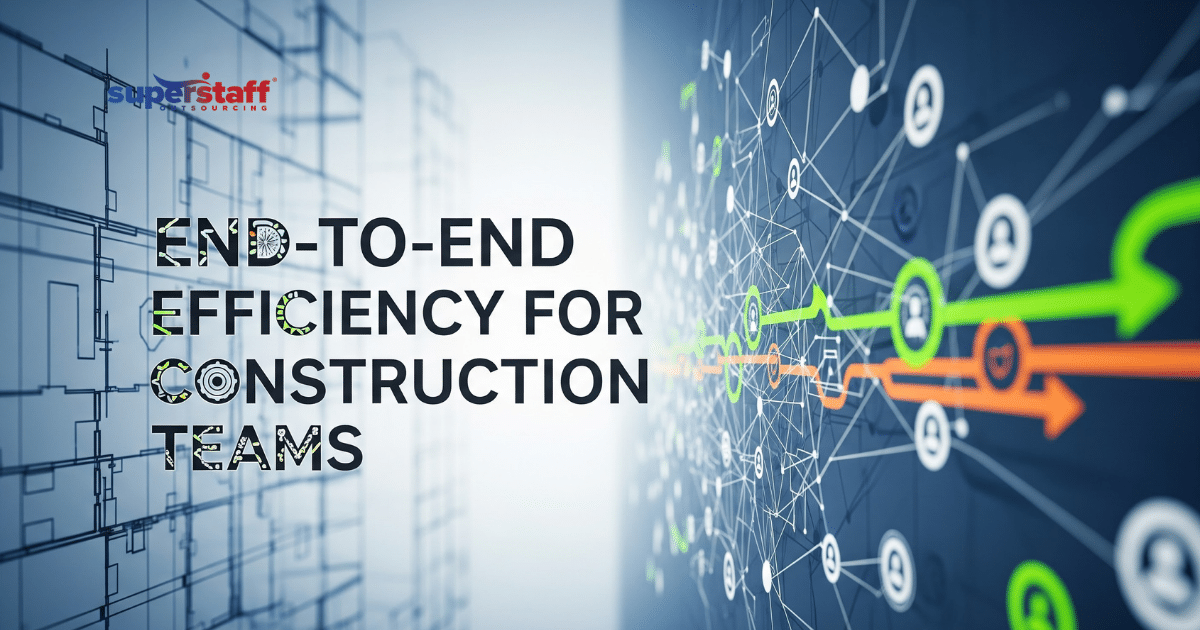
Construction Industry Outsourcing: End-to-End Efficiency Is Now a Competitive Advantage
Contractors and construction firms that embrace integrated offshore support position themselves for long-term operational stability. They gain structure and consistency in their administrative, documentation, and accounting functions. They also support field teams more effectively, which directly influences project outcomes.
Construction industry outsourcing builds a stronger operating foundation. It gives construction leaders a way to handle rising workloads, manage financial records, and maintain accurate project documentation without stretching internal teams too thin.
SuperStaff provides trained construction support teams that understand workflows, communication demands, and the importance of precise documentation. We help firms streamline daily tasks so their teams can focus on higher-value work and long-term planning.
To strengthen your construction operations and build a more scalable support model, explore how SuperStaff can help you streamline your processes from blueprint to billing.