Many businesses handle a growing volume of files such as contracts, invoices, customer records, reports, and compliance documents. As the volume increases, teams often struggle with slow turnaround times, scattered folders, and inconsistent workflows. These issues can slow down daily operations and affect overall efficiency.
Document management outsourcing gives businesses a structured way to manage files with accuracy and speed. With trained support teams and clear workflows, this setup reduces internal pressure and helps departments focus on high-value tasks. This article explains how document management outsourcing works, how it improves everyday operations, and how it supports long-term growth for organizations that want a more organized way to handle documents.
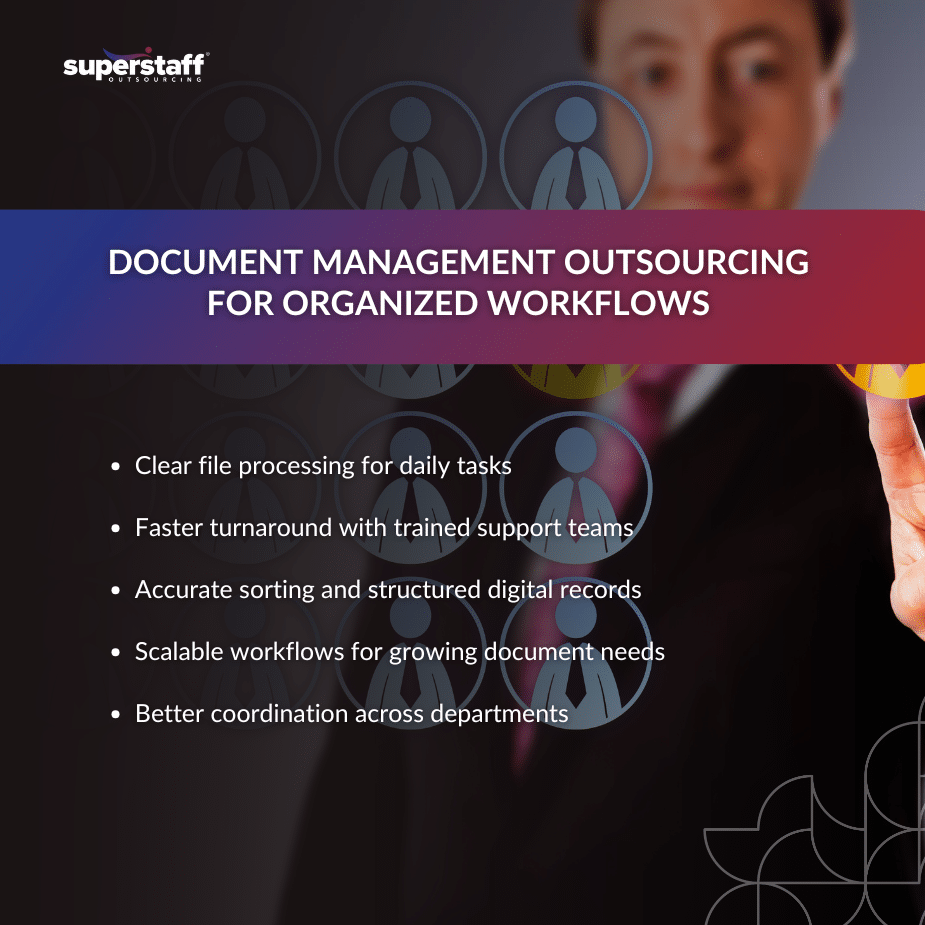
Why Businesses Choose Document Management Outsourcing
Many teams explore document management outsourcing to reduce workflow delays and improve overall accuracy.
1. Handling Growing Document Volume
Businesses deal with large amounts of files every day. Document management outsourcing helps teams keep up with demand by assigning routine tasks to trained support teams.
2. Reducing Internal Processing Errors
Outsourced document management services include file checks, indexing rules, and organized workflows. These steps help reduce errors in business document processing outsourcing.
3. Improving Turnaround Time
Document management outsourcing helps businesses process files faster through stable schedules and clear service levels.
4. Supporting Core Teams
Administrative and operational teams can focus on strategic work while outsourced teams handle repetitive document tasks.
5. Creating Structured Document Systems
A reliable system allows teams to locate files quickly, update records correctly, and follow consistent steps for every document type.
Key Services in Document Management Outsourcing
Document management outsourcing covers several essential processes that help businesses maintain clean and organized records.
1. Scanning and Digitization
Paper files are converted into digital records. This makes storage easier and improves accessibility.
2. Indexing and Metadata Tagging
Files are labeled with clear categories such as dates, names, codes, and document types to make retrieval faster.
3. Data Entry and File Organization
Document management outsourcing teams follow structured steps to input, sort, and organize documents based on the company’s requirements.
4. Secure Storage and Retrieval
Files are stored in secure systems. Businesses can request files based on clear search fields.
5. Compliance and Version Tracking
Teams maintain accurate versions of files and track changes to support compliance needs for industries like finance, healthcare, or legal services.
How to Outsource Document Management for Businesses
A clear plan helps ensure that document management outsourcing supports daily operations effectively. These steps show how to outsource document management for businesses in a structured and practical way.
1. Assess Document Volume and Workflow Gaps
Identify the types of documents processed daily. Check where delays or errors usually occur so the outsourcing plan can address those issues.
2. Define Processes and Service Levels
Create standard requirements such as accuracy rates, processing time, storage rules, and quality checks. These give both teams clear expectations.
3. Select a Qualified Outsourcing Partner
Look for a partner with experience in document management outsourcing. Check their tools, capacity, staff training, and ability to scale.
4. Train Both Internal and Outsourced Teams
Training helps align workflows. It avoids mismatched formats, inconsistent file names, and duplicate tasks.
5. Set Up Communication and Reporting Rules
Regular reports help managers see progress, track errors, and make adjustments before issues grow.
How Document Management Outsourcing Improves Operations
With stable processes and trained teams, businesses can expect several improvements.
1. Shorter Processing Time
Trained staff follow strict schedules. This helps documents move through workflows faster.
2. Higher Accuracy
Document management outsourcing teams use quality checks to reduce mistakes in data entry, indexing, and storage.
3. Better Accessibility
Organized digital systems allow staff to find needed files quickly without searching through multiple folders.
4. Consistent Workflows
A standard process improves teamwork and reduces confusion when new tasks enter the system.
5. Support for Operational Growth
As businesses grow, document management outsourcing partners can scale their support without disrupting operations.
Use Cases for Document Management Outsourcing
Many organizations adopt document management outsourcing for different types of files and workflows.
1. Contract and Legal Document Processing
Support teams help track versions, organize files, and maintain secure storage.
2. Invoice and Billing File Management
Accurate storage and sorting help accounting teams work faster.
3. HR Document Administration
Employee records, forms, and reports stay organized and updated.
4. Compliance Documentation
Businesses maintain the correct records for audits or reporting.
5. Archive Digitization
Old documents can be scanned, stored, and indexed for easier access.
How Outsourcing Supports Internal Teams
Document management outsourcing strengthens daily operations by giving internal teams more time and clearer processes.
1. Reducing Bottlenecks
Outsourced support teams help distribute work so tasks do not pile up.
2. Improving File Accuracy
Quality checks ensure correct entries, labels, and formats.
3. Faster Coordination
Clear workflows and communication rules help departments access the documents they need.
4. Better Resource Use
Internal staff can spend more time on projects that need specialized knowledge.
5. Stable Output
Reliable support ensures that document processing stays consistent even during busy periods.
Choosing the Right Partner for Document Management Outsourcing
Not all partners offer the same level of service. These points help guide the selection process.
1. Quality Assurance Methods
Check the partner’s accuracy checks, review steps, and validation rules.
2. Security and Data Protection
Ensure secure handling of confidential documents.
3. Staff Training Programs
Ask how staff are trained before handling files.
4. Communication and Reporting Structure
Partners should provide clear updates, reports, and escalation paths.
5. Scalability
Choose a partner that can support growth without delays.
Reliable Document Management for Growing Businesses
Document management outsourcing helps businesses improve accuracy, speed, and file organization through structured workflows and trained support teams. SuperStaff offers outsourced document management services with efficient processes that help maintain clean and accessible records.
SuperStaff provides reliable support for businesses that want organized document systems and consistent daily output. Reach out to us to build a stable and scalable document management outsourcing setup for your organization.