

Finding the right talent is not always about hiring a full-time employee. Many companies now choose fractional staffing to access the skills they need without the high cost of permanent roles. This model allows businesses to hire professionals part-time or on a project basis, giving them flexibility and savings. For organizations that want to grow efficiently, fractional staffing, or known as part-time or flexible staffing, offers both speed and precision. It provides access to experienced specialists and executives who can guide critical areas of business while avoiding the overhead of full salaries and benefits. Understanding what businesses gain from fractional staffing can help leaders decide how to manage workforce strategies in 2025 and beyond.
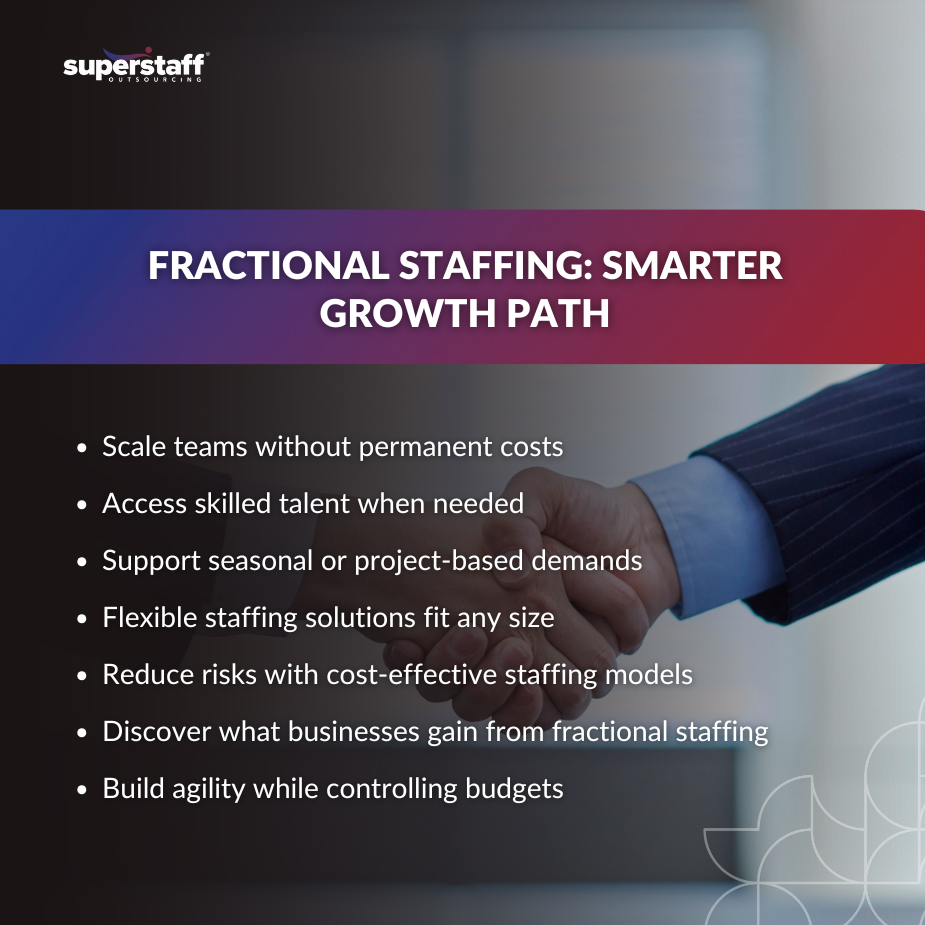
What Fractional Staffing Means
Fractional staffing is not a new concept, but its adoption is growing rapidly as companies rethink how they manage their teams.
1. Definition
Fractional staffing is the practice of hiring professionals on a part-time or project-based schedule. Instead of committing to a full-time role, businesses bring in talent only when needed.
2. Core Services
Typical flexible staffing services include:
- Part-time executives such as CFOs, CMOs, or CTOs
- Project-based specialists in HR, IT, or finance
- On-demand professionals for seasonal tasks or expansion projects
3. Difference from Traditional Hiring
Traditional hiring requires long-term contracts, salaries, and benefits. Part-time staffing reduces these commitments while keeping access to high-quality skills.
4. Flexible Staffing Solutions
Fractional work is part of flexible staffing solutions that allow companies to adjust workforce size based on current demand.
5. Role in Workforce Strategy
Fractional staffing fits modern workforce models, where agility and cost management matter as much as skill availability.
Why Businesses Choose Fractional Staffing
Companies select fractional staffing for many reasons. The model supports both immediate needs and long-term growth.
1. Lower Costs
With fractional staffing, companies avoid paying full-time salaries and benefits. This makes it one of the most cost-effective staffing models available.
2. Access to Specialized Skills
Businesses can work with experts in leadership, marketing, or technology without committing to permanent contracts.
3. Scalable Teams
Fractional staffing makes it easy to add or reduce staff quickly, especially during growth phases.
4. Reduced Risk
Since roles are flexible, businesses avoid the risks of over-hiring and can adjust as market conditions change.
5. Faster Hiring
It often takes less time to fill a fractional role compared to recruiting permanent executives or specialists.
Qualities of Reliable Fractional Staffing Providers
The success of fractional staffing depends on the quality of the provider. Businesses should evaluate several key qualities.
1. Proven Track Record
Providers with strong experience in placing fractional talent are more likely to deliver results.
2. Wide Talent Network
Access to diverse professionals across industries ensures businesses can find the right fit.
3. Transparent Pricing
Clear contracts and predictable costs prevent surprises and help companies manage budgets.
4. Communication and Support
Good providers stay connected with both the client and the fractional staff to ensure alignment.
5. Cultural Fit
The best providers look beyond skills and focus on whether candidates align with company culture and goals.
Benefits of Fractional Staffing
Adopting fractional staffing creates advantages that help businesses grow faster and smarter.
1. Cost Savings
Payroll expenses are reduced, and overhead costs are minimized.
2. Access to Experts
Companies gain executive-level or specialized knowledge that may otherwise be out of reach.
3. Speed and Agility
Projects move faster because the right skills are applied at the right time.
4. Scalability
Teams can expand or contract depending on workload, without the burden of long-term commitments.
5. Focus on Core Operations
Internal staff can concentrate on strategic goals while fractional professionals handle specific needs.
Challenges and Risks to Consider
Part-time staffing is effective, but it also comes with challenges that businesses must prepare for.
1. Limited Availability
Fractional staff may split time between multiple clients, which can affect availability.
2. Cultural Misalignment
Short-term professionals may need time to adapt to the company culture and processes.
3. Confidentiality Concerns
Sharing sensitive data with external professionals requires strong trust and agreements.
4. Coordination Issues
Managing part-time contributors may require clear communication systems to avoid delays.
5. Provider Dependence
Relying heavily on external providers could create risks if relationships are not managed well.
How Fractional Staffing Supports Growth
The value of part-time staffing becomes clear when looking at how it supports business growth strategies.
1. Executive Leadership at Lower Cost
Startups can bring in experienced leaders like CFOs or CMOs without paying full salaries.
2. Testing New Markets
Companies expanding globally can hire fractional experts to assess markets before building full teams.
3. Seasonal Demand
Retailers or logistics firms can add staff during peak seasons and scale back afterward.
4. Specialized Problem-Solving
Fractional professionals often bring targeted expertise for solving specific challenges.
5. Supporting Startups and SMEs
Smaller businesses can grow confidently with access to high-level skills that would otherwise be unaffordable.
Long-Term Outlook for Fractional Staffing
Fractional staffing is expected to grow stronger as part of global workforce strategies.
1. Lean Workforce Models
Companies are focusing on leaner structures where flexibility is valued as much as headcount.
2. Expansion Across Industries
More industries, including healthcare, technology, and finance, are adopting fractional roles.
3. Alignment with Remote Work
Fractional staff often work remotely, which fits the modern hybrid workforce model.
4. Rise of Fractional Executives
Senior leadership positions are increasingly offered in fractional form.
5. Global Workforce Scalability
Fractional staffing makes it easier to expand into new regions without large upfront costs.
Fractional Staffing Solutions That Drive Growth
Fractional staffing is more than a cost-saving option. It is a strategy that gives companies flexibility, access to talent, and faster growth opportunities. By using fractional staffing, businesses can avoid unnecessary expenses while gaining high-level expertise. This approach aligns with modern flexible staffing solutions and ensures that teams scale smoothly as needs change.
SuperStaff supports organizations in exploring what businesses gain from fractional staffing by connecting them with reliable and skilled professionals. With our help, companies can access cost-effective staffing models that fit both immediate goals and long-term strategies. Choosing flexible staffing with the right provider ensures stronger growth, smarter hiring, and a more sustainable future.