Global companies are under pressure to deliver fast, accurate, and culturally aligned customer support. Language is no longer a support function.
It is a strategic lever. A strong bilingual workforce allows businesses to connect with customers across markets while maintaining consistency in service quality.
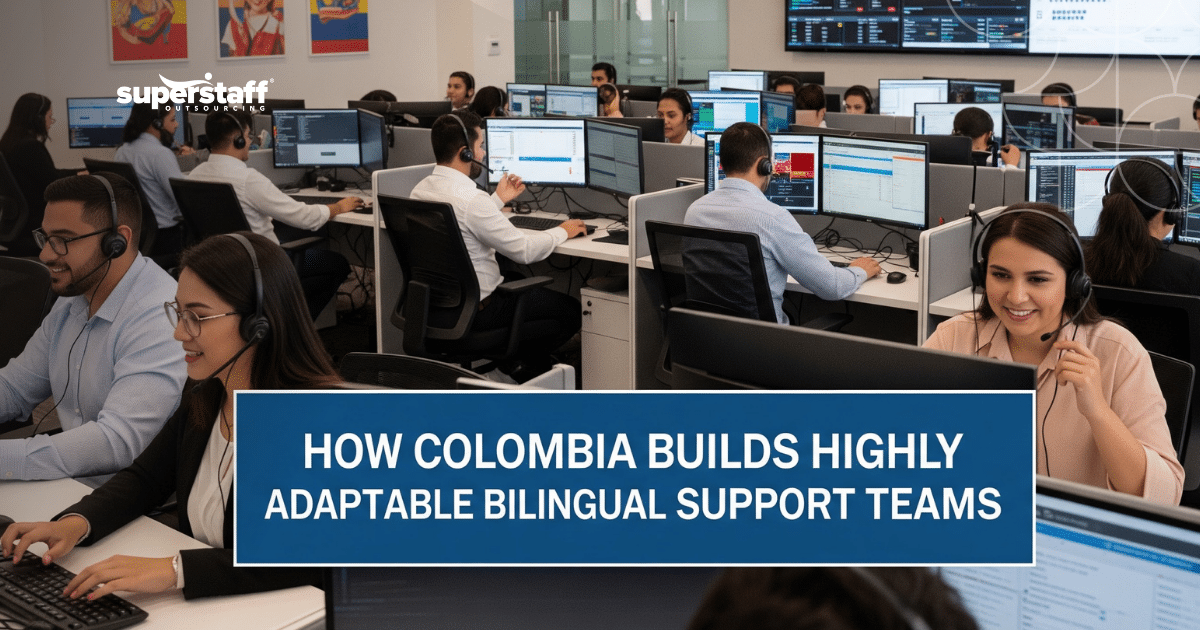
Colombia has emerged as a reliable location for companies that want to strengthen communication, improve customer experience, and scale operations with confidence.
Why Language Capability Is Now a Business Priority
Clear communication directly affects customer satisfaction and retention. Companies cannot afford delays or misunderstandings caused by language gaps.
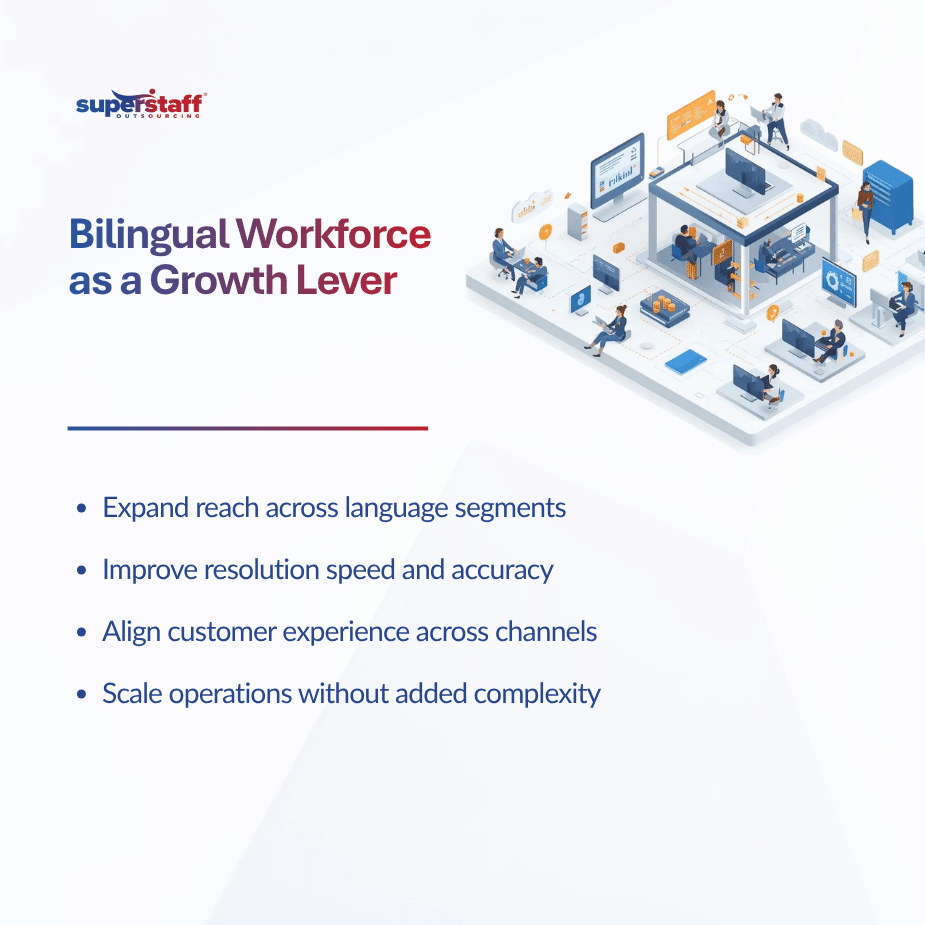
A bilingual workforce helps reduce friction in customer interactions. It allows support teams to respond faster, resolve issues accurately, and build trust with diverse customer bases.
For U.S. companies, serving both English and Spanish-speaking customers is no longer optional. It is a requirement for growth.
Colombia’s Workforce Advantage
Colombia continues to invest in education and workforce development, with a strong focus on English proficiency.
Many professionals enter the workforce with advanced communication skills. This creates a talent pool that is well-suited for customer-facing roles.
A bilingual workforce in Colombia is also trained to adapt to different communication styles. This helps businesses maintain brand consistency across markets.
Supporting U.S. Market Expansion
Companies expanding in the U.S. often face the challenge of serving a growing Spanish-speaking population.
A bilingual workforce provides immediate access to agents who can support both English and Spanish customers without additional layers of translation.
This setup allows businesses to:
- Expand customer reach without increasing complexity
- Offer consistent service across language segments
- Improve accessibility for diverse audiences
Enhancing Customer Experience Through Language
Customer experience depends heavily on clarity and empathy. Language plays a central role in both.
A bilingual workforce enables agents to engage customers in their preferred language. This improves understanding and reduces frustration.
Customers are more likely to stay loyal when they feel heard and understood. Language alignment supports that outcome.
Improving First Contact Resolution Rates
When customers communicate in their preferred language, issues are resolved faster.
A bilingual workforce reduces the need for transfers and escalations. This leads to higher first contact resolution rates.
Efficient resolution improves operational performance and lowers support costs over time.
Aligning with Multichannel Customer Expectations
Customers interact with brands through multiple channels, including phone, chat, email, and social media.
Each channel requires clear and consistent communication. A bilingual workforce ensures that messaging remains accurate across all touchpoints.
This consistency strengthens brand credibility and improves the overall customer journey.
Supporting Back Office and Non-Voice Functions
Language capability is not limited to voice support. It also plays a role in back-office operations.
A bilingual workforce can handle tasks such as:
- Data processing and documentation
- Email support and case management
- Content moderation and review
These functions require precision and attention to detail, which are supported by strong language skills.
Cultural Alignment Beyond Language
Language proficiency is important, but cultural understanding adds another layer of value.
A bilingual workforce in Colombia is familiar with both North American and Latin American communication styles.
This cultural alignment helps teams interpret customer needs more accurately. It also reduces the risk of miscommunication.
Cost Efficiency Without Compromising Quality
Companies often balance cost and quality when choosing outsourcing locations.
Colombia offers a strong combination of both. A bilingual workforce provides high-quality support while maintaining cost efficiency.
This allows businesses to scale operations without compromising service standards.
Building Scalable Support Models
Growth requires flexibility. Companies need teams that can scale with demand.
A bilingual workforce supports scalable operations by handling multiple language requirements within a single team.
This reduces the need for separate teams and simplifies management structures.
Integrating Technology with Human Expertise
Technology plays a role in modern customer support, but human interaction remains essential.
A bilingual workforce can work alongside AI tools to improve efficiency while maintaining a personal touch.
Agents can handle complex interactions, while automation supports routine tasks. This balance improves both speed and quality.
Strengthening Competitive Position
Language capability can differentiate a company in competitive markets.
A bilingual workforce allows businesses to respond quickly to customer needs and enter new markets with confidence.
Companies that prioritize communication are better positioned to build long-term relationships and maintain customer loyalty.
Stronger Connections Through Language
Language has become a core part of business strategy. Companies that invest in a bilingual workforce gain a clear advantage in customer experience, operational efficiency, and market reach.
Colombia offers access to skilled professionals who can support both English and Spanish-speaking customers. This makes it a practical choice for companies looking to strengthen communication and scale effectively.
SuperStaff helps businesses build high-performing teams that align with their goals. The company integrates AI into workflows to improve efficiency, while human expertise remains central to delivering quality service.
If you are exploring ways to improve customer support and expand your reach, connect with SuperStaff to learn how the right team can support your growth.