Understanding wages is one of the most important parts of doing business in Colombia. Both employers and workers rely on clear rules to ensure fair pay and smooth workplace relations. The minimum wage in Colombia sets the foundation for how much employees receive and how businesses manage their labor costs. For international companies and local businesses alike, knowing how this wage works is not only a matter of compliance but also of maintaining a productive workforce. This article breaks down the basics, the rules, and the effects of the minimum wage so both employers and employees can make informed decisions.
Basics of the Minimum Wage in Colombia
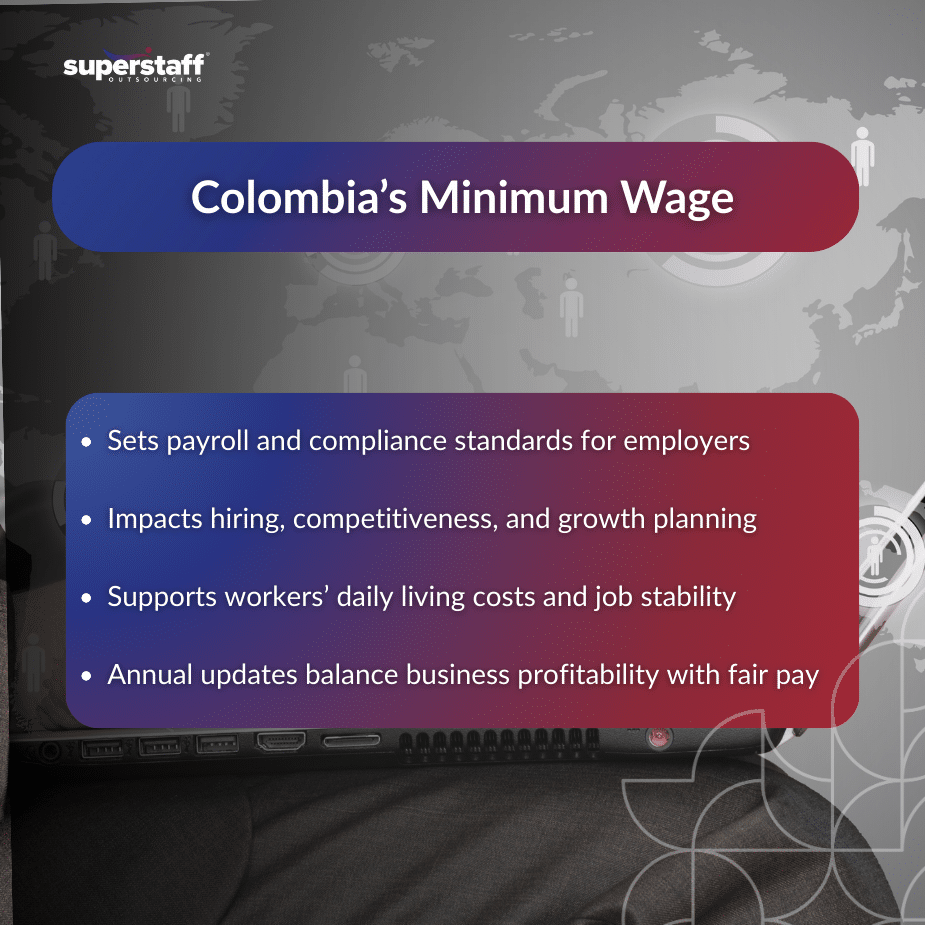
The minimum wage in Colombia is adjusted each year by the government after discussions with unions and employers. It is set to cover basic living costs while also balancing the financial capacity of businesses. This section highlights the main aspects of how the system works.
1. Annual Adjustment
- Every year, the government sets a new wage level.
- Adjustments are based on inflation, cost of living, and economic growth.
2. Coverage
The minimum wage applies to most formal sector workers. It covers salaries, but companies must also account for mandatory benefits, making actual employment costs higher.
3. Additional Benefits
Employers are required to provide benefits on top of wages, such as health contributions, pension payments, and transportation subsidies.
4. Regional Impact
While the wage is set at a national level, its effect differs between cities. For example, in Bogotá the cost of living is higher compared to smaller towns, so the same wage has different purchasing power.
5. Impact on Employers
How the minimum wage in Colombia affects employers depends on the industry. Labor-intensive businesses may feel more pressure compared to sectors that rely more on technology or capital.
Wages and Employee Rights
Understanding the minimum wage goes hand in hand with knowing employee entitlements. This section focuses on what workers can expect and what employers must comply with under Colombian employment regulations.
1. Fair Pay Guarantee
Workers cannot be paid below the national minimum wage. This ensures that all employees receive a basic standard of income.
2. Mandatory Benefits
Besides wages, employers must pay health, pension, and social security contributions. This system strengthens employee rights in Colombia by giving workers protection beyond their salary.
3. Contracts and Wage Clarity
Employment contracts must clearly state wages and benefits. This prevents disputes between employers and employees.
4. Overtime Pay
Employees working beyond legal hours must receive extra compensation. This ensures fairness in workload distribution.
5. Enforcement
The Ministry of Labor monitors compliance, and companies that fail to respect wage laws can face fines.
Business Planning and Payroll Management
For employers, the minimum wage in Colombia has a direct effect on budgeting and labor planning. Businesses must prepare payroll systems that meet both legal and financial needs.
1. Payroll Costs
Since wages are linked to social benefits, payroll expenses are often higher than just the salary. Employers must plan for this total cost.
2. Hiring Decisions
Some businesses may limit hiring or adjust work hours to manage costs. Understanding wage policies helps in making strategic workforce decisions.
3. Small vs Large Businesses
Large companies often have more flexibility to handle wage increases, while small businesses may need stronger financial planning.
4. International Companies
Foreign investors must familiarize themselves with wages and salaries in Colombia to avoid missteps when setting up local offices.
5. Long-Term Growth
Planning ahead for annual increases helps businesses avoid sudden financial strain and ensures smoother growth.
Broader Economic and Social Impact
The minimum wage in Colombia not only affects employers and workers directly. It also plays a role in shaping the wider economy and social stability.
1. Poverty Reduction
Higher minimum wages can help reduce poverty levels by giving families more financial stability.
2. Consumer Spending
When workers earn more, they spend more, which boosts local businesses and supports economic growth.
3. Inflation Effects
Raising wages can also increase production costs, which may influence prices of goods and services.
4. Labor Market Balance
A well-set wage protects workers but also ensures companies can remain competitive. Striking this balance is key to stability.
5. Attracting Talent
Fair wages help retain employees and make companies more attractive to job seekers.
Practical Steps for Employers
Businesses need clear steps to stay compliant and efficient when handling the minimum wage in Colombia.
1. Stay Updated
Employers must check official announcements each year for new wage levels.
2. Audit Payroll Systems
Reviewing payroll ensures all payments meet legal standards and avoid penalties.
3. Train HR Teams
Human resource staff should understand regulations to properly manage contracts and benefits.
4. Communicate with Employees
Clear communication about wages builds trust and reduces misunderstandings.
5. Seek Local Support
Partnering with outsourcing providers or legal experts can help navigate the complexities of labor law.
Fair Pay and Compliance Made Simple
The minimum wage in Colombia is central to fair labor practices and business planning. It safeguards workers while shaping how companies budget and grow. By respecting Colombian employment regulations, ensuring fair wages and salaries in Colombia, and protecting employee rights in Colombia, businesses can build trust with their workforce and avoid costly disputes.
SuperStaff supports global companies by offering reliable outsourcing solutions, including payroll management and compliance assistance. With the right support, employers can meet wage requirements while focusing on growth. Choosing a partner that understands how minimum wage in Colombia affects employers can make business operations smoother, fairer, and more sustainable.