

Financial management is one of the most demanding parts of running a company. From bookkeeping and payroll to taxes and reporting, accuracy and timeliness are non-negotiable. Many businesses find that handling everything internally drains time and resources. This is why outsourced financial services have become an important solution for modern organizations.
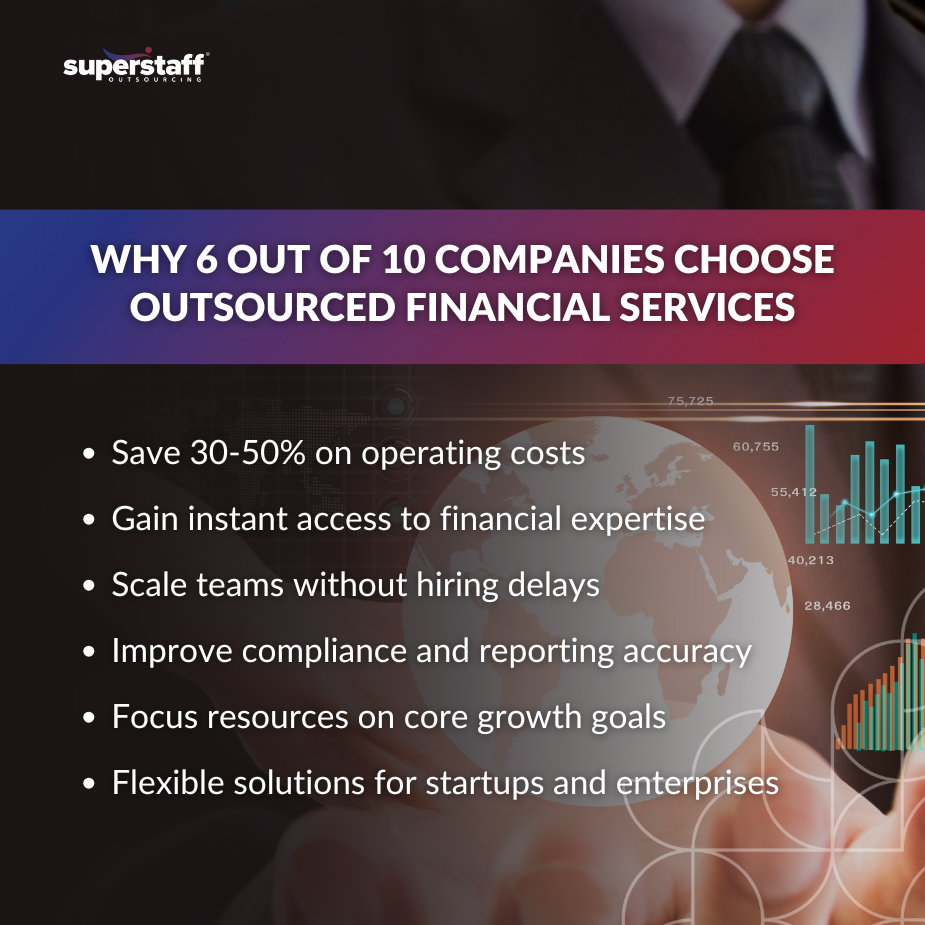
Studies show that 6 out of 10 companies now rely on outsourcing to handle their financial needs. The goal is not only cost savings but also efficiency, compliance, and improved decision-making. By trusting specialized providers, businesses reduce risk, stay on track with regulations, and make financial processes more scalable. This approach allows leaders to focus on growth while ensuring that their finances remain well-managed.
What Are Outsourced Financial Services?
Outsourced financial services cover a wide range of accounting and finance functions handled by external specialists. Instead of hiring full-time staff for every task, businesses work with professional providers that focus exclusively on financial management.
1. Clear Definition
Outsourced financial services involve delegating bookkeeping, payroll, tax preparation, and related tasks to third-party providers. These services are tailored to the needs of each business and can cover daily operations or long-term strategic planning.
2. Difference From In-House Teams
While in-house finance departments require hiring, training, and infrastructure, outsourcing provides access to skilled professionals without the overhead costs. This flexibility allows businesses to scale resources based on demand.
3. Range of Services
Financial services outsourcing typically includes payroll, accounts receivable and payable, tax filing, and financial reporting. Some providers also offer strategic advisory for budgeting and forecasting.
4. Growing Popularity
The rise of outsourced finance and accounting reflects the growing need for accurate, compliant, and cost-efficient solutions. Businesses of all sizes find it easier to keep up with financial obligations through outsourcing.
5. Why It Matters
Accurate financial management supports cash flow stability, investor confidence, and compliance with tax laws. Outsourcing ensures these functions are handled consistently and professionally.
Common Services Companies Outsource
Businesses rely on outsourced financial services to cover different aspects of financial management. Each function plays a role in efficiency and accuracy.
1. Bookkeeping and Accounting
Outsourcing bookkeeping ensures accurate records of every transaction. This helps companies track income and expenses without falling behind on data entry.
2. Payroll Processing
Managing payroll requires compliance with employment laws and tax regulations. Outsourcing reduces errors and ensures employees are paid correctly and on time.
3. Tax Preparation and Compliance
Tax filing errors can lead to penalties. Outsourced providers handle calculations, filings, and updates to comply with ever-changing tax rules.
4. Accounts Receivable and Payable
Timely billing and payments maintain a healthy cash flow. Providers manage invoicing, collections, and vendor payments efficiently.
5. Financial Reporting and Analysis
Outsourced partners deliver accurate financial statements and insights. These reports help leaders make better decisions based on reliable data.
Why Businesses Use Outsourced Financial Services
The rise in adoption is not surprising. Companies see clear improvements in efficiency and risk management when they outsource.
1. Reduce Workload on Internal Teams
Outsourcing removes repetitive tasks from in-house staff. Teams can focus on strategy and growth instead of data entry and reporting.
2. Improve Accuracy and Efficiency
Specialized providers use advanced systems and trained staff. This reduces mistakes and improves turnaround time for financial tasks.
3. Ensure Compliance
Tax and labor regulations change often. Outsourced finance and accounting teams stay updated, reducing the risk of penalties and audits.
4. Access to Financial Tools
Providers use cloud systems, automation, and dashboards. Businesses benefit from these tools without having to invest heavily in them.
5. Free Up Resources
By outsourcing, businesses lower costs and redirect budgets to innovation and expansion. This supports growth without overburdening internal teams.
Benefits of Outsourced Financial Services
The long-term advantages of outsourcing finance extend beyond cost savings. They strengthen the overall health of a business.
1. Lower Costs
Companies save on salaries, training, and software. Instead of fixed overhead, they only pay for the services they need.
2. Better Cash Flow Management
Accurate records and timely billing help companies avoid cash shortages. Improved financial planning supports stability.
3. Improved Decision-Making
Outsourced reports are reliable and detailed. Business leaders can make confident choices with accurate data.
4. Reduced Compliance Risks
With professionals handling regulations, the chance of errors or penalties decreases. This strengthens trust with stakeholders.
5. Scalable Support
As a company grows, outsourced services expand alongside it. Businesses gain flexibility without rebuilding their finance teams.
Challenges of Managing Finance In-House
Running finance internally is possible but comes with challenges. These difficulties explain why businesses use outsourced financial services.
1. High Staffing Costs
Hiring accountants and payroll specialists requires large budgets. Small businesses often struggle with these expenses.
2. Training Demands
Finance regulations change often, and staff must stay updated. Training takes time and resources that companies may not have.
3. Risk of Human Error
Without automation and oversight, mistakes in payroll or taxes are common. These errors can be costly.
4. Limited Tools
In-house teams may not have access to the latest financial systems. This creates inefficiencies in data handling and reporting.
5. Scalability Problems
When a company grows, in-house teams may not keep up with higher transaction volumes. Outsourcing provides faster scaling options.
The Role of Technology in Outsourced Finance
Technology plays a central role in making outsourced financial services efficient. Providers combine skilled professionals with modern tools.
1. Cloud Accounting Systems
These platforms allow real-time access to financial data. Businesses and providers can collaborate seamlessly.
2. Automated Payroll
Automation reduces errors and speeds up payroll cycles. Employees receive accurate pay on schedule.
3. Digital Invoicing
Electronic billing ensures faster payments and better tracking of receivables. This helps businesses maintain stronger cash flow.
4. Financial Dashboards
Dashboards provide clear, updated views of company finances. Leaders can monitor performance without waiting for reports.
5. Compliance Software
Software updates automatically to reflect regulatory changes. This reduces risks associated with manual tracking.
Efficient Finance Through Outsourcing
The trend is clear: 6 out of 10 companies now depend on outsourced financial services to manage efficiency, compliance, and costs. Financial services outsourcing is no longer limited to large corporations. Small and medium-sized businesses also benefit from outsourced finance and accounting to maintain accuracy and scalability.
SuperStaff understands why businesses use outsourced financial services to improve operations. With tailored support, we help organizations streamline their financial processes, reduce risks, and stay focused on growth.
Smarter Financial Management Through Outsourcing
Outsourced financial services give businesses more than just cost savings. They provide accuracy, compliance, and flexibility that are difficult to achieve in-house. With expert partners handling finance, companies improve efficiency, scale operations, and create space to focus on long-term goals.
Partnering with SuperStaff ensures that your finance operations are managed with accuracy and efficiency. Our outsourced financial services help businesses stay compliant, improve decision-making, and support sustainable growth.