

The reforma laboral en Colombia has become one of the most talked-about changes in the business community. Companies that operate locally and international firms that rely on Colombia for outsourcing are carefully reviewing what these new rules mean. Colombia has long been seen as an outsourcing hub, especially for call centers and back-office services. With the reforms in place, both employers and outsourcing partners are adjusting their strategies to meet the updated regulations. Understanding how these reforms reshape the outsourcing environment helps businesses plan ahead, stay compliant, and remain competitive.
Key Areas Affected by the Reforma Laboral en Colombia
The reforma laboral en Colombia covers several areas that directly influence hiring practices, outsourcing models, and compliance standards.
1. Changes in Contract Types
The reform limits the excessive use of short-term contracts and temporary hiring. Employers must now prioritize indefinite contracts, which offer greater worker stability. Outsourcing partners will need to plan staffing models around longer employment terms.
2. Overtime Adjustments
Working hours and overtime pay structures have been revised. This means higher labor costs for companies if shifts extend beyond the legal limits. Outsourcing providers must redesign shift schedules to avoid penalties and balance operational costs.
3. Night Shift Compensation
The reforma laboral en Colombia expands the definition of night work, starting earlier in the evening. Businesses now face higher costs for evening operations, particularly in customer service roles. Call centers will need to assess whether to adjust hours or absorb increased expenses.
4. Strengthened Worker Protections
Employees gain stronger rights under the new law, including stricter measures against unjust dismissals. This creates a need for clear compliance training within outsourcing teams. Firms must be more careful in managing performance and disciplinary processes.
5. Union and Collective Bargaining Rights
Unions now have a stronger presence. The reform increases the influence of collective bargaining in employment decisions. For outsourcing, this means more negotiation between workers and employers, requiring time and resources to manage labor relations.
How Outsourcing Companies Adapt to New Rules
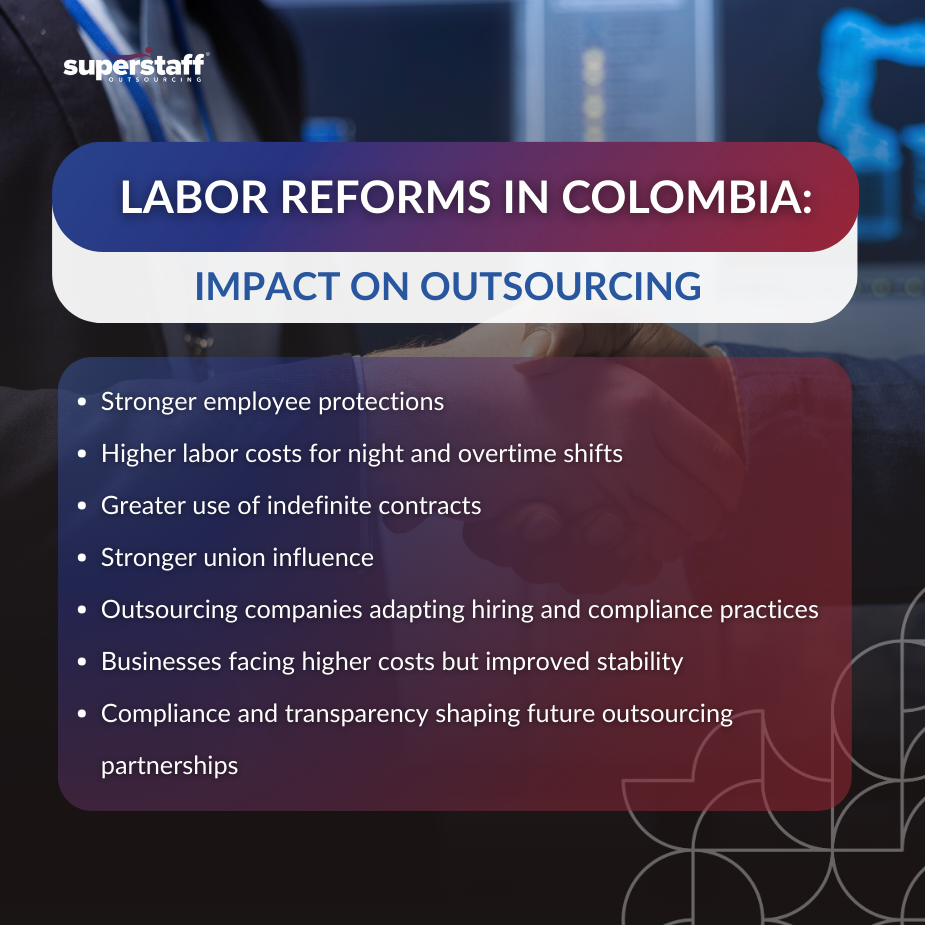
The outsourcing industry is one of the sectors most affected by these reforms. The impact of Colombia’s new labor laws on BPO sector is visible across operations, hiring, and client pricing.
1. Reviewing Cost Structures
The higher cost of compliance, overtime, and benefits is forcing BPO providers to adjust their pricing models. Some may need to renegotiate contracts with clients to ensure sustainable operations.
2. Adjusting Hiring Strategies
Companies must prioritize stable contracts over temporary ones. This affects how outsourcing firms recruit and manage their workforce, focusing on long-term retention instead of short-term staffing.
3. Revising Training Programs
To align with Colombia employment law, outsourcing providers are rolling out training programs on compliance, worker rights, and management practices. This reduces risks of violations and supports smoother operations.
4. Updating Technology Use
Automation tools and streamlined workflows are being adopted to minimize overtime costs. Companies see this as a way to maintain efficiency while meeting new labor rules.
5. Strengthening Client Communication
Outsourcing companies need to keep clients updated on how the reforma laboral en Colombia affects service delivery. Clear communication helps maintain trust and explains potential changes in cost or turnaround times.
What Outsourcing Clients Should Expect
Businesses that rely on outsourcing Colombia call center services and other BPO functions should also prepare for changes.
1. Potential Price Increases
As outsourcing providers adjust to higher costs, clients may see increased service prices. However, the trade-off is improved worker protections and long-term stability.
2. Higher Service Quality
With more stable contracts and greater worker protections, employees are likely to stay longer and perform better. This improves customer service and reduces turnover.
3. Compliance as a Priority
Clients can expect stricter compliance practices from providers. This helps ensure that services meet both local regulations and international standards.
4. Transparent Labor Practices
The reforma laboral en Colombia requires outsourcing firms to be more transparent in how they manage employees. Clients gain more visibility into labor practices and workforce stability.
5. Longer Contract Negotiations
With stronger union influence, negotiations may take longer. Businesses outsourcing to Colombia should plan ahead to allow more time for discussions and agreements.
Benefits and Challenges of the Reforms
The reforma laboral en Colombia brings both positive outcomes and obstacles for outsourcing firms and their clients.
1. Worker Stability
Longer contracts promote job security, which benefits both employees and employers in the long run.
2. Increased Costs
Higher wages, overtime, and benefits raise expenses. Outsourcing companies must find ways to balance these increases without losing competitiveness.
3. Stronger Reputation for Compliance
Businesses that adapt quickly will benefit from a stronger reputation as ethical and compliant employers.
4. Pressure on Smaller Firms
Smaller outsourcing providers may find it harder to absorb the new costs, creating pressure in the industry.
5. Better Employee Morale
Improved protections and fair treatment increase morale, leading to better performance in customer service and back-office roles.
Preparing for the Future of Outsourcing in Colombia
The reforma laboral en Colombia is reshaping the outsourcing landscape, but it also creates opportunities for growth. Companies that adapt early will stay ahead.
1. Building Long-Term Partnerships
Outsourcing relationships are shifting toward stability and sustainability. Businesses that value long-term collaboration will benefit the most.
2. Investing in Employee Development
With workers staying longer, investing in training and development becomes more valuable for employers.
3. Expanding Service Portfolios
Outsourcing providers may diversify services to offset increased labor costs. New offerings in tech support, finance, and healthcare are expected.
4. Leveraging Nearshore Advantages
Colombia’s geographic and cultural proximity to North America remains a strong advantage. Despite labor cost increases, nearshore outsourcing continues to be attractive.
5. Partnering with Reliable Providers
Companies outsourcing to Colombia should choose providers with strong compliance records and proven adaptability.
Strong Partnerships Build Stable Outcomes
The reforma laboral en Colombia highlights the importance of having reliable partners in outsourcing. As labor laws evolve, businesses need providers that understand compliance, workforce stability, and client success.
SuperStaff helps companies navigate these changes by offering outsourcing solutions that meet both local labor laws and international client needs. With a strong presence in Colombia and global experience, SuperStaff ensures compliance, quality service, and sustainable business partnerships.