IT expenses often put a heavy burden on companies. Between hiring full-time staff, purchasing hardware, and paying for emergency repairs, businesses can end up spending much more than they expect. Many organizations now use remote IT support services to control these costs. With this approach, companies reduce expenses, gain expert assistance, and keep systems reliable without maintaining a full in-house IT department. By adopting this model, businesses achieve real business IT cost reduction and direct more resources toward growth.
What Are Remote IT Support Services?
Remote IT support gives companies access to professional assistance for their technology needs without requiring an internal team to handle everything. Specialists connect securely to company systems and perform tasks such as monitoring, troubleshooting, and updating software from any location.
1. Help Desk and Troubleshooting
Remote teams provide quick solutions to everyday technical issues. This reduces downtime and allows employees to stay productive instead of waiting for in-person assistance.
2. System Monitoring
Continuous monitoring means potential issues are spotted and resolved before they disrupt operations. This prevents costly downtime and ensures smoother workflows.
3. Cybersecurity Support
Remote IT providers strengthen defenses against cyber threats. With updated security protocols, businesses can reduce risks of data breaches and maintain compliance with industry standards.
4. Software and Hardware Maintenance
Updates, patches, and maintenance tasks are handled regularly. Keeping systems updated avoids performance problems and unnecessary repair costs.
5. Network Support
Stable and reliable networks support both office-based and remote teams. This ensures that business communication and operations remain seamless.
Why Businesses Choose Remote IT Support
Companies are moving away from traditional in-house IT departments because remote solutions provide flexibility, affordability, and better results.
1. Lower Labor Costs
Hiring, training, and retaining IT employees is expensive. Remote IT support reduces staffing expenses while still providing access to skilled professionals.
2. Access to Specialists
Businesses of all sizes gain expertise across different areas such as cybersecurity, cloud systems, and network management.
3. Improved Efficiency
Faster response times mean fewer delays. Problems are solved quickly, reducing interruptions in operations.
4. Flexibility for Growth
Remote IT support services scale with the business. Companies can increase or reduce support levels as their needs change.
5. Predictable Expenses
Subscription or flat-rate pricing makes financial planning easier. Companies know exactly what they will spend each month.
How Remote IT Support Cuts Costs by Up to 50%
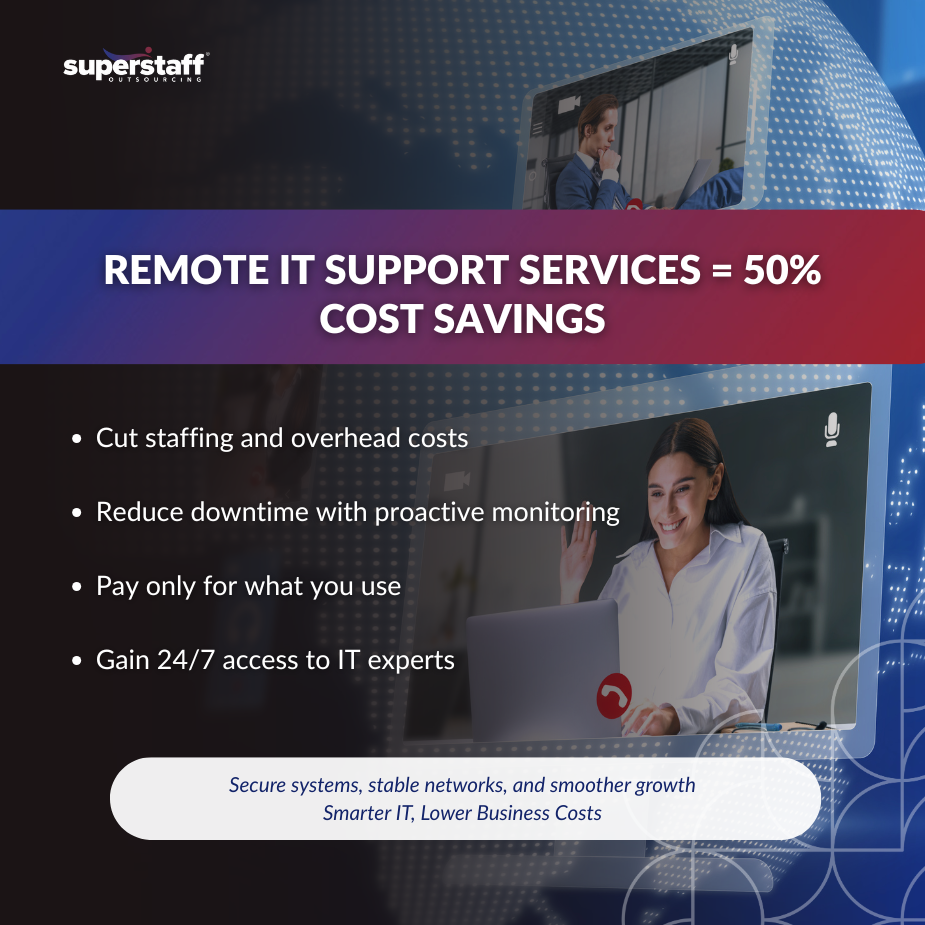
The cost savings from remote services can be substantial, often reaching up to half of what businesses would normally spend on IT.
1. Reduced Staffing Expenses
Companies no longer need to maintain a large IT department. Salaries, benefits, and training costs are significantly lowered.
2. Lower Overhead
Remote teams work off-site, eliminating the need for extra office space, equipment, or other resources for an in-house team.
3. Less Downtime
Proactive monitoring helps avoid outages. Every hour of downtime can cost a business money, so prevention directly reduces financial losses.
4. Affordable Subscription Plans
Instead of unpredictable repair costs, businesses pay set fees for ongoing support. This makes budgeting more stable.
5. Efficient Use of Resources
The money saved on IT can be redirected to marketing, operations, or other growth priorities. This is a clear example of how remote IT support services reduce business costs in both the short and long term.
Common Mistakes in Managing IT Costs
Many businesses overspend on IT because of poor planning or mismanagement.
1. Overstaffing IT Departments
Employing more IT staff than necessary leads to unnecessary expenses without improving performance.
2. Ignoring Regular Maintenance
Postponing updates and upgrades often results in larger, more expensive issues later on.
3. Paying for Unused Licenses
Businesses sometimes continue paying for software they no longer use. These hidden costs add up over time.
4. Mismanaging Security
Weak security can result in breaches. The costs of recovery, fines, and reputational damage are much higher than prevention.
5. Lack of Budget Planning
Without careful planning, IT expenses can grow unpredictably, leaving businesses unprepared for the impact.
Best Practices for Maximizing Savings
Applying the right strategies helps companies get the most from outsourced IT support.
1. Choose the Right Provider
It is important to partner with a provider that offers comprehensive services and proactive support, not just troubleshooting.
2. Define Clear SLAs
Service level agreements should set expectations for response times, system uptime, and security responsibilities.
3. Use Monitoring Tools
Real-time monitoring ensures that issues are detected early, which prevents them from escalating into costly disruptions.
4. Combine Remote and In-House Support
Some businesses benefit from a hybrid model where a small internal team handles daily tasks while remote experts manage advanced needs.
5. Conduct Regular IT Audits
Frequent reviews of IT expenses and systems help identify areas of waste and opportunities for savings.
Benefits of Remote IT Support Beyond Savings
While cost reduction is the primary motivation, remote IT support services deliver additional benefits. They provide stronger cybersecurity, 24/7 availability, access to advanced technologies, reliable disaster recovery options, and greater overall business continuity. These advantages improve the stability and reputation of the company.
Risks of Poor IT Cost Management
When businesses fail to manage IT expenses properly, they face significant risks. Costly downtime interrupts productivity, while security breaches may lead to fines and lost customer trust. Unexpected repair and replacement costs can strain budgets, and overall competitiveness in the market may suffer.
Long-Term Outlook for Businesses Using Remote IT Support
The future of IT is moving toward remote and hybrid models. More companies are choosing managed IT services for businesses because of their affordability and scalability. Cloud platforms make remote support even more efficient, while global operations benefit from round-the-clock coverage. Businesses that integrate proactive IT planning into their strategy will be better positioned for sustainable growth.
Smarter IT Support, Stronger Cost Savings
Remote IT support services are a practical way for businesses to reduce expenses, improve security, and plan for growth. Cutting costs by up to 50 percent is possible through lower staffing needs, less downtime, and predictable service models.
SuperStaff supports businesses with scalable back-office and IT solutions. By outsourcing IT support, companies can maintain compliance, reduce expenses, and stay focused on their core operations.
Understanding the value of remote IT support services allows businesses to control expenses and avoid financial risks. With professional guidance, clear agreements, and the right service provider, companies can build a cost-efficient IT structure that supports long-term growth.