
Teaching someone how to do a job is straightforward. Teaching someone how to treat a customer well is more complex. Many companies discover this gap only after customer complaints begin to surface. The difference lies in understanding the customer service golden rule and applying it consistently in real interactions.
Most training programs focus on accuracy, speed, and compliance. These are measurable and easy to track. However, customers remember how they were treated long after the issue is resolved. This is where the customer service golden rule becomes the true differentiator in customer-facing roles.
Skill Training Produces Competence
Training programs are designed to create competence. Agents learn systems, processes, and scripts quickly. Standard operating procedures guide most tasks.
This type of training produces predictable results. Teams can follow instructions and complete transactions efficiently. However, customers rarely judge service based only on task completion.
Competence is necessary, but it does not guarantee a positive experience shaped by the customer service golden rule.
Service Behavior Is Harder to Standardize
Customer conversations require judgment. They require tone. They require awareness of how the other person feels.
Scripts help, but they cannot anticipate every situation. Agents must listen carefully and respond with clarity and patience. These behaviors reflect the customer service golden rule in action.
This type of behavior cannot be memorized from a manual. It must be practiced and reinforced over time.
Understanding the Customer Service Golden Rule
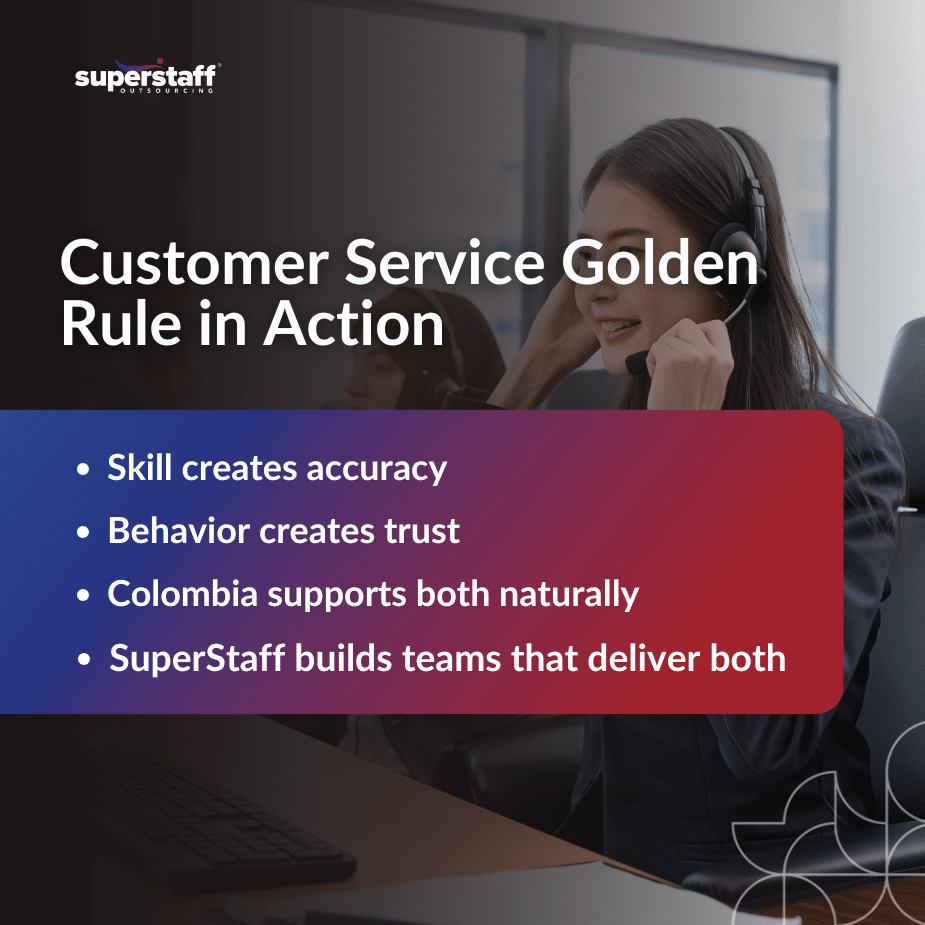
The customer service golden rule is simple in principle. Treat customers the way they want to be treated. In practice, this requires awareness and discipline.
Agents must listen actively. They must show ownership of the issue. They must communicate respectfully even under pressure.
Training for this rule involves developing habits, not just knowledge. It requires repeated coaching and feedback.
Why Some Locations Struggle With Service Mindset Training
Not all talent pools approach customer interactions the same way. Cultural differences influence communication styles and expectations.
Language fluency alone does not guarantee comfort in conversation. Service etiquette varies across regions. These gaps affect how naturally agents can apply the customer service golden rule.
This is why location matters when outsourcing customer-facing roles.
Colombia’s Cultural Alignment With U.S. Customers
Colombian professionals often communicate in a style familiar to U.S. customers. Their tone is warm, clear, and conversational. This makes interactions feel natural rather than scripted.
This alignment supports the customer service golden rule without forcing agents to adjust their personality. Customers feel heard and understood.
That familiarity reduces friction in conversations and builds comfort quickly.
How Training Programs in Colombia Reinforce Service Values
Training in Colombia combines technical instruction with behavioral coaching. Role plays and scenario exercises prepare agents for real conversations.
Supervisors provide feedback based on tone and clarity, not only accuracy. Quality monitoring focuses on how issues are handled, not just whether they are resolved.
This reinforces the customer service golden rule daily through practice and correction.
Live Customer Situations Demand Judgment
Real issues do not follow scripts. Customers call when they are confused, frustrated, or concerned. Agents must think independently.
They must reassure the customer. They must explain solutions clearly. They must decide when to escalate.
The customer service golden rule becomes the guide in these moments when decisions must be made quickly.
Why This Matters for Growing U.S. Companies
SMEs and midmarket firms rely heavily on customer loyalty. A single poor interaction can affect reviews and retention.
Good service protects brand reputation. Customers remember how they were treated more than how fast a task was completed.
Applying the customer service golden rule consistently strengthens trust and improves long-term loyalty.
Blending Skill and Service for Operational Stability
Teams that combine technical skill with service mindset reduce escalations. They resolve issues smoothly. Customers feel confident in the support they receive.
This balance improves efficiency while maintaining satisfaction. The customer service golden rule becomes part of daily operations rather than an abstract concept.
Colombia provides an environment where this balance is achievable at scale.
Service Mindset Reduces Escalations and Rework
When agents understand how to manage conversations properly, fewer issues require escalation. Customers feel confident that the person they are speaking to can help them.
Clear communication prevents misunderstandings. Proper tone diffuses frustration before it grows.
Following the customer service golden rule reduces repeat contacts and unnecessary workload for internal teams.
Customer Expectations Continue to Rise
U.S. customers expect clarity, patience, and professionalism in every interaction. They are quick to share feedback publicly when service falls short.
Meeting these expectations requires more than technical training. It requires agents who naturally understand how customers expect to be treated.
The customer service golden rule aligns directly with these expectations.
Why SuperStaff Builds Teams That Reflect This Approach
SuperStaff leverages Colombian talent for roles that require both competence and empathy. Training frameworks emphasize both skill and behavior equally.
Continuous coaching ensures agents apply the customer service golden rule consistently. Teams integrate smoothly with U.S. operations and reflect brand values accurately.
This results in reliable, customer-centered support that protects brand reputation.
That Highlights What Truly Matters
Training for tasks is straightforward. Training for behavior requires cultural alignment and thoughtful coaching. Colombia offers both, allowing teams to apply the customer service golden rule naturally in customer interactions.
SuperStaff builds customer-facing teams that reflect this balance, helping U.S. companies deliver consistent, respectful, and effective support.
Explore how SuperStaff can strengthen your customer operations with teams trained for both skill and service.