
Global companies want smoother, faster, and more cost-efficient operations. Many find that nearshoring logistics offers a steady way to support growth without long supply chain delays. Shorter routes, closer partners, and better communication help teams reduce risks and respond faster to demand changes. This approach also supports companies that want to scale into new regions while keeping operations manageable. As more businesses expand to cross-border markets, nearshoring logistics becomes a practical choice for meeting customer expectations, improving delivery times, and building stronger regional networks.
How Nearshoring Logistics Supports Growth
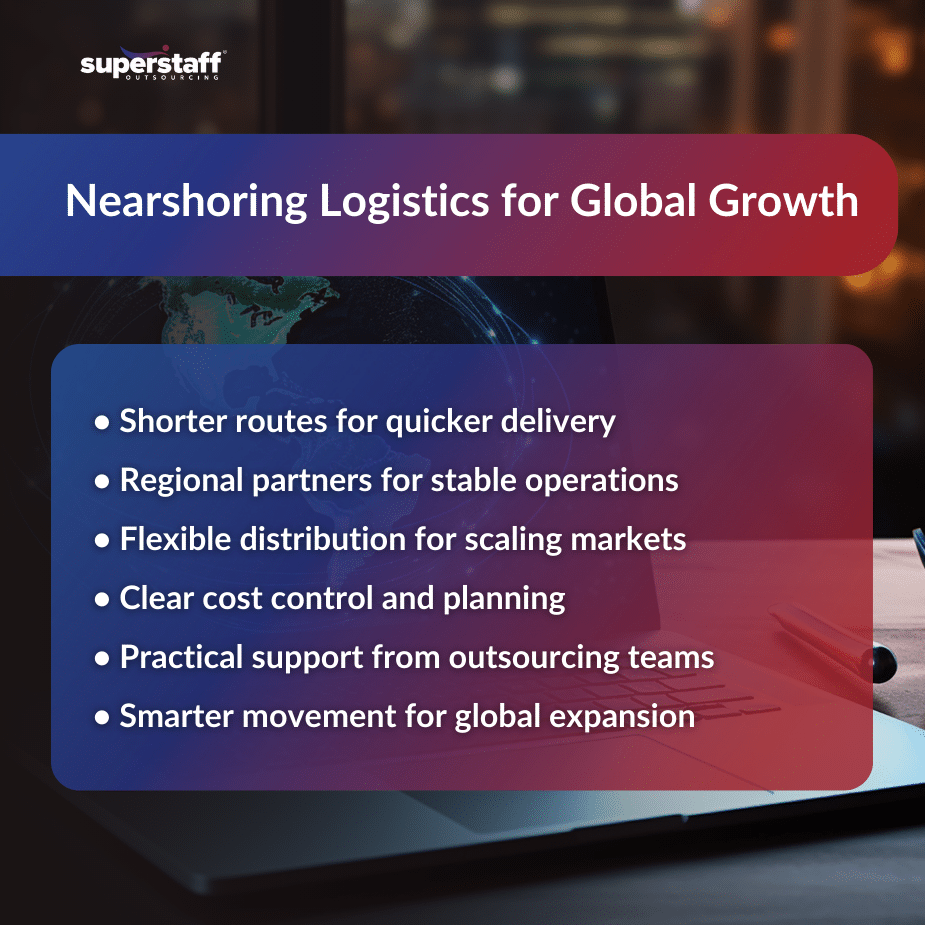
Nearshoring logistics creates a clear structure for global teams that want fewer delays and more control. The strategies below help companies build strong foundations for expansion.
1. Regional Production Planning
Regional production planning helps companies match supply with nearby demand. This keeps goods closer to customers and reduces long transport times. It also lowers the risk of interruptions that often happen with long supply chains.
2. Coordinated Cross Border Routing
Coordinated routing helps teams avoid bottlenecks and stay aligned with trade rules. Companies can plan routes that match their delivery targets and reduce unexpected delays.
3. Better Supplier Visibility
Working with regional suppliers improves communication and tracking. Teams can monitor shipments with less friction and respond to changes faster. This supports optimizing logistics for long term stability.
4. Balanced Inventory Controls
Nearshoring logistics makes it easier to review stock levels and adjust them based on nearby movement trends. This lowers storage costs and reduces overstock or shortage issues.
5. Stronger Collaboration with Local Partners
Local partners understand market behavior, pricing rules, and transport habits. They offer insights that help companies adjust strategies for each region.
Building Operational Strength with Nearshoring Logistics
This section focuses on steps that help companies make practical choices when launching or expanding nearshoring logistics programs.
1. Realistic Cost Evaluation
Companies should review transport fees, warehouse expenses, and labor costs in the chosen region. This step helps leaders understand the full impact of nearshoring logistics on long-term budgets.
2. Smooth Communication Processes
Teams can set up clear schedules for updates, routing changes, and delivery checks. Simple communication helps global teams stay aligned even with different time zones.
3. Reliable Compliance Planning
Border policies, trade documents, and customs procedures vary across regions. Reviewing these early reduces problems during shipment and improves movement speed.
4. Structured Performance Tracking
Tracking delivery times, error rates, and transport spend helps companies refine their nearshoring logistics strategy. Regular review keeps the process efficient.
5. Coordinated Support from Logistics Outsourcing Companies
Many global companies use logistics outsourcing companies to manage shipments, routing, support tasks, and reporting. These partners help teams access trained staff and well-maintained systems without needing an in-house setup.
Practical Nearshoring Logistics Strategies for Global Companies
Companies can use these steps to create systems that support steady expansion across regions.
1. Clear Market Targeting
Review demand in each region before moving operations. This ensures the nearshoring logistics setup matches customer volume and sales goals.
2. Flexible Distribution Models
Some companies use regional hubs while others use multi-point distribution. Both options help reduce long routes and offer faster fulfillment.
3. Consistent Quality Standards
Setting clear quality expectations for all suppliers ensures consistent results. This keeps products aligned with brand rules regardless of location.
4. Use of Short Route Transport Options
Shorter land or air routes allow quicker movement of items. This supports faster restocking and improves customer satisfaction.
5. Inventory and Delivery Synchronization
Syncing warehouse and distribution schedules across nearby regions helps teams maintain stock levels and avoid delivery conflicts.
Strengthening Global Expansion through Nearshoring Logistics
As companies grow across borders, planning becomes even more important. These steps support stronger long-term structures.
1. Practical Risk Management
Regional partners reduce the risk of long transport breakdowns. Companies also gain faster access to alternative routes during unexpected events.
2. Scalable Workforce Support
Nearshoring logistics often requires trained staff who can manage routing, fulfillment, and reporting tasks. Companies can work with outsourcing partners to scale teams based on demand.
3. Better Tracking of Regional Demand
Shorter supply chains make it easier to observe buying patterns. Companies can adjust production schedules and stock levels with a clear view of market behavior.
4. Smooth Technology Alignment
Shared systems for tracking, communication, and planning help each partner stay updated. This improves coordination across all locations.
5. Continuous Process Improvements
Teams can update routing plans, stock rules, and delivery workflows as the region grows. This creates a stable setup for long-term expansion.
More Ways Nearshoring Logistics Helps Global Operations
These additional strategies help strengthen outcomes for large and growing companies.
1. Practical Lead Time Management
Shorter distances make it easier to plan accurate delivery times. This improves customer confidence and reduces complaints.
2. Steady Supplier Relationships
Regional suppliers can respond faster and adapt to changes in demand. This allows companies to maintain smooth production schedules.
3. Lower Transport Risks
Shorter routes reduce the chances of damage, delays, or lost shipments. This supports a smoother supply chain at every stage.
4. Better Resource Allocation
Teams can assign people, tools, and budget to the right areas. This ensures operations run without unnecessary gaps.
5. Easier Market Expansion
Nearshoring logistics creates a clear pathway for entering nearby markets. Companies gain more flexibility to explore new regions.
Strong Logistics Support for Global Growth
Nearshoring logistics supports teams that want to scale without long and complicated supply chains. Many companies rely on strong partners to assist with planning, routing, fulfillment tasks, and regional support. The right structure creates stable movement, predictable timelines, and better customer service. Working with experts who understand border rules and regional transport can help companies build long-term success.
Smart Moves for Global Supply Success
Nearshoring logistics works as a practical method for smoother operations, shorter delivery times, and cost-efficient expansion. It also strengthens regional growth by creating predictable processes. SuperStaff provides trained support teams that help companies manage routing, order processing, shipment coordination, and other supply chain tasks. Reach out to us to build a strong and scalable logistics support system.