
U.S. insurance carriers are under growing pressure to operate efficiently while maintaining accuracy, compliance, and service quality. Administrative workloads continue to rise, yet internal teams are often stretched thin.
This is where insurance shared services offer a practical solution. By centralizing repeatable insurance functions in a nearshore location, carriers gain operational consistency without losing visibility or control.
Colombia has emerged as a strong contender for this model, especially for U.S. insurers seeking stability and scalability.
Why Insurance Operating Models Are Being Revisited
Insurance organizations are dealing with increasing claims volume, policy complexity, and regulatory scrutiny. Many carriers still rely on fragmented teams spread across departments and locations. This structure slows processing and increases operational risk.
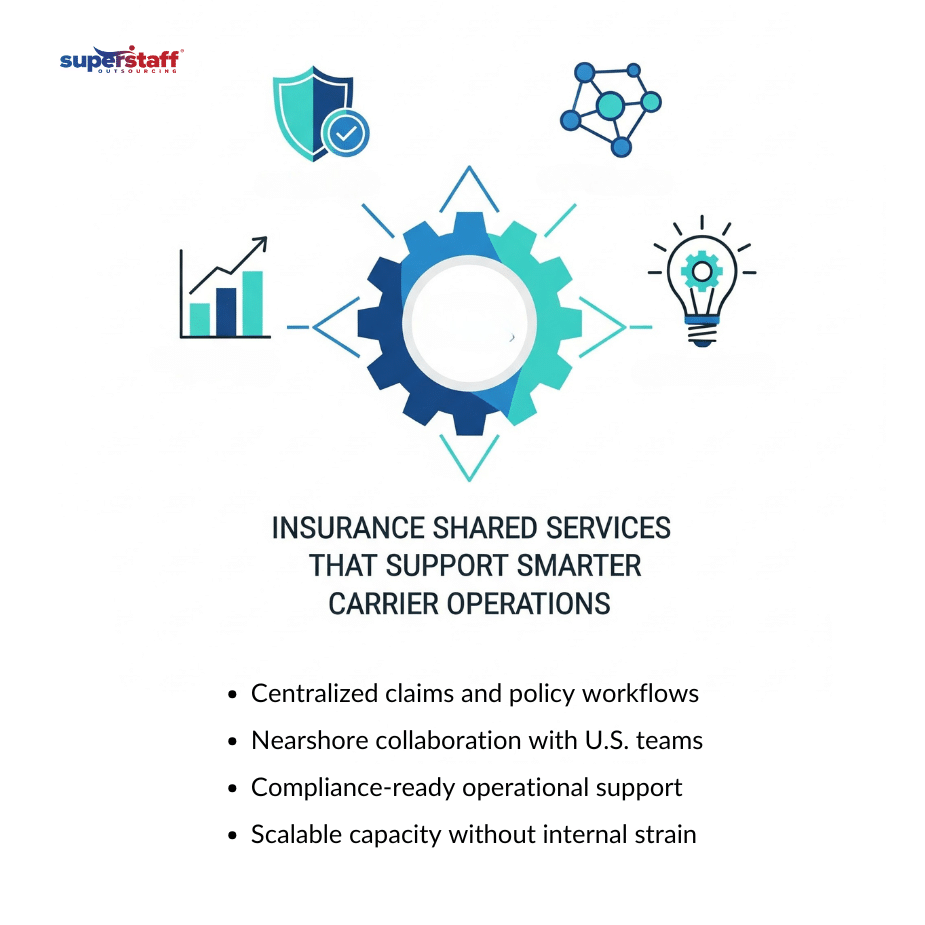
A shared services approach changes that structure. Insurance shared services consolidate core administrative tasks into a centralized delivery model. This allows carriers to standardize workflows, improve turnaround times, and reduce dependency on scarce domestic labor. For leadership teams, the benefit is not only efficiency but predictability.
Why Colombia Fits the Shared Services Model
Colombia offers a nearshore advantage that aligns well with U.S. insurance operations. Time zone alignment allows real-time collaboration between onshore leaders and offshore teams. Communication delays are reduced, and issues can be resolved within the same business day.
The country has developed a strong professional services workforce with experience in regulated industries. As a result, insurance shared services Colombia has become a practical option for carriers that require both operational discipline and adaptability. The model supports long-term continuity rather than short-term cost relief.
Claims Administration as a Core Use Case
Claims processing is one of the most resource-intensive areas in insurance operations. Intake, document validation, indexing, and follow-ups require accuracy and speed. When volumes spike, internal teams often struggle to keep pace.
Centralizing these activities through insurance shared services creates consistency. Offshore teams follow standardized procedures and service levels. This reduces backlog risk and improves claims cycle times. U.S. adjusters and managers gain breathing room to focus on complex decision-making instead of administrative tasks.
Policy Servicing and Back Office Support
Policy administration involves frequent updates, renewals, endorsements, and data checks. These tasks demand precision but are highly repeatable. When handled across disconnected teams, errors and delays become common.
Shared services teams support these workflows with structured processes and clear accountability. Insurance shared services help carriers maintain data integrity while improving throughput. The result is a more reliable policy lifecycle and a better experience for both agents and policyholders.
Supporting Compliance Without Losing Control
Compliance is non-negotiable in the insurance sector. Documentation, audit preparation, and reporting must meet strict internal and external requirements. Many carriers hesitate to offshore these tasks due to perceived risk.
When designed correctly, insurance outsourcing services can support compliance rather than weaken it. Colombia-based teams operate under defined controls, documentation standards, and escalation paths. U.S. leaders retain oversight while offloading time-consuming support activities that slow internal teams.
Talent Capabilities That Match Insurance Needs
Insurance shared services succeed or fail based on talent quality. Colombia’s workforce brings strong educational backgrounds, English proficiency, and experience in financial services environments. Many professionals are accustomed to structured workflows and performance metrics.
This talent profile supports the operational rigor required for insurance shared services. Teams adapt to carrier-specific systems and procedures while maintaining consistency across accounts. For U.S. carriers, this reduces training cycles and operational disruption.
Cost Predictability Without Quality Tradeoffs
Cost management remains a priority for insurance executives, especially in uncertain market conditions. However, savings alone do not justify a shift in operating model. Predictability matters more than short-term reductions.
Shared services in Colombia provide stable staffing costs and scalable capacity. Insurance shared services allow carriers to adjust team size based on volume without repeated hiring and layoffs. This creates budget clarity while maintaining service continuity across policy cycles.
Technology Alignment and Workflow Integration
Modern insurance operations rely on core platforms, document management systems, and workflow tools. Offshore teams must integrate seamlessly with these systems to be effective.
Colombia-based teams support the same platforms used by U.S. carriers. Clear role definitions and handoff points reduce friction. Through insurance shared services, offshore staff become an extension of the carrier’s internal operation rather than a disconnected vendor.
Scaling Operations Without Adding Risk
Growth introduces operational strain for insurance carriers. New products, expanded geographies, or sudden claims events can overwhelm internal teams. Scaling through domestic hiring is often slow and expensive.
Shared services provide a controlled path to growth. Insurance shared services in Colombia for U.S. carriers allow capacity to expand in measured increments. Leadership teams maintain governance while gaining the flexibility needed to respond to market shifts.
Governance as the Foundation of Long-Term Success
Strong governance separates successful shared services programs from failed experiments. Clear service levels, reporting cadence, and performance metrics keep teams aligned with carrier expectations.
Regular communication between U.S. leaders and offshore managers reinforces accountability. Insurance shared services perform best when treated as a long-term operating model rather than a temporary fix. This mindset drives continuous improvement and sustained value.
A Smarter Path Forward for U.S. Insurance Carriers
Insurance operations are becoming more complex, not less. Carriers that rely solely on traditional staffing models face rising costs and operational bottlenecks. Insurance shared services offer a smarter alternative by combining structure, scalability, and nearshore collaboration.
For U.S. carriers evaluating their next operating move, Colombia presents a compelling option. With the right partner, shared services deliver consistency without sacrificing control. SuperStaff helps insurance organizations design and manage offshore teams that align with U.S. standards, workflows, and business goals.
Explore how SuperStaff’s shared services expertise can support your insurance operations and help your teams operate with clarity, confidence, and control.