Healthcare has entered a new phase where distance no longer limits care. Clinics and hospitals now rely on telemedicine software to connect doctors and patients wherever they are. These tools help medical professionals manage consultations, patient records, and follow-ups through secure and easy-to-use platforms.
As more healthcare facilities adopt digital systems, choosing the right telemedicine software becomes important. Reliability, security, and convenience determine how well these tools support doctors and patients. Here are the must-have features of telemedicine software for clinics and hospitals that ensure quality care and seamless operations.
What Makes Telemedicine Software Reliable
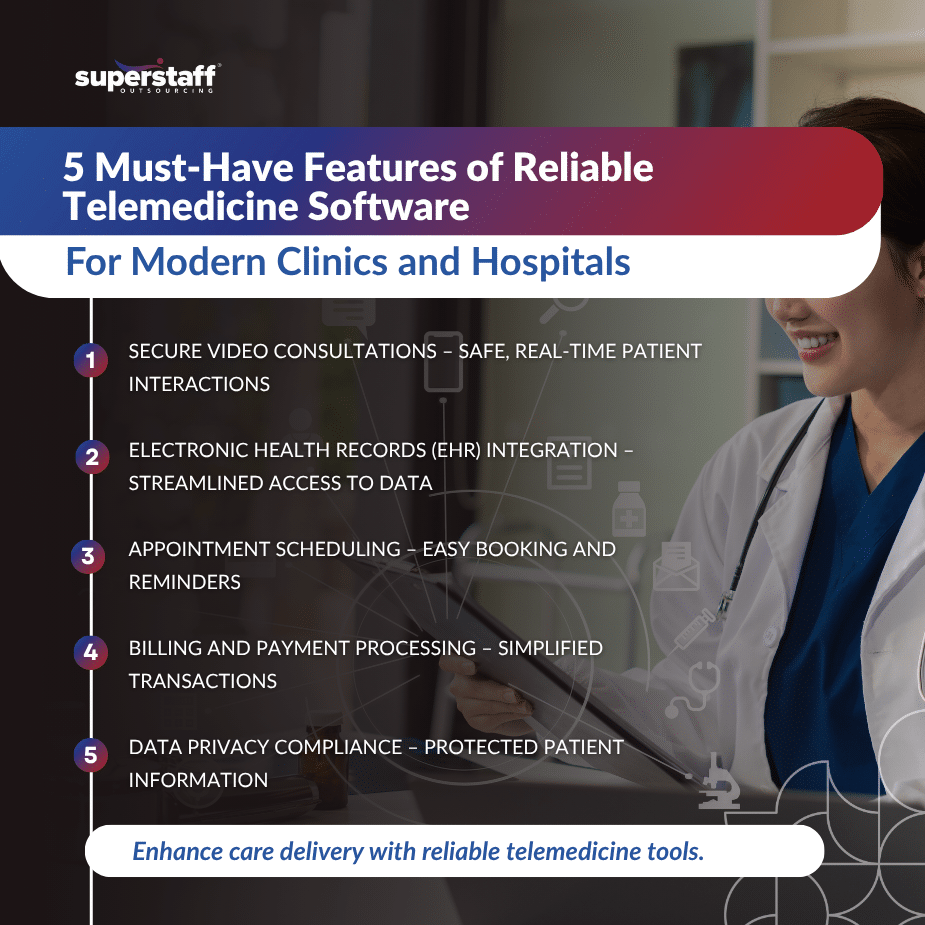
Before adopting a platform, healthcare administrators should understand what makes telemedicine software reliable. It must handle large volumes of patient data, enable real-time communication, and support consistent performance even during high usage.
Below are the five key features that define dependable and efficient telemedicine software for healthcare institutions.
1. Secure Patient Data Management
Data protection is one of the most important aspects of telemedicine software. Clinics and hospitals handle sensitive medical information daily, so strong security measures are essential.
- Encryption ensures all data shared during consultations stays private.
- Multi-level authentication protects access to patient records.
- Role-based permissions allow only authorized personnel to view or edit data.
By maintaining strict data controls, healthcare providers can reduce risks and build patient trust.
-
High-Quality Video and Audio Communication
Virtual consultations rely heavily on stable and clear video communication. Reliable telemedicine software should deliver uninterrupted sessions even when internet speeds vary.
Good video and audio quality help doctors assess patient symptoms accurately. Features such as:
- Real-time video streaming
- Noise reduction
- Adaptive quality control
Make the experience smoother for both sides. When healthcare professionals can see and hear patients clearly, they can make better medical judgments.
-
Integration with Scheduling and EHR Systems
Many healthcare institutions use multiple systems for patient management, appointments, and billing. Telemedicine software must integrate with these existing tools to prevent workflow disruptions.
Integrated scheduling and Electronic Health Records (EHR) allow seamless coordination between medical staff. It ensures that:
- Patient data updates automatically after each consultation.
- Appointment reminders are sent to patients without manual input.
- Doctors have full access to past medical histories during sessions.
This integration saves time, reduces administrative errors, and improves the quality of care.
-
Easy-to-Use Interface for Patients and Providers
Not all users are tech-savvy. Telemedicine software should have a simple layout that patients and healthcare workers can navigate easily. The goal is to make virtual care accessible to everyone.
A user-friendly interface includes:
- Simple login and scheduling options
- Clear call and chat buttons
- Easy upload of medical documents or lab results
When systems are easy to use, adoption rates improve among doctors, staff, and patients alike.
-
Scalability and Reliable Technical Support
As patient numbers grow, healthcare facilities need telemedicine software that can scale. The system should perform well whether it serves ten or a thousand users simultaneously.
Scalability helps clinics and hospitals manage peak consultation periods effectively. Technical support also plays a key role. A reliable software provider offers:
- 24/7 support channels
- Regular system updates
- Quick issue resolution
Having a dependable support team ensures minimal downtime and smooth operations.
Evaluating Telemedicine Software Options
Choosing the right telemedicine software requires understanding the unique needs of each healthcare organization. Factors such as budget, patient volume, and existing systems all influence the final choice.
Below are practical considerations to guide decision-makers.
-
Assess the Telemedicine Software Cost
Understanding the telemedicine software cost helps clinics and hospitals plan their budgets efficiently. Some providers offer subscription-based pricing, while others charge per consultation. Comparing pricing models ensures organizations choose an option that aligns with their financial capacity.
-
Review Compatibility with Existing Systems
Before implementation, confirm whether the telemedicine software works with the current patient management or billing systems. Compatibility prevents data duplication and ensures all information flows smoothly across departments.
-
Test Accessibility Across Devices
Healthcare workers and patients use different devices—desktops, tablets, and smartphones. The telemedicine software must operate effectively on all platforms. Mobile compatibility improves accessibility, especially for patients in remote areas.
-
Examine Data Privacy and Compliance
Reliability extends beyond function; it includes data compliance. A good telemedicine software provider follows global and local privacy standards. This helps clinics and hospitals avoid legal risks and ensures secure handling of medical records.
- Evaluate Technical Support and Training
Even advanced telehealth solutions require training. Providers should offer onboarding sessions for healthcare teams to help them maximize the software’s potential. Ongoing support ensures long-term success and minimizes downtime during system updates.
Benefits of Using Reliable Telemedicine Software
Reliable telemedicine software offers benefits that extend beyond convenience. It improves the way healthcare professionals and patients interact, manage data, and maintain continuous care.
Key benefits include:
- Reduced waiting time for patients
- Lower travel and facility costs
- Real-time access to health records
- Improved communication among care teams
- Easier coordination between in-house and outsourced medical support
For hospitals managing multiple locations, telemedicine bridges gaps between departments and ensures consistent service quality.
How Reliable Telemedicine Software Enhances Healthcare
When telemedicine software functions properly, healthcare delivery becomes faster and more inclusive. Patients can reach specialists without traveling long distances. Clinics can manage consultations, billing, and records in one unified system.
These platforms also help hospitals serve larger populations without increasing facility costs. Remote monitoring, automated reminders, and secure data sharing all contribute to more efficient operations.
Reliable systems also support healthcare outsourcing partnerships, allowing remote medical assistants and administrative teams to help with scheduling, documentation, and follow-up coordination.
The Future of Advanced Telehealth Solutions
The next generation of advanced telehealth solutions focuses on improving connectivity and expanding services. Integration with wearable devices, better analytics, and enhanced mobile access are becoming standard features.
As digital health continues to grow, clinics and hospitals must choose software that adapts to technological progress. Investing in reliable telemedicine software helps organizations remain ready for future demands while maintaining patient-centered care.
Smarter Tools for Connected Healthcare Delivery
Reliable telemedicine software supports clinics and hospitals in achieving efficiency, accuracy, and better patient outcomes. Choosing the right platform ensures smooth communication, secure data handling, and improved healthcare access for all.
If your organization wants to enhance virtual care operations, SuperStaff can help. Our outsourcing and healthcare support services integrate seamlessly with telemedicine systems to improve patient engagement and operational efficiency.
Call us now to learn how we can help your healthcare team implement dependable and scalable telemedicine solutions.