
Customers expect quick answers and clear solutions every time they contact support. Because of this, even small service gaps can lead to complaints or lost business. Many companies try to track performance while managing daily operations, yet consistency remains a challenge. This is where customer service QA becomes valuable. It helps teams review interactions, guide agents, and maintain service standards.
Colombia offers a strong option for businesses that want reliable support. With trained professionals and a growing outsourcing sector, companies can improve service quality without adding pressure to internal teams. As a result, customer service QA becomes easier to manage and scale.
Why Colombia Supports Strong Quality Assurance Results
Colombia continues to attract companies looking for stable outsourcing support. Its workforce and business environment make it a practical choice for structured quality programs.
1. Skilled Workforce with Industry Experience
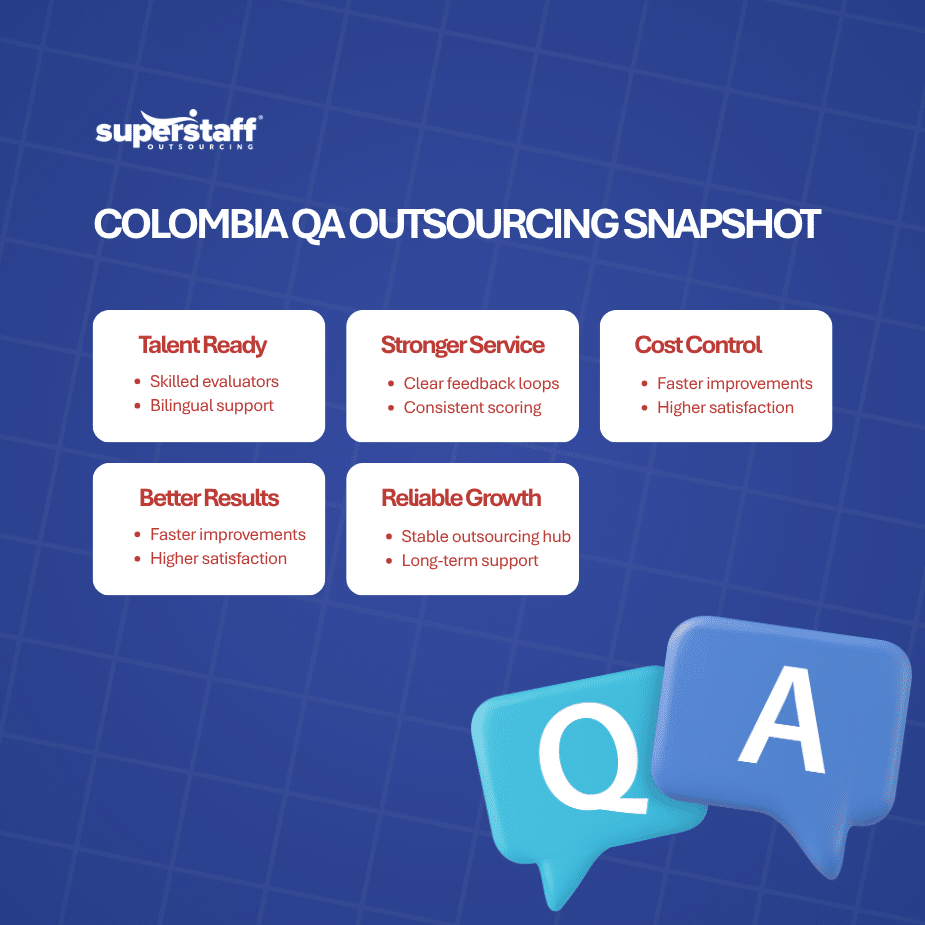
Colombia has a large pool of professionals trained in customer support and evaluation processes. Many QA analysts Colombia outsourcing teams already work with global companies, so they follow clear standards. Because of this, businesses can build customer service QA programs with less training time.
2. Strong Communication Skills
Clear communication improves how teams review and assess service quality. Since many professionals speak English and Spanish, evaluations can cover customer interactions across different markets. Businesses considering multilingual customer support can also use Colombia-based teams to support English- and Spanish-speaking customers while maintaining defined service standards.
3. Cost Efficiency Without Quality Loss
Companies need to manage costs while maintaining strong service. Colombia provides businesses with another option for controlling staffing and operating expenses. As a result, organizations can expand customer service QA efforts without relying only on larger internal teams.
4. Cultural Alignment with Western Markets
Understanding customer expectations is important for accurate evaluations. Colombia-based teams supporting U.S. companies can receive account-specific training on communication standards, brand tone, customer expectations, and service requirements.
5. Growing Outsourcing Sector
Colombia has developed a growing outsourcing industry that supports customer service and other business functions. This gives companies more options when building call center quality assurance Colombia teams for long-term operations.
Key Functions of Customer Service QA Teams
Quality teams play an active role in improving service performance. They review interactions, provide feedback, and support continuous improvement. Call center quality assurance commonly includes monitoring and evaluating calls, chats, and other customer interactions against defined service standards.
1. Call and Interaction Monitoring
Teams review calls, chats, and emails to check service quality. Through customer service quality monitoring Colombia, businesses can identify patterns and recurring concerns. This gives managers information they can use to adjust training and processes.
2. Scorecard Development and Tracking
Clear scorecards define what good service looks like. Customer service QA teams can establish evaluation criteria for communication, accuracy, resolution, policy adherence, and other service requirements. These tools provide a consistent framework for measuring agent performance.
3. Agent Coaching Support
Feedback should lead to clear action. Quality teams work with supervisors to identify coaching opportunities based on review results. Agents can then focus on specific areas that need improvement rather than receiving general feedback.
4. Compliance and Process Checks
Many industries follow specific rules, internal policies, and customer communication requirements. QA teams can review interactions to determine whether agents follow approved processes and scripts. This makes customer service QA an important part of operational oversight.
5. Reporting and Performance Insights
Quality reviews generate information that businesses can use to understand service performance. Reports can highlight recurring customer concerns, common agent errors, training needs, and areas where processes may need to change.
How Outsourcing Improves Quality Performance
Outsourcing gives businesses another way to build structured quality assurance operations without placing the entire workload on internal supervisors and managers.
1. Access to Dedicated Specialists
Outsourcing gives businesses access to professionals focused on quality evaluation. Companies exploring QA outsourcing services can assign defined quality assurance activities to dedicated teams while their internal employees focus on core responsibilities.
2. Scalable Operations
Business needs often change, especially during peak periods. Outsourcing allows companies to adjust support capacity based on interaction volume and operational requirements. This can keep quality reviews moving even when customer activity increases.
3. Faster Feedback Cycles
Timely feedback gives agents an opportunity to address performance issues sooner. Outsourced QA teams can review interactions according to an agreed schedule and provide findings to supervisors for coaching and follow-up.
4. Consistent Evaluation Standards
Consistency is important when multiple people evaluate customer interactions. Clear scorecards, calibration sessions, and documented criteria can keep evaluations aligned across QA analysts and teams.
5. Better Customer Experience
Quality monitoring can identify service issues that affect customer interactions. When companies use customer service QA findings to improve training and processes, agents receive clearer guidance on how to meet defined service expectations.
What to Look for in an Outsourcing Partner
Choosing the right provider supports long-term quality assurance goals. Businesses should consider the provider’s experience, processes, reporting capabilities, training methods, and ability to adapt to changing requirements.
- Proven experience in service evaluation
A strong partner should understand how to review customer interactions against defined quality standards and provide useful findings. - Transparent reporting systems
Regular reports give businesses visibility into agent performance, recurring concerns, quality scores, and areas that may need attention. - Flexible service models
Companies may need to adjust QA coverage as customer volumes, channels, and team sizes change. - Effective onboarding and training
QA analysts need to understand the client’s products, policies, brand standards, workflows, and evaluation criteria before reviewing interactions. - Commitment to continuous improvement
Quality assurance should not stop at identifying mistakes. QA findings should provide useful information for coaching, process updates, and service improvements.
Build Consistent Service Quality with Expert Support
Quality assurance can give businesses a clearer view of how their customer service teams perform and where improvements are needed. Colombia provides access to nearshore talent that can support monitoring, evaluation, reporting, and other customer service QA functions.
SuperStaff provides outsourcing solutions for companies that need trained customer service and quality assurance professionals. Businesses can build teams around their service channels, evaluation requirements, customer volumes, and performance goals.
If you want to strengthen your customer service QA program with a dedicated outsourcing team, contact SuperStaff to discuss your requirements and build a quality assurance approach that fits your customer service operations.