Customer concerns can become harder to manage when teams fail to respond on time. Delays may lead to repeated follow-ups, longer queues, and added pressure on internal staff. A clear ticket escalation process gives support teams defined steps for moving complex or urgent cases to the right person.
Colombia has become a practical nearshore location for businesses that need additional customer and technical support capacity. Outsourced teams can manage escalated cases, coordinate with internal specialists, and keep customers informed while a resolution is being worked on. With the right structure, companies can improve response times without placing the full workload on internal teams.
Why Businesses Improve Escalation with Colombia
Companies need skilled professionals who can recognize complex cases and follow defined procedures. Colombia offers access to customer service and technical support talent that can become part of a company’s wider support operation.
1. Skilled Support Professionals
Colombia has professionals with experience in customer service, help desk, and technical support roles. Companies considering customer support outsourcing in Colombia can build dedicated teams to handle customer inquiries, identify issues that require escalation, and coordinate cases with the appropriate internal specialists.
2. English and Spanish Support
Access to bilingual professionals can support companies serving both English- and Spanish-speaking customers. Clear communication is particularly important during escalations because customers may need updates while technical or account issues are being investigated.
3. Time Zone Alignment with North America
Colombia operates during hours that overlap with many U.S. businesses. This allows outsourced and internal teams to communicate during the same working day rather than waiting for another region to begin its shift.
4. Cost-Effective Operations
Outsourcing gives businesses another staffing option for managing customer support expenses. Instead of expanding every support function internally, companies can assign defined escalation activities to a dedicated nearshore team.
5. Scalable Support Capacity
Ticket volumes can change because of product launches, service disruptions, seasonal demand, or business growth. Outsourced teams give companies additional capacity to manage these changes without relying only on internal recruitment.
Key Features of Effective Escalation Handling
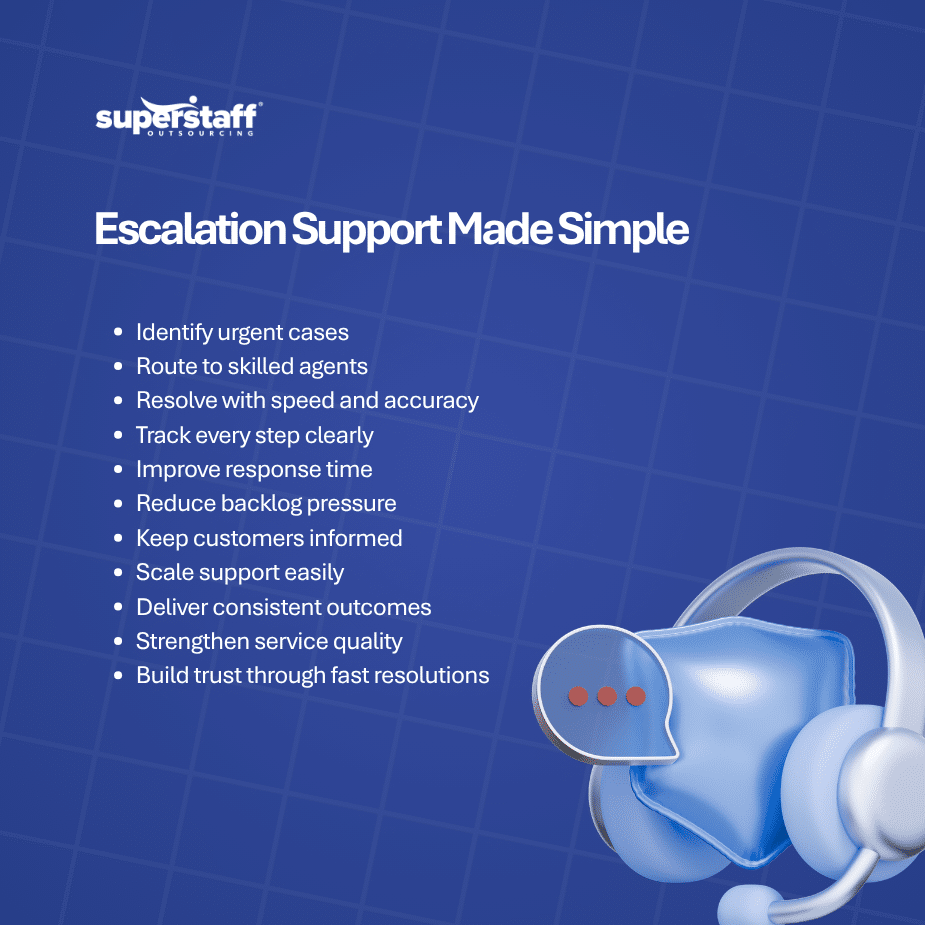
A structured approach reduces confusion when an agent cannot resolve a customer issue at the first level of support. Companies using outsourced help desk escalation Colombia services should define responsibilities, priorities, and communication requirements before operations begin.
1. Clear Escalation Paths
Teams need to know which issues they can resolve and which require additional expertise or authority. A structured ticket escalation process defines where different cases should go, reducing unnecessary transfers and delays.
2. Dedicated Escalation Teams
Specialized agents or support tiers can focus on complex and high-priority cases. This structure allows frontline agents to continue handling routine requests while experienced team members work on issues requiring additional investigation.
3. Real-Time Tracking and Updates
Support teams should track escalated cases from handoff through resolution. Customers can then receive relevant updates instead of having to contact the company repeatedly to ask about their case.
4. Defined Response and Resolution Targets
A service level agreement can define expected service levels and responsibilities between parties. In customer support operations, businesses can establish targets for response, escalation, follow-up, and resolution so teams have measurable standards for managing cases.
5. Continuous Performance Monitoring
Managers can track metrics such as escalation rate, response time, resolution time, reopen rate, and customer satisfaction. These results can identify recurring problems and areas where workflows or training need improvement.
How Colombia Supports High-Level Escalations
Some customer concerns require advanced technical knowledge, additional account permissions, or coordination between several departments. Colombia BPO for high-level customer support escalation can provide additional capacity for these cases.
1. Industry-Specific Training
Outsourced professionals can receive training based on the client’s industry, products, systems, and customer service requirements. This gives teams the context they need to identify issues and follow the correct procedures.
2. Scalable Support Operations
Businesses can adjust team capacity as support demand changes. Additional staffing can be useful during product launches, seasonal peaks, system changes, or unexpected increases in customer requests.
3. Integration with Existing Systems
Outsourced teams can work within approved ticketing, CRM, help desk, and communication platforms. Using the same systems allows internal and outsourced teams to share case information and maintain consistent records.
4. Remote Support Capabilities
Remote escalation handling services can extend support across locations without requiring every specialist to work from the same office. Businesses using technical support outsourcing can also assign defined troubleshooting and support responsibilities to trained external teams while maintaining escalation paths for issues that require additional expertise.
5. Customer Communication
Complex cases often take longer to resolve than routine requests. Support teams can keep customers informed about progress, expected next steps, and any additional information needed to continue investigating the issue.
Common Challenges and How Outsourcing Addresses Them
Managing escalations internally can place pressure on customer support teams, especially when ticket volume increases or cases require specialized knowledge.
- Limited internal resources
Companies may not have enough employees to manage both routine tickets and complex escalations. Outsourcing adds support capacity without requiring every role to be filled internally. - Slow response times
Large ticket queues can delay the initial review of escalated cases. Additional support capacity allows businesses to distribute workloads and prioritize urgent concerns. - Inconsistent handling of cases
Different agents may approach similar issues differently. Documented workflows, escalation criteria, and training create a more consistent ticket escalation process across the support operation. - Lack of specialized knowledge
Some cases require technical, billing, account, or product expertise. A tiered support model allows these cases to reach professionals with the required knowledge. - Poor communication with customers
Customers may become frustrated when they receive no information about an unresolved case. Defined communication procedures ensure agents know when and how to provide updates.
Build Stronger Support with the Right Partner
Choosing an outsourcing provider requires more than comparing staffing costs. Businesses should evaluate experience, training, reporting, technology, security, and the provider’s ability to work with existing support teams.
1. Choose Experienced Providers
Look for teams with relevant customer service, technical support, or help desk experience. Ask how they identify, document, transfer, and monitor escalated cases.
2. Set Clear Expectations
Define response times, priorities, escalation levels, ownership, and communication requirements before the team begins handling customer requests.
3. Monitor Performance Regularly
Review relevant KPIs and reports to understand how escalated cases are being managed. Metrics can reveal delays, recurring issues, and opportunities to improve agent training.
4. Focus on Long-Term Improvement
Escalation data can reveal problems that occur repeatedly. Businesses can use these findings to update documentation, improve products, refine workflows, or provide additional training.
5. Maintain Open Communication
Internal and outsourced teams need clear communication channels. Regular meetings and documented handoff procedures can prevent important case information from being lost during an escalation.
Reliable Escalation Support for Better Service
A well-managed ticket escalation process gives businesses a structured way to handle customer concerns that require additional expertise or attention. Colombia-based outsourcing teams can provide added support capacity while working within established service standards and internal workflows.
SuperStaff provides customer service and technical support outsourcing solutions for businesses that need flexible staffing and structured operations. Teams can support different levels of customer service based on a company’s workflows, systems, and escalation requirements.
If your company needs additional support for complex customer cases, contact SuperStaff to discuss an outsourcing team that fits your service requirements.