
Outsourcing helps businesses reduce costs, improve efficiency, and access skilled talent. However, many companies focus only on launching an outsourcing partnership and overlook what happens if they need to end it. While outsourcing relationships often start with clear goals, they may change over time due to shifting business needs, performance concerns, or company growth.
This is why an outsourcing exit strategy deserves attention from the beginning. Without a plan, businesses may face unexpected costs, service interruptions, and operational challenges. An outsourcing exit strategy provides a clear path for transitioning work, protecting data, and maintaining business continuity. As a result, organizations can make decisions with confidence while reducing risk if circumstances change.
Why Businesses Need an Exit Plan Before Outsourcing
Every outsourcing agreement eventually reaches a point where businesses must evaluate whether the partnership still supports their goals. Therefore, planning for that possibility early creates stability and flexibility.
1. Avoid Unexpected Transition Costs
Many companies underestimate the expenses involved in ending an outsourcing relationship. As a result, they may encounter contract termination fees, knowledge transfer costs, recruitment expenses, and technology migration charges.
When businesses prepare ahead of time, they can identify these costs and build them into their long-term plans. Consequently, they avoid financial surprises that can affect budgets and operations. Companies can also improve oversight by reviewing vendor responsibilities, contract terms, and performance expectations throughout the partnership. Vendor management outsourcing can help businesses understand the importance of organized vendor oversight.
2. Protect Business Continuity
Operations cannot stop simply because a vendor relationship ends. However, organizations without a transition plan often struggle to maintain service levels during the change.
A documented process helps teams transfer responsibilities smoothly. In addition, it reduces downtime and keeps customers, employees, and stakeholders supported throughout the transition. A well-developed business continuity plan can help organizations prepare for disruptions and maintain essential operations during unexpected changes.
3. Reduce Dependency on One Provider
Long-term outsourcing relationships sometimes create heavy dependence on a single vendor. Over time, important knowledge, systems, and processes may become concentrated within the provider’s team.
Therefore, businesses should establish procedures for documentation and knowledge sharing. This approach makes it easier to regain control if they decide to switch providers or bring operations back in-house. Reviewing different outsourcing solutions can also help businesses assess which functions to delegate and how to maintain control over their operations.
4. Strengthen Contract Negotiations
Companies that have a clear exit plan often negotiate stronger agreements. Since they understand potential transition challenges, they can address them during contract discussions.
For example, they may include provisions for knowledge transfer, data ownership, and transition support. As a result, they gain greater control over future decisions.
5. Support Business Flexibility
Markets change, customer needs evolve, and business priorities shift. Therefore, outsourcing arrangements that worked in the past may no longer align with future objectives.
An exit plan gives organizations the freedom to adapt without creating unnecessary disruption. Consequently, they can respond to new opportunities faster.
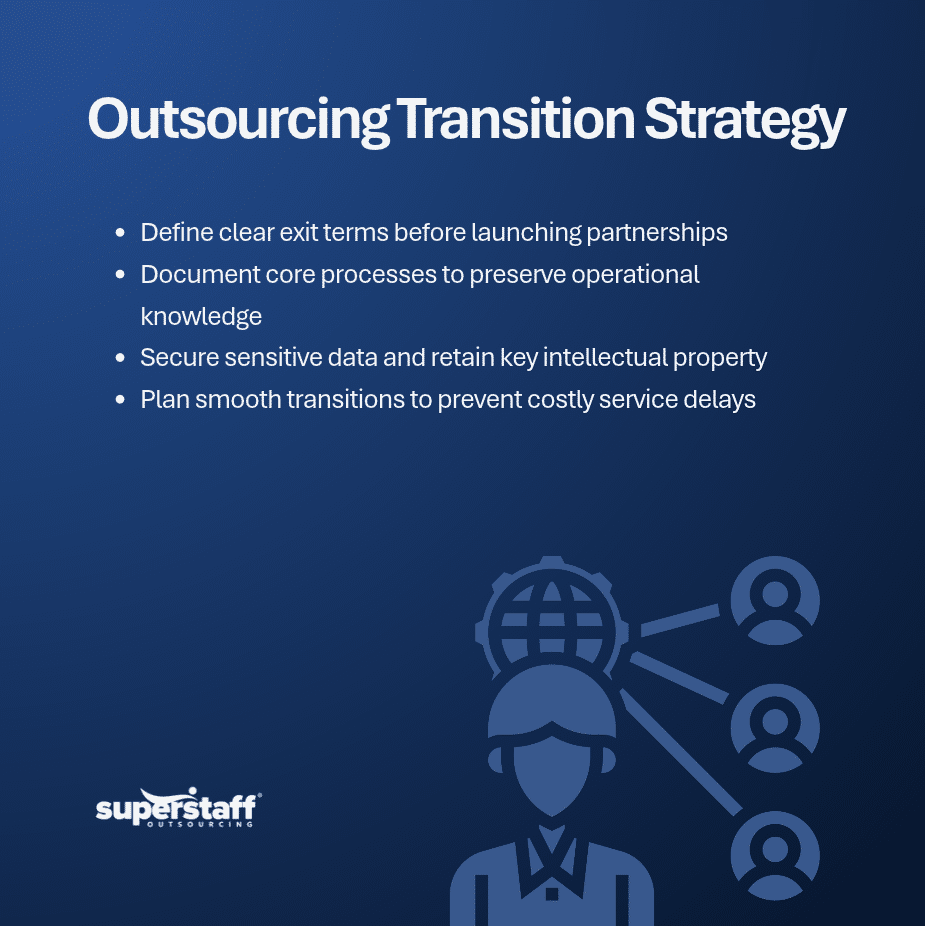
Risks of Operating Without an Exit Strategy
Businesses that ignore exit planning often discover the consequences when it is already too late. While outsourcing can deliver significant benefits, the absence of preparation creates several risks.
1. Loss of Critical Knowledge
When providers manage essential functions for years, valuable information can become difficult to recover. As a result, businesses may struggle to document workflows or train replacement teams.
Furthermore, knowledge gaps can slow operations and affect service quality after the transition.
2. Data Security Concerns
Data remains one of the most valuable business assets. However, companies without clear exit procedures may face uncertainty regarding data access, storage, and transfer.
An effective outsourcing exit strategy helps establish clear guidelines for handling sensitive information. Therefore, organizations reduce security risks during vendor transitions. The Federal Trade Commission’s cybersecurity guidance for small businesses provides advice on managing vendor-related security risks and protecting business data.
3. Operational Delays
Transitions require planning, coordination, and communication. Without a structured process, businesses often experience delays that affect productivity.
For example, teams may struggle to access systems, transfer responsibilities, or onboard new providers. Consequently, projects can fall behind schedule.
4. Customer Service Disruptions
Customers expect consistent service regardless of internal business changes. However, outsourcing transitions can affect response times, support quality, and customer satisfaction if not managed properly.
A planned approach helps maintain service continuity. As a result, businesses protect their reputation and customer relationships.
5. Increased Financial Risk
Unexpected costs often appear when companies rush through vendor transitions. Recruitment expenses, training costs, and emergency operational adjustments can quickly add up.
Therefore, organizations that prepare in advance can better manage transition expenses and maintain financial stability.
Building an Effective Outsourcing Exit Strategy
Creating a successful exit plan does not require complex processes. Instead, businesses should focus on practical steps that support long-term flexibility and risk management.
1. Define Exit Conditions Early
Organizations should identify situations that may require ending the partnership. These conditions may include performance issues, changing business goals, or contract expiration.
By establishing expectations early, both parties gain a clear understanding of future requirements.
2. Document Processes Regularly
Accurate documentation supports smooth transitions. Therefore, businesses should ensure that workflows, procedures, and operational guidelines remain updated throughout the partnership.
This practice makes knowledge transfer faster and more efficient when changes occur.
3. Clarify Data Ownership
Companies should clearly define who owns business data and how it will be returned at the end of the agreement.
In addition, contracts should outline timelines and security requirements for data transfers. This step helps prevent disputes and operational delays.
4. Plan Knowledge Transfer Activities
Knowledge transfer should not begin only when the contract ends. Instead, businesses should encourage ongoing documentation and training throughout the partnership.
As a result, critical information remains accessible regardless of staffing or vendor changes.
5. Review the Strategy Regularly
Business needs evolve over time. Therefore, organizations should review their outsourcing exit strategy periodically to ensure it remains relevant.
Regular reviews help businesses identify new risks, update transition procedures, and maintain preparedness for future changes.
Plan Ahead for a Stronger Future
Outsourcing partnerships can create significant value when managed effectively. However, every business should prepare for the possibility of change. A well-defined outsourcing exit strategy helps reduce financial risk, protect operations, secure business knowledge, and maintain service continuity.
SuperStaff offers outsourcing solutions that help organizations manage daily operations and adjust to changing business needs. If your company is launching a new outsourcing initiative or reviewing an existing partnership, contact SuperStaff to discuss your requirements and find a support arrangement that fits your business goals.