
Managing payroll across borders can be challenging for businesses with international employees and remote teams. Employers must consider different currencies, payment schedules, tax systems, employment arrangements, and labor regulations. A process that works for a local workforce may not be suitable for employees based in another country. Without proper planning, payroll mistakes can lead to delayed payments, compliance problems, and employee dissatisfaction.
Learning how to pay offshore team workers requires a clear understanding of local requirements and reliable payment systems. Businesses need to establish accurate payroll records, choose suitable payment methods, and make sure workers receive the correct compensation on time. With organized processes and the right support, companies can manage international payroll more efficiently while maintaining trust with their offshore teams.
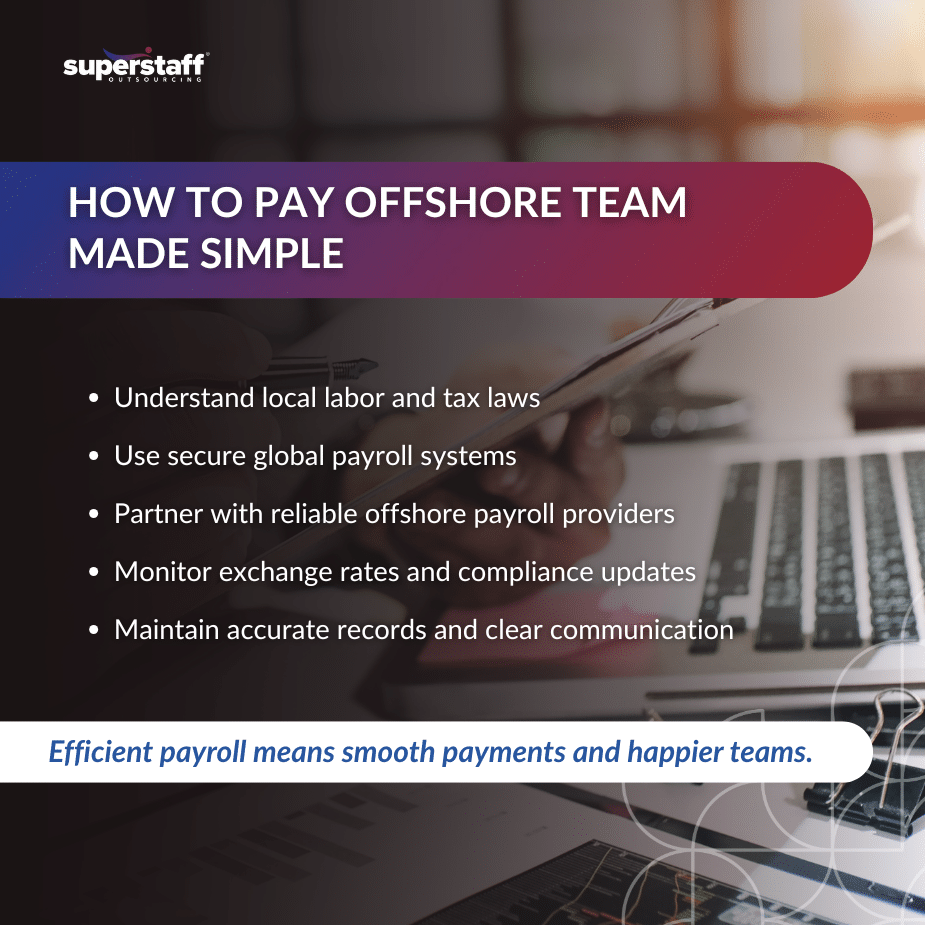
How to Pay Offshore Team Workers
Paying international employees involves more than transferring salaries to foreign bank accounts. Businesses must understand how employment arrangements, local regulations, and payment requirements affect payroll processing. These steps can help establish a reliable system for managing offshore compensation.
1. Research Local Labor and Tax Laws
Every country has its own employment regulations, minimum wage requirements, tax rates, and mandatory benefits. Businesses must understand these rules before hiring offshore employees.
For example, some countries require employers to contribute to social security programs, provide paid leave, or submit regular payroll reports to government agencies. Failing to meet these obligations can result in penalties and employment disputes.
2. Choose a Reliable Payment Method
Businesses can use international bank transfers, digital payment platforms, or global payroll providers to distribute salaries. Each option has different processing times, transaction fees, currency conversion rates, and security features.
Compare these factors before selecting a payment method. The right option should allow employees to receive their salaries consistently without unnecessary transaction costs.
3. Classify Workers Correctly
Determine whether offshore workers are employees or independent contractors before setting up payroll. This distinction affects tax responsibilities, employment benefits, reporting requirements, and contractual obligations.
A contractor arrangement should reflect the actual working relationship, not simply the label used in an agreement. Businesses that need to hire employees in another country without establishing a local entity may consider an Employer of Record arrangement.
4. Maintain Accurate Payroll Records
Keep complete records of employee information, agreed salaries, working hours, deductions, benefits, and payment dates. These details help payroll teams calculate compensation correctly and address questions about salary adjustments.
Organized documentation also makes it easier to review payroll history, prepare financial reports, and respond to compliance checks.
5. Plan for Currency Fluctuations
Exchange rates can change between payroll periods, affecting the amount employees receive in their local currency. Businesses should establish clear agreements about the currency used for salary calculations and who is responsible for conversion fees.
Using consistent payment dates and communicating exchange rate policies can prevent misunderstandings between employers and offshore workers.
Key Challenges in Paying Offshore Teams
Managing payroll across different countries introduces responsibilities that local payroll systems may not be designed to handle. Businesses need to recognize these challenges before expanding their international workforce.
1. Multiple Currency Conversions
Companies paying employees in different currencies must account for changing exchange rates and transfer fees. These differences can affect payroll budgets and the final amount deposited into employee accounts.
Using a consistent conversion policy helps businesses maintain predictable payroll expenses.
2. Compliance Risks
Employment and tax requirements vary by country. Businesses that overlook local withholding rules, statutory contributions, or reporting deadlines may face financial penalties.
Working with experienced payroll specialists can help companies understand these obligations and maintain proper documentation.
3. Delayed Transactions
International transfers may take longer than domestic payments because of banking procedures, intermediary institutions, and currency conversion requirements.
Businesses should account for processing times when scheduling payroll so employees receive their compensation on the agreed date.
4. Complex Tax Obligations
Each country has its own tax structure and reporting requirements. Employers may need to manage income tax withholding, employer contributions, social security payments, and other statutory deductions.
These responsibilities become harder to manage when a company employs workers across several jurisdictions.
5. Miscommunication About Compensation
Employees may have questions about salary adjustments, deductions, benefits, or payment schedules. Unclear payroll policies can lead to confusion and reduce employee confidence.
Providing accessible payroll information and a clear process for raising concerns helps maintain transparency.
Best Practices for Global Payroll Management
A consistent payroll process helps businesses manage international compensation while reducing administrative errors. The following practices can make payroll easier to monitor and maintain.
1. Partner With Payroll Experts
Working with experienced payroll professionals gives businesses access to people who understand payroll calculations, documentation, and compliance requirements.
Companies handling larger international teams may also benefit from global HR outsourcing support, particularly when payroll coordination is connected to employee records, benefits administration, and other HR responsibilities.
2. Standardize Payroll Policies
Create written policies covering pay periods, salary calculations, payment methods, deductions, and employee benefits. These guidelines should explain which procedures apply to all workers and which depend on local employment laws.
A consistent framework makes payroll easier to manage without assuming that every country follows the same rules.
3. Use Secure Payroll Platforms
Digital payroll systems help businesses calculate compensation, organize employee records, and monitor payment status. They can also reduce manual work by connecting timesheets, attendance information, and payroll data.
Choose platforms with appropriate access controls, data encryption, and audit records to protect sensitive employee information.
4. Conduct Regular Payroll Audits
Review payroll calculations, employee records, payment confirmations, and tax documentation regularly. Audits help identify duplicate payments, incorrect deductions, missing information, and processing errors before they create larger problems.
5. Monitor Changes in Local Regulations
Tax rates, employment requirements, and statutory benefits can change. Assign responsibility for monitoring these updates or work with local payroll professionals who can help identify changes that affect your workforce.
How Outsourcing Simplifies Offshore Payroll
Managing payroll internally can become difficult as a company hires more employees across different countries. Outsourcing certain administrative responsibilities gives businesses access to specialized support without requiring their internal HR and finance teams to handle every task.
The Internal Revenue Service explains that outsourcing payroll duties can help employers streamline operations and manage payroll tax administration. However, outsourcing does not automatically remove an employer’s legal responsibility for its tax obligations.
1. Reduced Administrative Work
Payroll teams handle recurring tasks such as collecting employee information, checking timesheets, updating records, and preparing payroll reports. Outsourcing administrative support allows internal employees to focus on financial planning, workforce management, and other responsibilities.
2. Fewer Processing Errors
Dedicated payroll specialists follow established procedures when reviewing compensation details and preparing payroll information. Their support can reduce errors caused by manual calculations, incomplete records, and inconsistent data.
3. Better Compliance Coordination
An experienced provider can help businesses organize payroll documentation, monitor deadlines, and coordinate with local specialists. For companies employing workers in multiple countries, this support can make compliance management more organized.
The exact responsibilities depend on the service agreement and employment arrangement, so businesses should clearly define which party handles tax filings, statutory payments, and reporting.
4. Consistent Payroll Reporting
Outsourced payroll teams can prepare regular reports covering salaries, deductions, payment status, and payroll expenses. These records help finance departments review compensation costs and identify discrepancies.
5. Flexible Support as Teams Grow
As a business hires more offshore employees, payroll volume increases. Outsourced support can help manage additional records and recurring administrative tasks without requiring immediate expansion of the internal payroll department.
Building a Reliable Offshore Payroll System
A reliable payroll system needs clear procedures, accurate records, and regular communication. Businesses should establish these processes before their international workforce becomes difficult to manage.
1. Set Clear Payment Schedules
Inform offshore employees about their pay periods, salary release dates, and expected processing times. If international bank transfers require additional time, explain this before the first payment.
Consistent schedules help employees plan their expenses and reduce unnecessary payroll inquiries.
2. Centralize Payroll Information
Use a central system to organize employee details, compensation agreements, working hours, and payment records. This gives authorized HR and finance personnel access to consistent information.
Businesses can maintain centralized oversight while still applying the local payroll requirements of each country.
3. Review Payroll Performance
Track processing time, payment accuracy, unresolved payroll concerns, and compliance deadlines. These measurements help businesses determine whether their current processes are working effectively.
Regular reviews also make it easier to identify areas that need additional attention.
4. Communicate Salary Details Clearly
Employees should understand their gross salary, deductions, benefits, and final take-home pay. Provide accessible payslips and clear explanations of any changes to compensation.
A reliable communication process helps prevent misunderstandings and supports employee confidence.
5. Evaluate Payroll Providers Regularly
Review your provider’s processing accuracy, reporting quality, data protection practices, and ability to meet agreed deadlines. As your workforce expands, make sure the provider can continue supporting your payroll requirements.
Choosing the Right Global Employment and Payroll Arrangement
The best way to pay offshore workers depends on how your business hires and manages them. Companies should understand the available arrangements before choosing a payroll solution.
1. Direct Employment Through a Local Entity
Businesses with an established legal entity in the employee’s country can usually manage payroll through local systems. This arrangement provides direct control over employment agreements, compensation, and workforce administration.
However, maintaining a local entity requires additional administrative work and compliance responsibilities.
2. Independent Contractor Payments
Companies working with genuine independent contractors can use agreed payment schedules and international transfer methods. Contracts should clearly state payment terms, responsibilities, and service arrangements.
Businesses must still review local classification rules to avoid treating employees as contractors incorrectly.
3. Employer of Record Services
An Employer of Record (EOR) legally employs workers on behalf of another company in a particular country, subject to local laws and the service agreement. The EOR generally handles employment contracts, payroll processing, tax filings, and statutory benefits.
For companies hiring internationally without setting up local entities, SuperStaff’s global Employer of Record and payroll services provide support for international employment, payroll administration, and local compliance.
4. Outsourced Payroll Administration
Some businesses already have the correct employment arrangements but need help managing recurring payroll tasks. In these cases, external specialists can support timesheet checks, employee record updates, payroll data preparation, and reporting.
This arrangement allows the company to retain control over employment decisions while reducing administrative work.
Ensure Smooth Payments and Strong Offshore Teams
Managing global payroll requires more than choosing a payment platform. Businesses must understand local employment laws, classify workers correctly, maintain accurate records, and establish clear payment schedules. These responsibilities become increasingly important as companies expand their offshore workforce.
With organized systems and reliable support, businesses can reduce payroll errors, improve payment consistency, and maintain better communication with international employees. Choosing the right employment and payroll arrangement also helps companies manage their responsibilities as their teams grow.
SuperStaff helps businesses manage international workforce requirements through offshore staffing and Employer of Record services. From employment documentation and payroll processing to local compliance support, the right arrangement can reduce administrative pressure and make global workforce management easier.
If your company is planning to hire or manage offshore workers, contact SuperStaff to discuss your workforce requirements and find a suitable global employment support arrangement.