Building a finance career takes time, practical experience, and access to the right opportunities. Working with international accounting teams can help professionals develop their skills while handling financial tasks for clients across different industries. Getting hired by offshore accountant experts can also provide exposure to global business practices, accounting software, and financial reporting requirements.
Offshore accounting firms may offer structured roles, professional guidance, and opportunities to work with experienced finance teams. These environments can help accountants strengthen their technical knowledge, improve communication skills, and understand how financial operations work across different markets. With the right experience and continued learning, professionals can prepare for more advanced responsibilities in accounting and finance.
The Value of Getting Hired by Offshore Accountant Experts
Working with an offshore accounting firm can expose finance professionals to different clients, systems, and business practices. These opportunities help employees understand how accounting functions support companies across various industries.
1. Access to Global Experience
Professionals who join offshore accounting teams may handle financial records, reconciliations, reporting, and other tasks for international clients. This experience helps them understand different business requirements and develop a broader view of accounting operations.
Working with international teams can also improve their ability to follow client instructions, meet reporting deadlines, and maintain accurate financial records. These skills can be useful when applying for future roles with multinational companies or accounting firms.
The demand for qualified accounting professionals also creates opportunities for offshore teams. SuperStaff discusses this workforce need in its article on bridging the accounting talent shortage through offshore teams in the Philippines.
2. Structured Training and Mentorship
Some offshore accounting firms provide training to help employees understand client requirements, internal procedures, and accounting systems. New hires may receive guidance from senior accountants, team leaders, or managers as they learn their responsibilities.
This support can help employees improve their work and understand areas that need further development. Regular feedback also gives them a clearer idea of how to prepare for more complex accounting tasks.
3. Exposure to Accounting Tools
International accounting teams often use digital platforms to manage bookkeeping, payroll, financial reporting, and reconciliations. Employees may gain experience with tools such as QuickBooks, Xero, and SAP, depending on the company’s systems and client requirements.
Learning these platforms can improve efficiency and help accountants become familiar with technology used in modern finance departments. It also gives them practical experience they can highlight when applying for other finance positions.
4. Professional Networking
Working with colleagues, managers, and clients from different locations can help accountants build professional connections. These relationships may provide opportunities to learn from experienced professionals and understand different approaches to financial work.
Strong working relationships can also support collaboration and communication. Over time, these connections may help professionals learn about new roles, industry developments, and career opportunities.
5. Clearer Career Development Opportunities
Some offshore firms have defined roles and performance review processes that help employees understand what they need to improve before taking on additional responsibilities. Accountants may progress from entry-level tasks to more specialized work as they gain experience.
Career progression depends on performance, qualifications, available positions, and business needs. Employees who continue developing their skills can improve their readiness for senior accounting, team leadership, or supervisory roles.
Skills That Help Accountants Succeed in Offshore Roles
Offshore accounting positions require more than basic knowledge of financial records. Employees need technical ability, attention to detail, and the communication skills to work with clients and colleagues in different locations.
1. Accounting and Financial Reporting Knowledge
A strong understanding of bookkeeping, reconciliations, financial statements, accounts payable, and accounts receivable provides a useful foundation. These skills help accountants complete routine tasks and understand how individual transactions affect financial records.
Professionals should also learn how to review reports, identify inconsistencies, and document financial activities. These responsibilities require accuracy and a clear understanding of accounting procedures.
2. Software and Digital Skills
Familiarity with accounting platforms can help candidates prepare for offshore finance roles. QuickBooks and Xero are commonly used for bookkeeping and financial management, while larger organizations may use enterprise resource planning systems such as SAP.
Accountants should also be comfortable using spreadsheets, shared documents, and communication platforms. These tools support daily work, reporting, and coordination with remote teams.
3. Communication and Problem-Solving
Offshore accountants often need to explain financial information, ask questions about unclear transactions, and provide updates on completed work. Clear written communication helps prevent misunderstandings, especially when working with clients in different time zones.
Problem-solving is equally important. Accountants should be able to investigate discrepancies, review supporting documents, and identify possible causes before raising concerns with their managers.
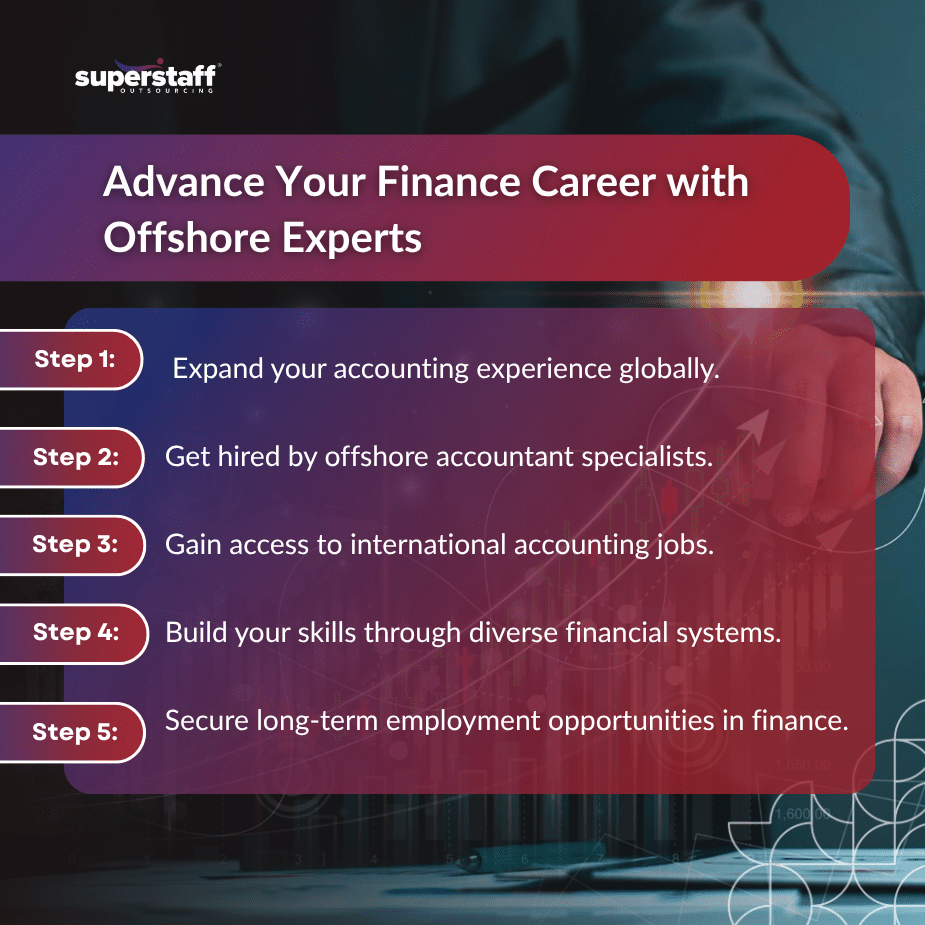
How to Advance Your Finance Career With Offshore Accounting Firms
Getting hired by offshore accountant experts can help professionals build experience, but career development requires consistent effort. Employees should look for ways to improve their technical knowledge and take on responsibilities that match their growing skills.
1. Develop Knowledge of International Standards
Working with international clients may expose accountants to different financial reporting and compliance requirements. Understanding these differences helps professionals adjust to client procedures and complete assigned work more accurately.
Accountants should continue studying the standards and regulations relevant to their roles. The International Federation of Accountants explains the importance of continuing professional development in its International Education Standard on Continuing Professional Development. Ongoing learning helps finance professionals maintain and improve their professional competence.
2. Improve Technical Skills
Employees should build on their existing accounting knowledge by learning new systems and improving their ability to analyze financial information. They can also develop skills in financial reporting, tax preparation, payroll, and account reconciliation based on their career goals.
Practical experience is important because it allows accountants to apply what they learn to actual work requirements. Taking on more complex assignments can help them prepare for specialized roles.
3. Build Cross-Cultural Communication Skills
Working with international clients requires professionals to adjust to different communication styles and business practices. Accountants should provide clear updates, follow agreed schedules, and ask questions when instructions need clarification.
Understanding time zone differences and client expectations can also improve teamwork. These habits help employees build trust and work more effectively with colleagues in other locations.
4. Take on Greater Responsibilities
Accountants can prepare for career advancement by volunteering for tasks that expand their experience. This may include reviewing financial reports, helping with month-end closing, assisting with audits, or supporting process improvements.
Taking on additional responsibilities gives employees a better understanding of how accounting teams operate. It can also help managers assess their readiness for senior or supervisory positions.
5. Continue Professional Development
Professional development should remain part of an accountant’s career plan. Employees can attend relevant training sessions, pursue certifications, join professional organizations, and study updates related to their area of practice.
The right learning activities depend on a person’s current role and long-term goals. Regular skill assessments can help identify knowledge gaps and guide decisions about future training.
Key Benefits of Being Hired by Offshore Accountant Experts
Working with an offshore accounting firm can provide benefits that support professional development and career planning. The experience may vary by employer, role, and employment arrangement, so candidates should review each opportunity carefully.
1. Competitive Compensation Opportunities
Some offshore accounting positions offer compensation based on experience, qualifications, responsibilities, and market conditions. Candidates should compare salary offers with the required skills, work schedule, benefits, and opportunities for advancement.
Understanding the full employment package helps professionals assess whether a position meets their financial and career goals.
2. Continued Learning
Employees may gain access to internal training, mentoring, and practical learning opportunities. These programs can help them become familiar with new accounting systems, client procedures, and reporting requirements.
Professionals should take an active role in identifying training that supports their career plans. Applying new knowledge to daily tasks can also improve work quality and confidence.
3. Opportunities for Promotion
Performance reviews can help employees understand their strengths and areas for improvement. Some firms use these assessments to identify employees who are ready for more complex assignments or leadership responsibilities.
Promotion opportunities depend on business needs and available positions. Consistent performance, technical knowledge, and the ability to support other team members can help employees prepare for advancement.
4. Experience Across Different Industries
Offshore accounting professionals may support clients from industries such as retail, healthcare, technology, and professional services. Each sector can have different reporting needs, transaction types, and financial processes.
This experience can help accountants understand how finance teams support different business operations. It may also help them identify a field in which they want to specialize.
5. Professional Credibility
Experience with international clients can strengthen an accountant’s professional profile. It shows familiarity with remote collaboration, digital accounting systems, and financial work performed for businesses in other markets.
However, international exposure does not replace formal qualifications or professional licensing requirements. Accountants should continue meeting the standards required for the positions and locations where they intend to work.
Best Practices for Success in Offshore Accounting Careers
A successful offshore accounting career requires reliable work habits and a willingness to keep learning. Employees should focus on accuracy, communication, and organization to meet the expectations of their teams and clients.
1. Communicate Clearly
Provide regular updates and ask questions when financial records or instructions are unclear. Clear communication helps prevent mistakes and allows managers to address issues before they affect reporting deadlines.
2. Stay Updated on Relevant Standards
Accounting rules, tax requirements, and reporting procedures can change. Professionals should follow updates that apply to their assigned clients and responsibilities instead of relying only on what they learned during initial training.
3. Manage Time Effectively
Working with clients in different time zones requires careful planning. Accountants should organize their tasks, monitor deadlines, and communicate early when additional information is needed to complete an assignment.
4. Check Work for Accuracy
Financial reports and records must be reviewed carefully before submission. Accountants should verify figures, supporting documents, account classifications, and calculations to reduce errors and maintain reliable records.
5. Use Feedback to Improve
Feedback from managers and colleagues can help employees identify weaknesses in their work. Applying suggestions, reviewing past mistakes, and asking for guidance can improve performance over time.
How Offshore Employment Supports Long-Term Career Growth
Offshore accounting experience can contribute to long-term development when employees use each role to build relevant knowledge and practical skills. It can also help them understand different finance functions before choosing a specialization.
1. Build a Strong Professional Foundation
Working on bookkeeping, reporting, reconciliations, and other accounting tasks helps professionals develop a broader understanding of financial operations. This foundation can prepare them for more specialized responsibilities as they gain experience.
2. Explore Different Accounting Specializations
Accountants can use their experience to identify areas that match their interests and strengths. Possible paths include tax accounting, payroll, financial reporting, accounts payable, accounts receivable, auditing support, and financial analysis.
Learning about these areas can help professionals make informed decisions about future training and job applications.
3. Prepare for Leadership Roles
Experienced accountants may eventually take on responsibilities such as reviewing work, training new employees, coordinating assignments, or monitoring team performance. These duties help develop the management skills needed for supervisory positions.
Professionals interested in leadership should also improve their communication, decision-making, and problem-solving abilities.
4. Maintain Professional Competence
Career development does not end after securing a position. Accountants need to keep their knowledge current as financial systems, reporting practices, and business requirements change.
Regular training and practical experience help professionals remain prepared for new responsibilities and future employment opportunities.
Finding Accounting Roles That Match Your Skills
Not every finance position requires the same level of experience or technical knowledge. Candidates should review job descriptions carefully and compare the required qualifications with their current skills before applying.
1. Identify Your Area of Expertise
Start by listing your accounting experience, software knowledge, certifications, and areas of specialization. This helps you identify positions that match your current abilities, whether in bookkeeping, payroll, financial reporting, or general accounting.
2. Review Job Requirements
Check the responsibilities, work schedule, experience requirements, and technical skills listed in each vacancy. Some positions may require knowledge of specific accounting systems, while others may focus on financial analysis or client reporting.
3. Prepare for the Application Process
Update your resume with relevant responsibilities and measurable achievements. Prepare examples that show how you handled reconciliations, improved reporting accuracy, managed deadlines, or resolved accounting discrepancies.
4. Research Potential Employers
Review the company’s services, work environment, training opportunities, and employee policies. Look for clear information about compensation, benefits, working hours, and career development before accepting an offer.
Your Gateway to Global Finance Opportunities
Getting hired by offshore accountant experts can help finance professionals gain international work experience, improve their technical skills, and explore different career paths. However, long-term progress depends on continued learning, reliable performance, and the ability to adapt to changing accounting requirements.
SuperStaff works with finance and accounting professionals as part of its offshore operations. Its accounting support services cover functions such as bookkeeping, payroll, reconciliations, and financial reporting. Professionals interested in joining the company can review its career opportunities and check available positions that match their qualifications.
Take time to assess each opportunity and choose a role that supports your experience and career goals. With the right position and a commitment to professional development, you can build the skills needed for long-term growth in finance.