The demand for architectural work continues to grow as construction, development, and renovation projects move forward. Many firms must produce more drawings, 3D models, technical documents, and revisions while working with shorter deadlines. These demands can stretch internal teams, especially when several projects require attention at the same time. Architecture outsourcing gives firms another way to manage production workloads and maintain progress without relying entirely on additional in-house hires.
By assigning selected drafting, modeling, and documentation tasks to external professionals, firms can increase their production capacity and give internal architects more time for design decisions, client communication, and project oversight. A clear outsourcing arrangement also helps teams organize responsibilities, manage revisions, and maintain consistent work standards. The right approach depends on the project scope, required skills, and level of coordination between internal and external teams.
A Clear Look at Architecture Outsourcing
Architecture outsourcing allows firms to assign selected production tasks to external specialists. These tasks may include CAD drafting, 3D modeling, BIM support, drawing updates, and technical documentation. The in-house team remains responsible for design direction, approvals, and other decisions that require direct project knowledge.
This arrangement can help firms manage changing workloads without going through a full recruitment process every time project demand increases. It can also provide access to skills that may not be available within the existing team.
1. What Architecture Outsourcing Provides
Architecture outsourcing gives firms additional production support for drawings, models, and project documents. External specialists work from approved plans, markups, specifications, and instructions provided by the in-house team.
Clear task assignments help ensure that outsourced work follows the project’s requirements. Firms should also establish review procedures so that completed files are checked before they move to the next project stage.
2. Why Firms Adopt This Approach
Some architecture firms experience uneven workloads. They may have enough employees during slower periods but struggle to complete deliverables when several projects reach important design or documentation stages at once.
Outsourcing provides a flexible way to handle these changes. Firms can assign suitable tasks externally while keeping project leadership and client relationships within their internal teams.
3. Faster Access to Production Support
Recruiting and training new employees can take time, particularly when a firm needs people with specific software or technical skills. Working with an external provider may help firms access additional production support without managing every stage of recruitment themselves.
The arrangement should still include proper onboarding, software orientation, and project-specific instructions. These steps help external specialists understand file standards, drawing conventions, and approval procedures.
4. Support for Detailed Production Tasks
Redlines, drawing updates, model adjustments, and document revisions require careful attention. When internal architects handle all these tasks, they may have less time for design reviews and project coordination.
A dedicated external team can take on selected production work under the direction of the firm’s project leads. This helps distribute responsibilities and keep routine deliverables moving.
5. Scalable Support for Changing Project Needs
Architectural design outsourcing gives firms room to adjust production support based on project volume. They may request additional help during busy periods and reduce the level of support when workloads become lighter.
The scope, staffing arrangement, and turnaround expectations should be agreed upon in advance. This makes it easier to manage changes without disrupting active projects.
For a broader look at how companies assign selected processes to external teams, read SuperStaff’s article on operations outsourcing for streamlined business processes.
Challenges Firms Face With Growing Workloads
As construction and development activity increases, architecture firms may face pressure to complete more work with the same number of employees. These challenges can affect drawing production, documentation, coordination, and project schedules.
1. Limited Workforce Capacity
A design team may be handling several projects with overlapping deadlines. When the available staff cannot keep up with the required output, drawing updates and other deliverables may fall behind.
Additional production support can help distribute the workload. Internal architects can then focus on design decisions, client requirements, and technical reviews.
2. Time Spent on Documentation
Architectural documentation involves preparing, checking, and updating drawings and project files. These tasks require accuracy and can take considerable time, especially when project details change frequently.
External support can help with defined documentation tasks. However, firms should maintain clear standards for file naming, drawing formats, revisions, and document control.
3. Seasonal Project Peaks
Some firms experience higher workloads during specific months or project stages. A sudden increase in drafting or modeling requirements can place pressure on employees and affect delivery schedules.
A flexible staffing arrangement can provide additional capacity during these periods. Firms should plan ahead where possible and communicate expected workload changes to their external teams.
4. Gaps in Specialized Skills
Some projects require experience with particular modeling tools, technical details, or documentation standards. A firm’s existing employees may not have every skill needed for all project requirements.
External specialists can provide additional technical support when their experience matches the work. Firms should review sample outputs, software knowledge, and relevant experience before assigning project tasks.
5. Pressure to Meet Client Deadlines
Clients and contractors may request revisions or additional documents within short time frames. When several requests arrive at once, teams may struggle to complete each task without affecting other project commitments.
A clear priority system helps managers assign work according to urgency and importance. Additional production support can also help reduce backlogs when internal capacity is limited.
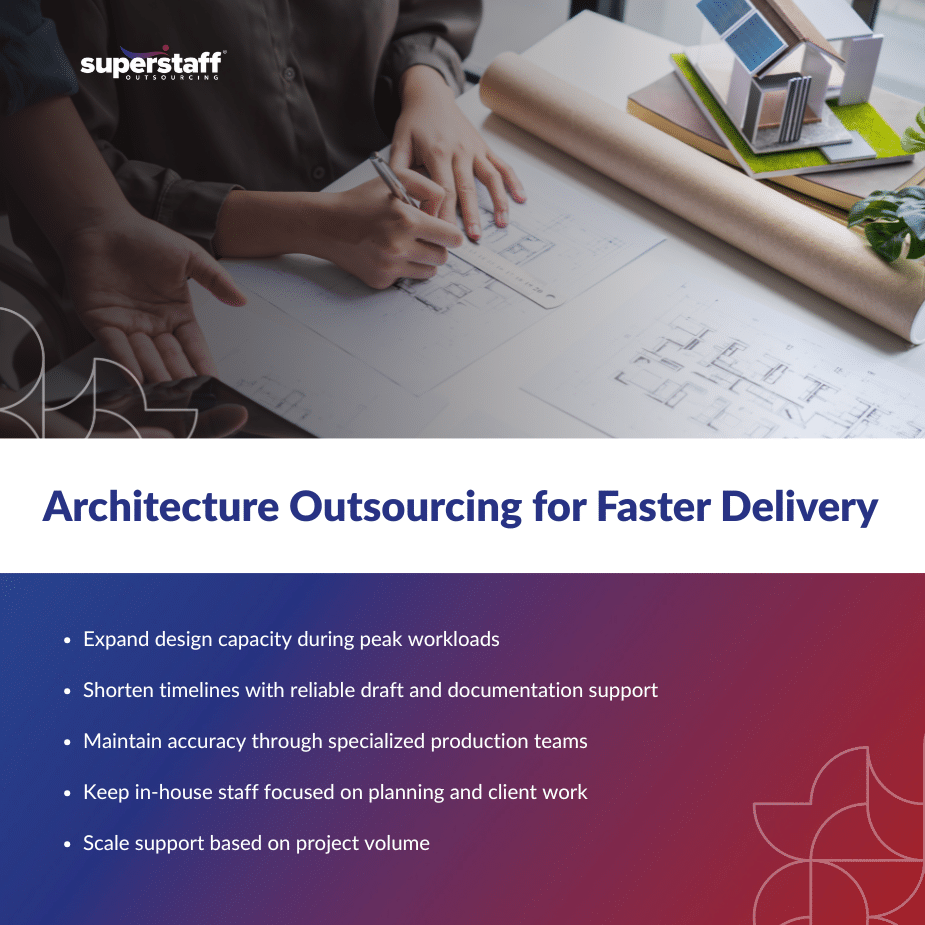
How Architecture Outsourcing Supports Faster Project Delivery
Architecture outsourcing can improve project delivery by giving firms more people to handle defined production tasks. It also helps project managers organize work across internal and external teams.
The results depend on how tasks are assigned, reviewed, and coordinated. Outsourcing alone does not guarantee faster delivery, but a well-managed arrangement can help reduce production delays.
1. Expanded Output Capacity
Additional drafting and modeling support allows firms to distribute deliverables across more professionals. This can help teams complete drawing sets, model updates, and documentation without placing every task on the same employees.
Managers should assign work based on skill level, project priority, and required completion dates. This helps prevent bottlenecks and keeps production responsibilities clear.
2. Dedicated Production Teams
External specialists can focus on assigned drafting, modeling, and documentation tasks. With clear instructions and agreed deadlines, they can work through production requirements while internal architects handle design coordination and approvals.
This division of work can improve focus across the project team. It also helps managers track which tasks are complete and which still need review.
3. Support for Time-Sensitive Changes
Client feedback, contractor requests, and design updates can create additional work during a project. Outsourced specialists may help process these revisions when the scope and instructions are clear.
Firms should use a controlled revision process to prevent outdated drawings or conflicting information from being used. Every updated file should be reviewed and approved by the appropriate project personnel.
4. Smoother Project Coordination
External teams need access to the correct project information, file versions, and communication channels. Shared documentation standards and regular progress updates help reduce confusion during review cycles.
The American Institute of Architects explains how collaboration among project participants supports integrated project delivery in its guide to Integrated Project Delivery. Clear roles and coordination practices are also important when external specialists contribute to project work.
5. More Consistent Progress During Busy Periods
When workloads increase, a firm may struggle to maintain the same production pace across every project. External support can help handle selected tasks and reduce pressure on internal employees.
Project leads should continue monitoring progress, checking deliverables, and adjusting priorities when deadlines change. This keeps the outsourcing arrangement connected to the overall project schedule.
Key Advantages of Using Outsourced Support
Architecture outsourcing can provide operational benefits when firms choose the right tasks and manage external work carefully. The value comes from matching production requirements with suitable skills, clear procedures, and reliable quality checks.
1. Faster Production Turnaround
Additional professionals can help firms process drawings, 3D models, and technical documents more efficiently. This is especially useful when internal teams are handling several deliverables at once.
Turnaround times still depend on task complexity, project information, and review requirements. Firms should set realistic deadlines and allow enough time for quality checks.
2. Better Cost Management
Hiring permanent employees involves salaries, benefits, recruitment, training, and equipment costs. Outsourcing offers another way to access production support based on the firm’s workload and agreement with the provider.
Businesses should compare the full cost of each option. They should also consider project volume, required supervision, software access, and the time needed to review external work.
3. Flexible Staffing Resources
Project requirements can change during the year. Firms may need more drafting support during documentation stages and fewer external resources when production demand decreases.
A flexible arrangement allows managers to review staffing needs as project workloads change. Clear agreements help both parties understand how additional or reduced support will be handled.
4. Consistent Work Standards
External specialists can follow the firm’s drawing conventions, documentation rules, and quality requirements when these are clearly explained. Standard templates and review checklists help maintain consistency across deliverables.
The in-house team should still review completed work before it is issued to clients, contractors, or other project participants.
5. More Time for Core Design Responsibilities
When production tasks are distributed across internal and external teams, in-house architects may have more time for concept development, design reviews, client meetings, and project coordination.
This division allows firms to use their internal expertise where it has the greatest value while assigning suitable production work to external specialists.
Common Tasks Handled Through Architecture Outsourcing
Firms can outsource different architectural production tasks depending on project requirements, available internal skills, and the provider’s capabilities. Before assigning work, they should define the scope and identify which tasks require direct involvement from licensed professionals or project leaders.
1. CAD Drafting
CAD drafting support may include floor plans, elevations, sections, and technical details. External drafters work from approved design information and project instructions to prepare or update drawings.
Firms should provide clear drafting standards, dimensions, reference files, and revision notes. This helps reduce errors and makes completed drawings easier to review.
2. 3D Modeling and Rendering
External specialists may help develop 3D models and visual materials for design reviews or client presentations. These outputs can help project teams communicate spatial layouts, building features, and design concepts.
The level of detail should match the purpose of the model. Firms should specify the required software, file format, modeling standards, and visual output before work begins.
3. Design Documentation
Documentation tasks may include drawing updates, sheet organization, detail development, and preparation of project files. These activities require consistent formatting and careful coordination with the latest design information.
Firms should maintain control over document approvals and confirm that all issued files reflect the correct project revisions.
4. Space Planning Support
External professionals may assist with basic layout development based on project requirements and approved design direction. This can include preparing alternative layouts or updating plans after receiving feedback.
Final design decisions should remain with the responsible project professionals, who understand the client’s needs, applicable regulations, and site conditions.
5. BIM Modeling and Coordination
BIM support may involve model development, updates, information entry, and coordination tasks. External specialists can work from agreed modeling standards and project requirements.
Firms should establish model ownership, access permissions, file exchange procedures, and review responsibilities. These steps help prevent conflicting information and support coordination with engineering and construction teams.
Industries Using Architecture Outsourcing Support
Different industries require architectural drawings, models, and technical documents to plan, develop, or update their facilities. Outsourced production support can help firms manage these requirements when internal capacity is limited.
1. Commercial Construction
Commercial projects often involve multiple stakeholders, detailed drawing packages, and frequent coordination. Additional drafting and modeling support can help design firms manage production requirements while project leads oversee technical decisions.
2. Residential Development
Residential projects may require floor plans, elevations, construction details, and repeated design revisions. External production teams can help prepare and update these documents based on approved project information.
3. Engineering and Design Firms
Engineering and design firms may need additional drafting or BIM support when several projects are active at the same time. Outsourcing selected tasks can help them manage production workloads while their internal specialists focus on technical reviews and coordination.
4. Retail Expansion Projects
Retail brands opening or renovating multiple locations may need recurring layout updates, fit-out drawings, and documentation. Consistent drawing standards can help firms manage similar requirements across different sites.
5. Hospitality and Healthcare Projects
Hotels, resorts, clinics, and healthcare facilities require detailed planning and coordination. Architectural teams may need support with drawing updates, space planning documentation, and model preparation while responsible professionals review project requirements and applicable standards.
How Architecture Outsourcing Builds Long-Term Efficiency
Architecture outsourcing can support more than short-term production needs. When firms establish consistent procedures, external support can become part of their regular project workflow.
1. More Flexible Workforce Planning
Firms can review project pipelines and identify periods when additional production support may be needed. This helps managers plan resources before workloads become difficult to manage.
2. Consistent Documentation Procedures
Using shared templates, file standards, and revision processes helps internal and external teams produce documents in a consistent format. These procedures also make it easier to review work across different projects.
3. Better Use of Internal Expertise
When external specialists handle suitable production tasks, internal architects can focus on design direction, client requirements, technical decisions, and project oversight.
4. Improved Capacity Across Multiple Projects
A structured external team can help firms manage production tasks across several active projects. Managers should still assign clear priorities and monitor each project’s progress to avoid overloading the external team.
5. Ongoing Process Improvement
Regular reviews help firms identify recurring errors, unclear instructions, and delays in the production process. They can use these findings to update workflows, improve training, and make future outsourcing arrangements more effective.
Firms that want to understand how external teams can support project coordination may also find SuperStaff’s article on outsourcing project management support useful when reviewing their operational needs.
Managing Quality and Coordination in Outsourced Architecture Work
External production support must follow the firm’s technical requirements and project controls. Without clear procedures, additional staffing can create more review work or lead to inconsistent files.
1. Define the Scope of Work
List the tasks that will be assigned externally and identify the deliverables expected from the provider. Include file formats, software requirements, drawing standards, deadlines, and revision limits.
2. Establish Review and Approval Procedures
Assign internal personnel to check completed drawings, models, and documents. Define who can approve changes and who is responsible for issuing final files.
3. Maintain Secure File Access
Share only the project information required for assigned tasks. Use approved file-sharing systems and access permissions to protect client information and prevent unauthorized changes.
4. Set Communication and Reporting Schedules
Agree on how the teams will share updates, raise questions, and report delays. Regular check-ins help managers identify problems early and keep production work aligned with project schedules.
5. Review Performance Regularly
Monitor turnaround time, revision rates, documentation accuracy, and completion against agreed deadlines. Use these results to assess whether the arrangement is meeting the firm’s requirements.
For firms that need broader administrative and operational support, SuperStaff’s professional services outsourcing solutions include project delivery and coordination roles that can help professional teams manage deadlines and stakeholder updates. These services support project operations and should not be treated as a substitute for licensed architectural design or technical approval.
Stronger Delivery With Global Architectural Support
Architecture outsourcing can help firms manage production workloads, complete documentation tasks, and maintain progress across multiple projects. It gives internal teams additional capacity while allowing them to remain responsible for design decisions, technical reviews, and client coordination.
The best results come from defining the work clearly, choosing specialists with the right skills, and maintaining consistent review procedures. Firms should also protect project information and ensure that all final drawings and models receive the required professional checks.
If your firm is reviewing ways to manage growing workloads and improve operational support, contact SuperStaff to discuss your business requirements and explore a suitable outsourcing arrangement.