Healthcare teams work under constant pressure. Between patient care, administrative tasks, and compliance requirements, staff members have limited time to manage every responsibility. Billing adds another layer of work, from checking patient information to submitting claims and following up on unpaid accounts. Many providers now consider medical billing outsource support to reduce this workload and keep daily operations organized.
With trained billing specialists, structured workflows, and consistent claim tracking, healthcare facilities can manage administrative tasks without placing additional pressure on their internal teams. Outsourcing also gives providers access to specialized support for coding, claims processing, payment posting, and denial management. When these tasks are handled properly, healthcare staff can spend more time assisting patients while the billing process continues to move forward.
Why Medical Billing Outsource Support Improves Daily Operations
Billing affects several areas of a healthcare organization. Delays or inaccurate records can interrupt payments, create backlogs, and increase the workload of administrative employees. Outsourcing gives providers access to specialists who can manage these responsibilities using established procedures.
1. Accurate Coding Support
Medical coding requires knowledge of current classification systems and payer requirements. A medical billing outsource provider can assign trained specialists to review documentation and check whether the correct codes are used. This helps reduce coding errors that may lead to rejected or delayed claims.
2. Faster Claim Submissions
Claims need to be reviewed and submitted within the required timelines. Outsourced billing teams follow defined processes for checking information, preparing claims, and sending them to insurance providers. Consistent handling helps prevent unnecessary delays in the billing cycle.
3. Fewer Administrative Tasks
Healthcare staff often spend hours reviewing billing records, preparing documents, and contacting insurance companies. Outsourcing transfers these responsibilities to a dedicated team. Internal employees can then focus on patient coordination and other administrative duties that require their direct attention.
4. Organized Denial Management
Denied claims require careful review to identify the reason for nonpayment. Outsourced specialists can track denial patterns, check supporting documents, and prepare corrections or appeals when appropriate. This gives providers a more organized way to manage outstanding claims.
5. Better Staff Allocation
When billing responsibilities are shared with an external team, managers can assign internal employees to tasks that support daily patient operations. This helps reduce overlapping responsibilities and gives staff more time to complete their assigned work.
SuperStaff explains how external billing specialists can help healthcare organizations manage administrative pressure in its article on medical billing outsourcing.
How Strategic Outsourcing Strengthens Billing Accuracy
Billing accuracy depends on complete documentation, correct codes, and careful claim reviews. Even small mistakes can result in rejected submissions or delayed reimbursement. A structured outsourcing arrangement gives healthcare providers access to specialists who can follow documented procedures and monitor each stage of the billing process.
1. Consistent Quality Control
Billing teams can use review steps to check patient details, service information, and coding before claims are submitted. Regular quality checks help identify recurring errors and show where additional training or process changes are needed.
2. Standardized Billing Procedures
Documented workflows help agents follow the same steps when processing claims, updating records, and managing follow-ups. This reduces confusion between team members and makes billing tasks easier to monitor.
3. Real-Time Claim Tracking
Claim tracking systems allow billing teams to monitor submitted, pending, approved, and denied claims. Providers can review progress through agreed reporting procedures instead of manually checking every account.
4. Updated Compliance Knowledge
Billing requirements and payer policies can change. Outsourced specialists need ongoing training to stay familiar with relevant coding rules, documentation standards, and client procedures. Providers should also establish clear oversight to make sure outsourced work follows applicable regulations.
5. Clear Data Organization
Organized billing records make it easier to review payment activity, outstanding claims, and recurring issues. Accurate reports help healthcare managers understand where delays occur and which parts of the billing process need attention.
How Outsourcing Frees Up Staff Time
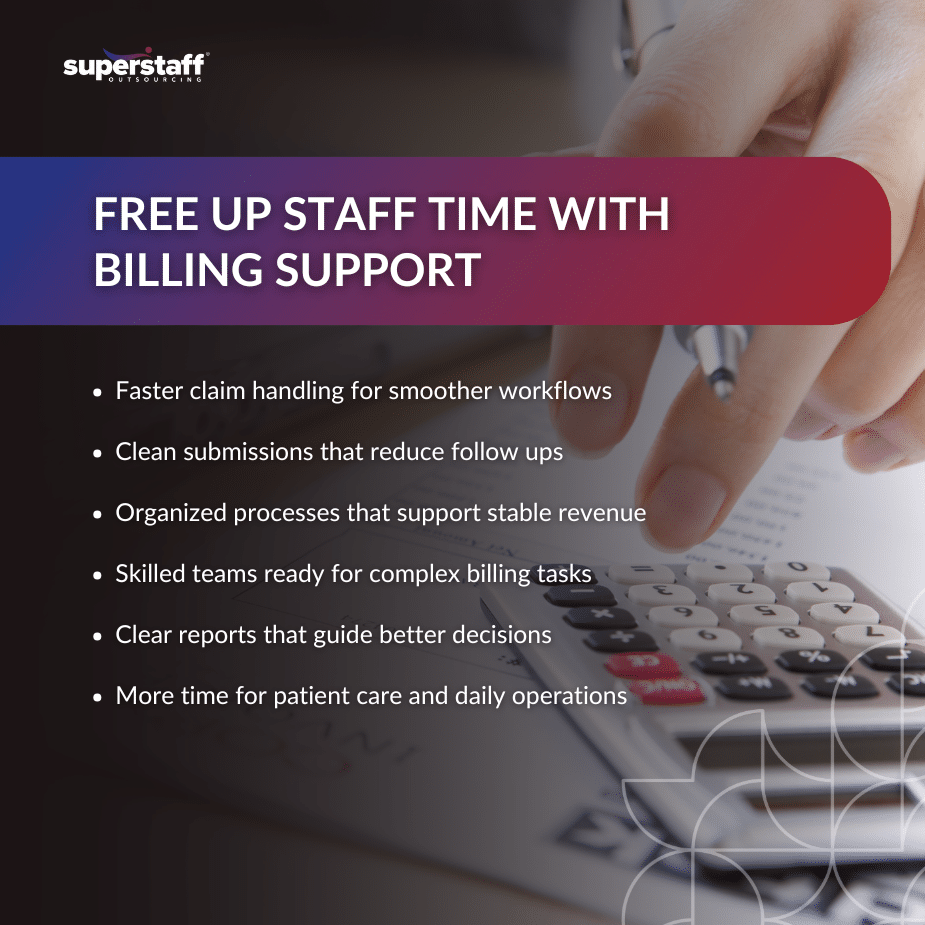
When billing remains entirely in-house, employees may need to divide their attention between patient support and administrative work. This can lead to unfinished tasks, longer response times, and growing backlogs. A medical billing outsource arrangement shifts selected responsibilities to a trained team, allowing internal staff to focus on their primary duties.
1. Reduced Phone and Email Backlogs
Insurance follow-ups often involve calls, emails, and repeated requests for claim information. Outsourced billing specialists can manage these communications based on the provider’s instructions. This reduces the number of follow-ups handled by front desk and administrative employees.
2. Fewer Manual Tasks
Data entry, claim updates, payment posting, and documentation checks require time and attention. Assigning these tasks to a dedicated billing team helps reduce the amount of manual work handled internally.
3. Less Time Spent on Billing Training
Billing procedures require ongoing learning as payer requirements and coding guidance change. Outsourcing providers are responsible for preparing their teams and maintaining relevant skills. Healthcare organizations still need to provide client-specific instructions and review performance, but they do not have to manage every aspect of staff development.
4. Stable Workloads During Peak Periods
Higher patient volumes can increase the number of claims and billing inquiries that need attention. An outsourced team can provide additional capacity based on agreed staffing arrangements, helping providers manage periods of increased demand.
5. Improved Focus on Front Desk Operations
Front desk employees need time to handle patient registration, appointment scheduling, and general inquiries. When billing tasks are assigned to specialists, these employees can give more attention to patients and daily clinic operations.
The American Medical Association’s guide to effective revenue cycle management explains how registration, insurance verification, coding, claim submission, and payment collection work together. These activities require clear responsibilities and regular follow-up to keep the billing process organized.
Key Use Cases for Medical Billing Outsource Solutions
Medical billing outsourcing can cover several administrative functions, depending on the provider’s needs and the services included in the agreement. Identifying which tasks create the most pressure helps healthcare organizations choose the right level of support.
1. Claim Coding and Submission
Billing specialists review clinical documentation, assign appropriate codes based on the provider’s guidelines, and prepare claims for submission. They also check required information before sending claims to insurance companies.
2. Eligibility and Insurance Verification
Insurance verification helps confirm a patient’s coverage before an appointment or procedure. An outsourced team can check eligibility details, identify missing information, and report potential coverage issues to the appropriate staff.
3. Payment Posting
Payment posting involves recording payments from insurance companies and patients. Specialists update billing systems, review payment details, and flag differences that may require further investigation.
4. Denial Review and Corrections
When a claim is denied, specialists review the explanation and identify the required next steps. Depending on the issue, they may correct billing information, gather supporting documents, or prepare an appeal for provider review.
5. Patient Statement Support
Patients may contact healthcare providers to ask about balances, payment records, or statement details. Trained support staff can handle approved billing inquiries and direct complex account concerns to the appropriate department.
How Healthcare BPO Services Streamline Administrative Work
Healthcare BPO services help providers assign selected administrative functions to external teams. These services can include billing, insurance verification, patient coordination, and documentation support. Using a specialized team allows healthcare organizations to manage routine work without adding every role to their internal payroll.
1. End-to-End Billing Coverage
Depending on the service agreement, an outsourced team can support several stages of the billing cycle. This may include coding assistance, claim preparation, submission, payment posting, and follow-ups.
2. Centralized Documentation
A consistent documentation process helps keep billing records organized. Teams can follow agreed naming conventions, update account information, and maintain records within approved systems.
3. Consistent Staffing Levels
Internal teams may experience interruptions due to employee absences, turnover, or changes in patient volume. An outsourcing arrangement can provide additional staffing support based on the agreed service requirements.
4. More Organized Workflows
Defined roles and procedures help prevent tasks from being overlooked or handled more than once. Healthcare managers can also use regular reports to review completed work and identify pending items.
5. Better Control of Staffing Costs
Outsourcing can reduce the need to recruit and manage additional in-house billing employees. Providers can plan support costs based on their workload and service requirements, although actual savings depend on the scope and pricing of the agreement.
For a closer look at how offshore teams handle different healthcare functions, read SuperStaff’s article on healthcare outsourcing in the Philippines. It covers support areas such as patient coordination, medical coding, billing, and administrative assistance.
How Remote Medical Billing Support Assists Providers
Remote medical billing support allows specialists to complete assigned billing tasks without working at the healthcare facility. Through approved systems and communication channels, remote teams can coordinate with internal employees and follow established billing procedures.
1. Flexible Team Arrangements
Healthcare providers can select a support arrangement based on their workload and operational needs. This may involve dedicated specialists, shared support, or a team assigned to specific billing functions.
2. Extended Service Hours
Remote teams may provide coverage beyond the provider’s regular office hours, depending on the agreed schedule. This can help keep administrative tasks moving when internal employees are unavailable.
3. Access to Existing Systems
Remote specialists can work with approved billing platforms and practice management systems. Proper access controls and training help ensure that employees use the correct processes when updating records or handling claims.
4. Improved Team Communication
Regular updates help internal staff stay informed about claim status, missing documents, and pending concerns. Clear communication channels also make it easier to escalate issues that need provider input.
5. Reliable Administrative Assistance
Remote billing specialists focus on assigned administrative responsibilities without taking time away from clinical duties. This helps healthcare providers maintain a clearer division between patient care and billing operations.
A Reliable Way to Improve Billing Workflows
A well-managed billing process helps providers monitor claims, identify delays, and maintain organized financial records. Outsourcing selected responsibilities can give internal teams additional support while allowing managers to maintain oversight of billing performance.
1. Better Revenue Cycle Visibility
Regular reports help providers review submitted claims, outstanding balances, payment activity, and denial trends. This information supports better decisions about staffing and process improvements.
2. More Consistent Claim Processing
Documented procedures and assigned responsibilities help ensure that claims are reviewed and followed up on. Consistency does not guarantee payment, but it can reduce avoidable mistakes and missed follow-ups.
3. More Predictable Billing Operations
A structured workflow helps teams manage daily tasks and outstanding accounts. Providers can use performance reports to identify workload changes and plan resources more effectively.
4. Flexible Support Capacity
An outsourcing partner can adjust team arrangements as billing volume changes, subject to the service agreement. This gives healthcare organizations another option when managing growth or temporary increases in administrative work.
5. Improved Patient Service
When billing responsibilities are handled by trained specialists, internal employees can spend more time on patient coordination and other service-related duties. This helps maintain attention on patient needs while administrative work continues.
Protecting Patient Information in Outsourced Billing
Outsourcing billing requires careful attention to patient information and system access. Healthcare providers should assess a potential partner’s security procedures before transferring any billing responsibilities.
1. Review Data Access Requirements
Give remote specialists access only to the systems and records needed for their assigned tasks. Access permissions should be reviewed regularly and updated when responsibilities change.
2. Establish Clear Privacy Procedures
The provider and outsourcing partner should agree on how patient information is accessed, stored, shared, and handled. For organizations subject to HIPAA, the arrangement must meet applicable privacy and security requirements, including the use of a business associate agreement when required.
3. Monitor Security Practices
Review the partner’s employee training, access controls, incident reporting procedures, and other security measures. Regular checks help providers confirm that agreed requirements are being followed.
Healthcare providers looking for external support can review SuperStaff’s healthcare outsourcing services to see how its teams assist with claims processing, medical billing, patient intake, and other administrative functions.
Choosing the Right Medical Billing Outsourcing Partner
Selecting a provider requires more than comparing service rates. Healthcare organizations should assess the partner’s experience, training standards, security practices, and ability to follow existing billing procedures.
1. Check Relevant Healthcare Experience
Ask whether the provider has experience supporting clinics, hospitals, specialty practices, or other healthcare organizations. Familiarity with medical terminology, billing systems, and payer processes can help reduce the time needed to prepare a team.
2. Review Training and Quality Checks
Find out how agents are trained and how their work is reviewed. A reliable provider should have a clear process for handling errors, providing feedback, and updating team knowledge.
3. Confirm System Compatibility
The outsourced team should be able to work with the healthcare organization’s approved billing and practice management systems. Discuss access requirements, integration needs, and technical support before starting the arrangement.
4. Set Clear Performance Measures
Agree on measurable standards such as claim accuracy, processing time, follow-up completion, and reporting frequency. These measures help both parties assess whether the arrangement is meeting operational needs.
5. Define Responsibilities and Communication
Establish which tasks the outsourced team can complete independently and which require approval from internal staff. Clear escalation procedures help prevent confusion when claims need additional documentation or review.
Efficient Billing Support That Frees Your Team
SuperStaff helps healthcare providers manage administrative workloads through specialized healthcare support. Its teams can assist with revenue cycle operations, claims-related tasks, and other back-office functions based on each client’s requirements. This gives healthcare organizations added support while their internal employees focus on patient care.
With the right medical billing outsource arrangement, providers can improve task management, maintain organized records, and reduce the pressure on internal staff. To discuss your requirements and explore a suitable support arrangement, contact SuperStaff.