
Strong business relationships require consistent communication, clear expectations, and reliable service. Clients want to know that their concerns are heard, their goals are understood, and their projects receive proper attention. When communication becomes inconsistent, or responsibilities are unclear, misunderstandings can affect the partnership. This is why businesses benefit from having a dedicated client relationship partner who helps manage communication and keep both sides aligned.
A client relationship partner serves as a central point of contact between a company and its clients. The role involves coordinating internal teams, monitoring service performance, addressing concerns, and identifying ways to improve the working relationship. With clear responsibilities and regular updates, businesses can provide a more organized client experience, strengthen trust, and support long-term partnerships.
How a Client Relationship Partner Supports Stronger Connections
A client relationship partner helps maintain communication between clients and the teams responsible for delivering services. This role gives clients a reliable contact person who understands their requirements and can coordinate the right response when questions or concerns arise.
1. Dedicated Communication
Clients should not have to contact several departments to get answers about their accounts or projects. A client relationship partner organizes meetings, provides updates, and directs questions to the appropriate people. This makes communication more consistent and reduces the risk of missed information.
2. Clear Coordination With Teams
Client requests often involve several departments, including operations, finance, customer support, and management. The partner coordinates with these teams to confirm responsibilities and keep tasks moving. This helps prevent delays caused by unclear instructions or incomplete handoffs.
3. Consistent Progress Monitoring
Clients need regular information about project status, service performance, and pending tasks. A client relationship partner gathers updates and shares relevant information through reports or scheduled discussions. This gives both sides a clearer view of progress and outstanding priorities.
4. Early Identification of Issues
Small service problems can become larger concerns when they remain unresolved. By monitoring feedback, performance reports, and ongoing requests, the partner can identify possible issues early. They can then coordinate with the responsible team to find a suitable solution.
5. Long-Term Relationship Management
The role focuses on maintaining the partnership beyond individual transactions or completed projects. Regular communication helps the company understand changing client needs and identify opportunities to improve its services over time.
SuperStaff discusses how dedicated customer success support helps businesses maintain these relationships in its article about customer success outsourcing in the Philippines.
Why This Role Improves Client Retention
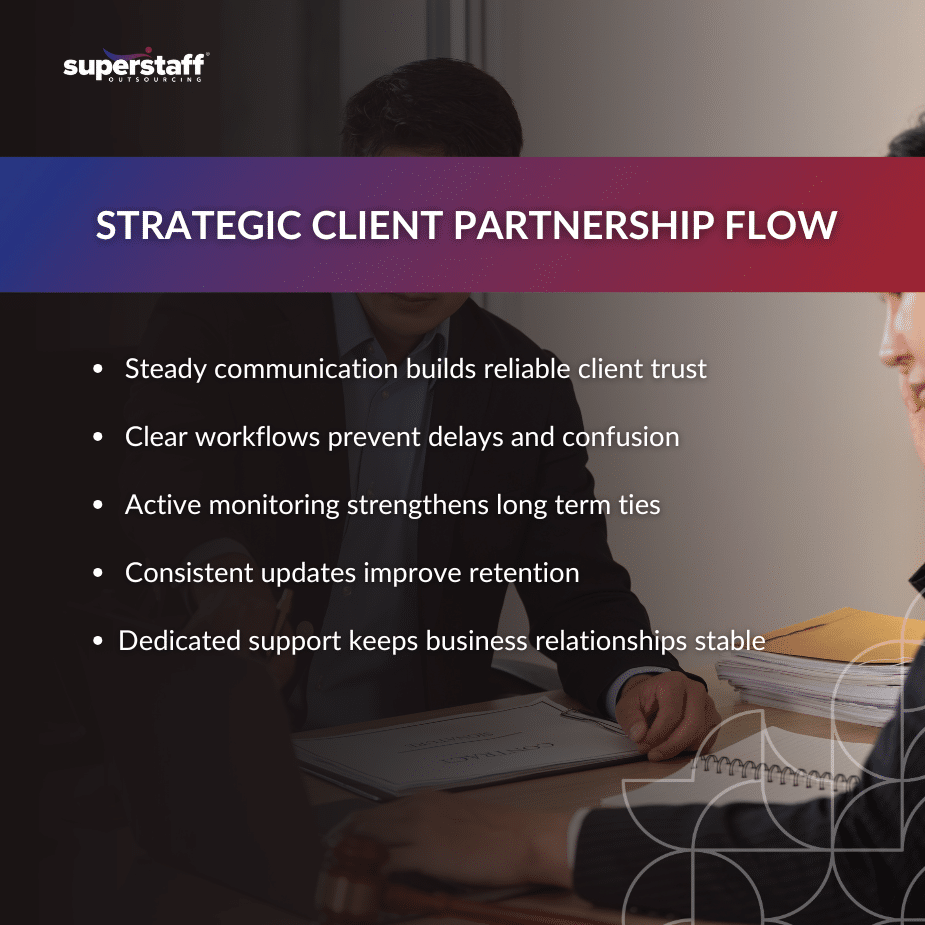
Client retention depends on the value and consistency of the service a business provides. Even when a company delivers quality work, poor communication or unresolved concerns can weaken the relationship. A dedicated partner helps prevent these issues by keeping client expectations and service responsibilities clear.
1. Faster Response Times
Clients value timely answers, especially when their questions affect business operations or project schedules. A designated contact person can receive concerns, coordinate with the appropriate department, and provide updates on the next steps. This reduces unnecessary delays and gives clients a clearer way to get assistance.
2. Better Understanding of Client Needs
Client requirements can change as their businesses grow or priorities shift. Regular conversations help the partner understand these changes and communicate them to internal teams. This allows the company to adjust its service approach based on current client needs.
3. More Consistent Service Delivery
Clients expect agreed services to be delivered according to established standards. The partner monitors ongoing work and coordinates with the responsible teams when service gaps appear. This helps maintain consistency across different projects and interactions.
4. Stronger Planning and Forecasting
Regular discussions can reveal upcoming projects, changes in demand, and possible resource requirements. By gathering this information early, the partner can help internal teams prepare for future needs rather than responding only when problems arise.
5. Clearer Client Relationship Management
Client relationship management involves organizing communication, tracking commitments, and reviewing the overall health of a business relationship. A dedicated partner helps keep these activities connected so that important requests, decisions, and follow-ups are not overlooked.
Research published by Harvard Business Review discusses how businesses can reduce customer churn by paying closer attention to the health of their business relationships. Read Toward Healthier B2B Relationships for further insights into maintaining stronger client connections.
How a Client Relationship Partner Supports Business Growth
As businesses expand, managing client relationships becomes more demanding. More accounts, projects, and service requests can create additional coordination work. A client relationship partner helps maintain service standards while internal teams handle growing responsibilities.
1. Organized Workflows
The partner helps document client requirements, service agreements, project updates, and pending requests. Organized records make it easier for employees to understand what needs to be done and who is responsible for each task.
2. Stable Communication Channels
Growth can make communication more difficult when clients need to coordinate with several departments. A dedicated contact person provides a consistent channel for updates and questions. This helps prevent information gaps as the company takes on more clients.
3. Support During Business Transitions
Businesses may introduce new systems, expand service coverage, or change internal processes. A client relationship partner communicates these changes and explains how they may affect the client. They can also collect feedback and coordinate any adjustments required during the transition.
4. Coordination With Growing Teams
As companies hire more employees, responsibilities may shift between departments. The partner helps share client requirements with the right people and ensures that new team members understand existing commitments.
5. Better Business Partnership Strategies
A strong partnership requires both sides to understand their goals and limitations. The client relationship partner helps identify shared priorities, review service requirements, and coordinate plans that match the company’s capabilities with the client’s needs.
Role of Client Relationship Partners in BPO and Business Growth
Business process outsourcing companies depend on clear communication between clients and service teams. A client relationship partner helps maintain this connection by monitoring service delivery, coordinating resources, and ensuring that both parties understand their responsibilities.
1. Understanding Industry Requirements
Different industries have different operating standards, customer expectations, and reporting needs. The partner works with clients to understand these requirements and communicate them to the relevant teams. This helps ensure that service delivery follows the agreed procedures.
2. Improving Service Delivery
Regular performance reviews help identify areas where service quality can improve. The partner can gather client feedback, review team performance, and coordinate changes with operations managers. This creates a clear process for addressing concerns.
3. Reducing Operational Gaps
Miscommunication can happen when several teams handle different parts of a client’s account. The partner helps keep information consistent by sharing updates, confirming responsibilities, and following up on unresolved matters.
4. Supporting Expansion
As a client increases its service requirements, the partner can help assess staffing needs, operational changes, and resource availability. This supports better planning and helps the company prepare for additional responsibilities.
5. Maintaining Transparency
Clients should receive clear updates about service performance, delays, and ongoing concerns. A client relationship partner helps make sure reports are accurate and discussions address both progress and areas that need attention.
SuperStaff also explains how businesses can improve retention through customer retention services, including consistent support and better management of customer concerns.
Strengthening Collaboration and Workflow Alignment
A successful partnership requires cooperation between the client and the service provider. Both sides need to understand their responsibilities, share relevant information, and follow agreed procedures. A client relationship partner helps maintain this structure throughout the working relationship.
1. Scheduled Review Meetings
Regular meetings give both parties time to discuss performance, upcoming priorities, and unresolved concerns. These discussions also help confirm whether current services continue to meet the client’s requirements.
2. Structured Documentation
Meeting notes, service updates, project records, and agreed action items should be documented and shared with the appropriate people. This gives everyone a reliable reference and reduces confusion about previous decisions.
3. Organized Escalation Paths
Not every concern can be resolved by the first person who receives it. The partner helps establish a clear escalation process so clients know where to direct urgent or complex issues. This also helps internal teams respond according to their responsibilities.
4. Support With Performance Metrics
Key performance indicators help both parties assess whether the service is meeting agreed standards. Depending on the type of partnership, these may include response times, completion rates, quality scores, and client satisfaction results.
5. Alignment Across Departments
Different departments may have separate tasks, but they still need to work toward the same client objectives. The partner shares relevant information and confirms that teams understand the current priorities. This reduces conflicting instructions and unnecessary delays.
Skills That Make an Effective Client Relationship Partner
The success of this role depends on more than maintaining regular contact. A client relationship partner needs the communication, organizational, and problem-solving skills required to manage different client expectations and coordinate internal teams.
1. Strong Communication Skills
The partner must explain information clearly, listen to client concerns, and provide updates without creating confusion. Good communication also includes knowing when to ask questions and when to involve other team members.
2. Problem-Solving Ability
Clients may raise concerns involving missed deadlines, service errors, or changing requirements. The partner should understand the issue, identify the responsible team, and coordinate practical next steps.
3. Organization and Time Management
Managing several client accounts requires careful planning. The partner needs to track meetings, requests, deadlines, and follow-ups to ensure that important tasks receive attention.
4. Business and Industry Knowledge
Understanding the client’s industry helps the partner recognize operational needs and communicate more effectively with internal teams. This knowledge also supports better discussions about service improvements and future requirements.
5. Relationship-Building Skills
Trust develops through consistent actions. A good partner follows through on commitments, communicates honestly, and treats client concerns with attention. These habits help maintain professional relationships over time.
How Outsourced Support Helps Maintain Client Relationships
Some businesses need additional support to manage client communication and daily coordination. Outsourcing can provide trained professionals who handle assigned customer experience and administrative functions while internal managers focus on strategy and business decisions.
1. Additional Communication Support
Outsourced teams can manage routine inquiries, provide approved updates, and direct requests to the correct department. This helps businesses maintain timely communication when internal employees have other priorities.
2. Consistent Customer Experience
A structured support team follows established communication standards and service procedures. This helps ensure that clients receive consistent assistance across calls, emails, chats, and other channels.
3. Flexible Team Capacity
As client accounts grow, businesses may need additional people to manage requests and follow-ups. Outsourcing gives companies an option to increase support capacity based on their service requirements.
4. More Time for Strategic Work
When routine communication and administrative tasks are handled by a dedicated team, managers can spend more time reviewing performance, planning improvements, and developing client partnerships.
5. Access to Specialized Support
Outsourcing providers can supply professionals with experience in customer service, back-office operations, and account coordination. Businesses can assign these teams specific responsibilities based on their operational needs.
For companies that need additional support with customer interactions, SuperStaff offers customer experience outsourcing services covering customer service, omnichannel communication, and related support functions.
Measuring the Success of Client Relationship Management
Businesses need to review whether their relationship management efforts are producing useful results. Tracking performance helps identify service gaps, assess client satisfaction, and determine whether current processes support long-term partnerships.
1. Client Retention Rate
Retention measures how many clients continue working with the business over a given period. A declining rate may indicate concerns with service quality, communication, pricing, or changing client needs.
2. Client Satisfaction Scores
Surveys and feedback discussions help businesses understand how clients view the service they receive. Reviewing feedback regularly can reveal recurring concerns and areas where the company needs to improve.
3. Issue Resolution Time
Tracking how long it takes to resolve client concerns helps assess the effectiveness of internal coordination. Longer resolution times may point to unclear responsibilities or delays in escalation.
4. Service Performance Results
Businesses should review agreed service indicators, such as response times, task completion, accuracy, and quality scores. These measures help clients and service providers discuss performance using clear information.
5. Account Growth and Engagement
Changes in service requirements, project participation, and account activity can indicate how the relationship is developing. These details help the partner identify opportunities for additional support while making sure recommendations match the client’s actual needs.
Building Stronger Bonds Through Clear Partnership
A client relationship partner helps businesses maintain strong partnerships through clear communication, organized workflows, and consistent follow-up. By coordinating internal teams and understanding client priorities, this role reduces misunderstandings and helps both sides work toward shared goals.
SuperStaff supports businesses that need reliable customer communication and organized service operations. Its teams can help manage customer interactions and support consistent service delivery as business requirements change.
To discuss your client support needs and explore a suitable outsourcing arrangement, contact SuperStaff.