Most companies recognize the importance of customer retention. Loyal customers generate repeat business, provide referrals, and contribute to long-term growth. However, many organizations overlook one factor that directly affects customer satisfaction and loyalty: hiring speed.
When businesses struggle to fill open positions, service quality often suffers. Existing employees may become overwhelmed, response times can increase, and customer experiences may decline. As a result, the connection between hiring delays and customer retention becomes increasingly clear. Companies that address staffing challenges quickly are better positioned to maintain strong customer relationships and support long-term business success.
How Hiring Delays Affect Customer Experience
Open positions can create operational gaps that impact both employees and customers. When companies do not have enough people to handle daily responsibilities, customers may notice the difference in service.
1. Longer Response Times
Customers expect timely answers when they contact a company. However, understaffed teams often struggle to keep up with inquiries.
As a result, customers may wait longer for assistance, experience delayed callbacks, or receive updates later than expected. These issues can create frustration and reduce confidence in the business.
2. Increased Workloads for Existing Employees
When positions remain vacant, current employees often absorb additional responsibilities. Therefore, workloads increase across the organization.
Employees may have less time to address customer concerns properly, which can affect both morale and service quality.
3. Service Consistency Becomes Difficult
Staffing shortages can make it challenging to maintain consistent customer experiences. Consequently, customers may encounter varying levels of service quality depending on who handles their concerns.
Consistency remains an important part of building customer loyalty.
4. Delayed Project Delivery
Some industries depend on teams completing projects within specific timelines. However, hiring delays can slow progress and affect customer expectations.
As a result, businesses risk missing deadlines and damaging important relationships.
5. Reduced Customer Confidence
Customers want confidence that a company can meet its commitments. Staffing challenges can create concerns about reliability and responsiveness.
Research from Qualtrics XM Institute found that customers who are satisfied with their contact center experience are more likely to trust a brand, purchase more, and recommend it to others. Its 2025 contact center research shows why response times and effective issue resolution matter to customer loyalty.
Why Hiring Delays and Customer Retention Are Closely Connected
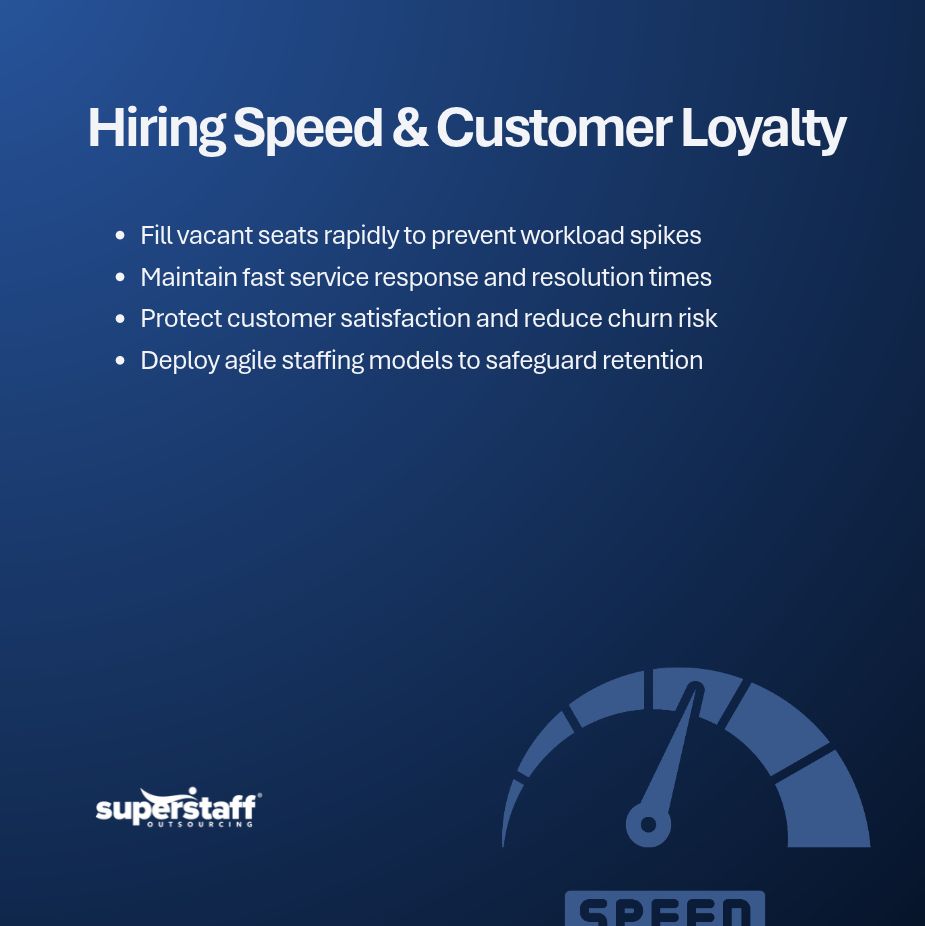
Customer loyalty depends on the quality of every interaction. Consequently, workforce challenges can have a direct impact on retention rates.
1. Customers Notice Service Gaps
Even small delays can affect customer perceptions. Therefore, businesses must address staffing shortages before service levels decline.
Customer expectations continue to rise across industries. Companies need enough employees to respond to questions, resolve concerns, and provide consistent assistance.
2. Competitors Are Readily Available
Customers often have multiple options available. As a result, poor experiences can encourage them to explore alternatives.
Retaining customers requires consistent service delivery, especially when competitors offer similar products or services.
3. Employee Burnout Affects Performance
Heavy workloads can reduce employee engagement and productivity. Consequently, customer interactions may become less effective.
This situation can weaken customer relationships over time. It may also lead to additional employee departures, creating more staffing gaps.
4. Growth Creates Additional Pressure
As businesses expand, customer expectations often increase. Therefore, organizations must ensure staffing levels keep pace with growth.
Failing to do so may affect retention efforts. Companies need to prepare their teams before customer demand increases.
5. Retention Depends on Reliability
Customers value dependable service. Hiring delays and customer retention often become connected when staffing shortages affect reliability.
Organizations that maintain adequate staffing are better positioned to respond to customers and protect long-term relationships. Businesses can also strengthen their approach by reviewing customer retention strategies that turn support teams into revenue drivers.
Strategies to Reduce Hiring Delays
Businesses can take proactive steps to strengthen recruitment efforts and protect customer relationships. The goal is to make hiring more organized while ensuring that service teams have enough support.
1. Improve Workforce Planning
Companies should regularly evaluate staffing requirements based on business goals and projected demand.
This approach helps reduce unexpected shortages. Leaders can also identify which departments may need additional employees during busy periods.
2. Streamline Recruitment Processes
Long hiring cycles often discourage qualified candidates. Therefore, organizations should identify opportunities to improve efficiency.
Reviewing interview schedules, approval procedures, and candidate screening methods can help reduce unnecessary delays. Faster hiring also supports business continuity.
3. Build Talent Pipelines
Maintaining relationships with potential candidates can reduce future recruitment challenges.
As a result, businesses can fill positions more quickly when openings arise. A ready talent pool is especially useful for companies with frequent hiring needs.
4. Consider Outsourcing Support
Many organizations use outsourcing solutions to supplement internal teams during hiring periods.
This strategy helps maintain service levels while recruitment efforts continue. External professionals can handle selected customer service and administrative responsibilities so internal employees are not left managing every task.
5. Monitor Workforce Trends
Tracking turnover, staffing needs, and hiring performance helps leaders make informed workforce decisions.
Consequently, businesses can respond more effectively to changing demands. Regular reviews also help identify recurring recruitment problems before they affect customers.
Companies that need additional recruitment capacity can consider outsourced recruitment solutions for growing businesses. Dedicated recruitment support can help manage candidate sourcing and screening while internal HR teams focus on other responsibilities.
Keep Customer Service Consistent During Hiring Periods
Recruitment takes time, but customer requests continue to come in. Businesses should have a plan for maintaining service coverage while they work to fill vacant positions.
Start by identifying the tasks that require immediate attention. Assign available employees based on their skills, review pending customer requests, and establish clear priorities. If workloads remain high, temporary or outsourced support may help prevent service backlogs.
Managers should also communicate with customers when delays occur. Clear updates and realistic timelines can help maintain trust while the company works through staffing challenges.
Build a Workforce That Supports Customer Loyalty
Hiring the right people is only part of the solution. Businesses must also give employees the tools, training, and support needed to deliver consistent service.
Customer service teams should have clear procedures for handling inquiries, resolving complaints, and escalating complex issues. Regular coaching and performance reviews can help employees maintain service standards as customer demand changes.
A workforce that is properly supported is better prepared to deliver the experiences customers expect.
Customer Experience Support for Growing Businesses
When internal teams need additional capacity, outsourcing can help maintain customer service coverage without requiring immediate expansion of the permanent workforce. SuperStaff provides customer experience outsourcing solutions that support customer service, omnichannel communication, and other customer-facing functions.
Dedicated support teams can help businesses manage inquiries, respond to customer concerns, and maintain consistent service while internal employees focus on other business priorities.
Strong Teams Help Retain Customers
Customer loyalty depends on consistent service, responsive support, and positive experiences. However, staffing shortages can make it difficult to meet these expectations. This is why understanding the relationship between hiring delays and customer retention is essential for business success.
SuperStaff helps organizations strengthen workforce strategies through scalable outsourcing solutions that support customer service, operations, and business growth.
If your company wants to reduce hiring delays and protect customer relationships, contact SuperStaff to discuss your staffing needs and find the right support for your business.