Expanding into new markets creates exciting opportunities, but it also introduces new responsibilities. Every country has its own employment laws, tax rules, payroll requirements, and worker protections. As governments continue to update labor regulations, companies must stay informed to avoid costly mistakes. This is why many organizations are paying closer attention to international hiring compliance when building global teams.
At the same time, businesses want to move quickly when hiring talent across borders. However, legal requirements can slow down expansion plans if companies do not have the right support. Fortunately, Employer of Record (EOR) services help businesses hire internationally while meeting local requirements. By providing expertise and infrastructure, EOR providers help organizations maintain international hiring compliance and reduce administrative burdens as regulations continue to change.
Why Regulatory Changes Create Hiring Challenges
Employment regulations rarely stay the same. Governments regularly update labor laws to protect workers, improve tax collection, and address workforce trends. Because of this, companies that hire internationally must remain vigilant.
1. Employment Laws Differ Across Countries
Every country establishes its own rules regarding employment contracts, probation periods, benefits, and termination procedures. As a result, businesses cannot apply the same hiring approach everywhere.
Without proper guidance, employers may unintentionally violate local laws. Therefore, understanding local regulations remains a key part of international hiring compliance.
2. Payroll and Tax Rules Frequently Change
Governments often revise tax rates, reporting requirements, and social contribution programs. Consequently, payroll teams must continuously monitor updates.
If businesses fail to comply with these changes, they may face penalties or audits. Therefore, staying current with tax regulations is essential.
3. Worker Classification Requirements Vary
Many countries closely monitor how companies classify workers. Some governments have strengthened rules surrounding contractors and full-time employees.
The International Labour Organization explains how employment relationships determine the rights and responsibilities of workers and employers. Its guidance on the employment relationship is a useful starting point for understanding why worker classification matters across different jurisdictions.
4. Data Privacy Standards Continue to Expand
Employee information requires proper handling and protection. Furthermore, many countries have introduced stricter data privacy regulations.
Organizations that manage international employees must ensure secure data processing practices. This responsibility becomes even more important when hiring across multiple regions.
5. Regulatory Updates Can Happen Quickly
Labor laws can change with little notice. Consequently, businesses may struggle to keep pace with new requirements.
For growing companies, monitoring every legal update can become time-consuming. Therefore, many organizations seek external support to reduce compliance risks.
How EOR Services Support International Hiring Compliance
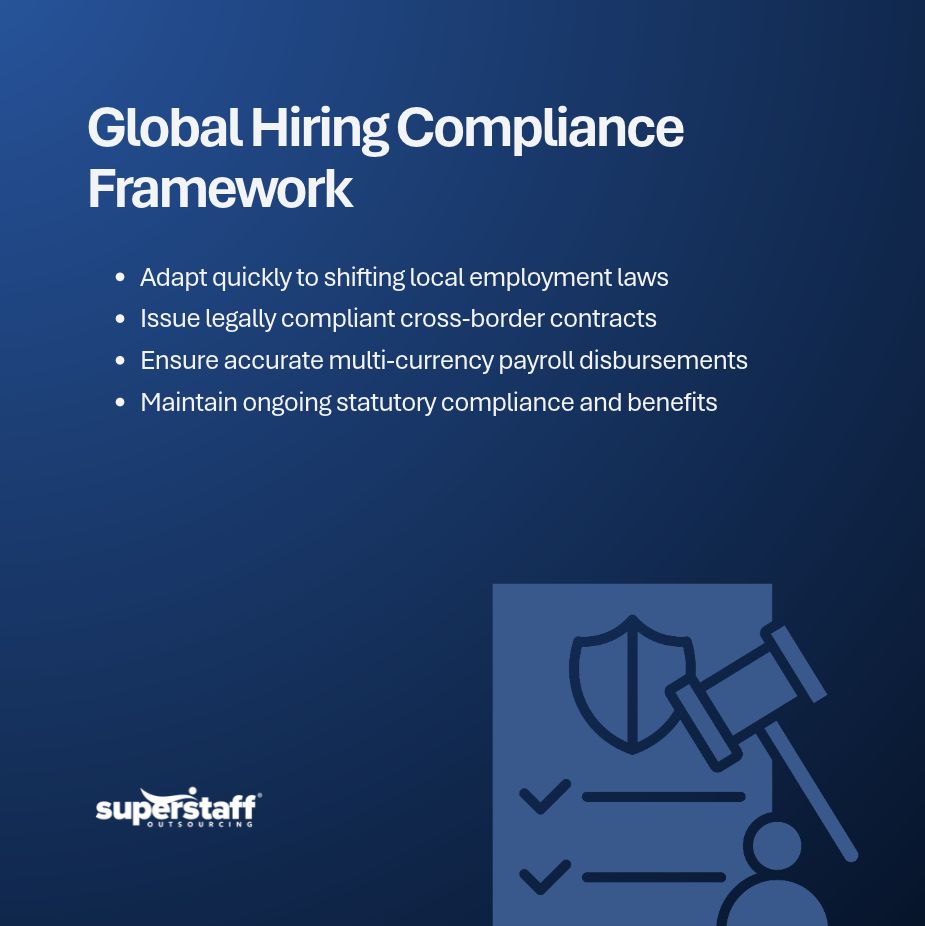
Managing legal obligations in several countries requires expertise and local knowledge. This is where EOR services provide significant value.
1. Local Employment Expertise
EOR providers maintain knowledge of country-specific employment laws. Because they work directly within local markets, they understand current regulations and compliance requirements.
As a result, businesses gain access to local employment expertise without building large internal compliance teams.
2. Compliant Employment Contracts
Employment agreements must reflect local labor laws. Therefore, EOR providers prepare contracts that align with country-specific regulations.
This approach helps businesses maintain international hiring compliance while providing employees with legally compliant documentation.
3. Payroll Administration Support
Payroll involves more than simply issuing salaries. It also includes taxes, social contributions, statutory benefits, and government reporting.
An EOR manages these responsibilities on behalf of the client company. Consequently, businesses can reduce payroll-related compliance risks.
4. Benefits Administration
Different countries require different employee benefits. Some locations mandate healthcare contributions, paid leave programs, or retirement plans.
EOR providers help administer these benefits according to local requirements. As a result, companies can offer appropriate employment packages while meeting their obligations.
5. Regulatory Monitoring
Keeping up with changing regulations requires ongoing attention. EOR providers monitor legal developments and update their employment processes when requirements change.
This support helps businesses respond to regulatory changes without having to manage every local employment requirement themselves.
Business Benefits of Using EOR Services
Beyond compliance support, EOR solutions offer practical advantages that help organizations expand more efficiently. Businesses can access international talent while avoiding some of the time and costs involved in setting up foreign entities.
1. Faster Market Entry
Establishing a legal entity in another country often takes significant time and resources. However, EOR services allow businesses to hire employees without creating their own local entity.
As a result, organizations can enter new markets faster and begin building teams sooner.
2. Reduced Administrative Work
International hiring generates substantial paperwork and reporting obligations. Consequently, internal teams can become overwhelmed.
An EOR handles many employment administration responsibilities, allowing HR and leadership teams to focus on strategic priorities.
3. Lower Compliance Risk
Regulatory mistakes can lead to penalties, legal disputes, and reputational damage. Therefore, reducing compliance exposure remains a major priority.
By working with local employment specialists, companies can strengthen their international hiring compliance efforts and reduce avoidable risks.
4. Better Workforce Flexibility
Business needs often change quickly. Some organizations hire for short-term projects, while others test new markets before making long-term investments.
EOR services provide flexibility that supports different workforce strategies. Consequently, businesses can adapt more easily to changing conditions.
5. Improved Employee Experience
Employees expect accurate payroll, compliant benefits, and clear employment agreements. When these elements are managed effectively, workers gain confidence in their employer.
As a result, businesses can create a more positive employee experience while supporting retention efforts.
Companies exploring this model can review how businesses use Employer of Record services when hiring abroad. Understanding the arrangement helps employers decide whether an EOR is suitable for their expansion plans.
Choosing the Right EOR Partner
Not all EOR providers offer the same level of service. Therefore, businesses should evaluate potential partners carefully before making a decision.
Consider the following factors:
- Experience across multiple countries
- Strong compliance and legal expertise
- Reliable payroll management capabilities
- Transparent pricing structures
- Responsive customer support
- Proven experience supporting international hiring
Additionally, companies should assess whether an EOR provider can support future expansion plans. A scalable partner can help organizations grow without frequent provider changes.
Businesses should also ask how providers manage regulatory updates. Since employment laws continue to evolve, proactive compliance monitoring remains essential.
Finally, communication matters. Clear reporting and responsive support help businesses address issues quickly and maintain operational efficiency.
Prepare for Regulatory Changes Before Hiring
Companies should not wait for a new labor regulation to take effect before reviewing their employment arrangements. Regular checks can help identify outdated contracts, payroll procedures, and employee benefit policies.
It is also useful to establish who will monitor regulatory updates and communicate changes to the relevant teams. Businesses should review their provider’s reporting process, escalation procedures, and approach to handling new legal requirements.
These steps make it easier to respond when employment rules change and help prevent compliance issues from disrupting international operations.
Understand How an EOR Arrangement Works
Before entering an agreement, companies should understand the responsibilities of the EOR and the client business. The EOR generally handles formal employment matters, such as contracts, payroll, statutory benefits, and local employment administration. The client company usually directs the employee’s daily work and business activities, subject to the applicable legal arrangement.
A clear understanding of these responsibilities helps prevent confusion and supports better coordination. Businesses can also review how Employer of Record arrangements work before choosing a provider.
EOR Support for International Hiring
Businesses that want to hire overseas employees without establishing a local entity can work with an experienced EOR provider. SuperStaff offers SuperEOR Staffing services to support international recruitment and employment administration.
This solution helps companies manage employment contracts, payroll, statutory benefits, and local compliance requirements while building teams in new markets. It also gives internal HR teams more time to focus on workforce planning and business priorities.
Build Global Teams With Confidence
Regulatory changes will continue to shape international employment practices. As companies expand into new markets, they must remain prepared to navigate varying labor laws, payroll requirements, and compliance obligations. Maintaining international hiring compliance requires ongoing attention, local expertise, and a reliable support system.
EOR services help businesses simplify international hiring while reducing administrative and compliance risks. From payroll administration to employment support, these solutions allow organizations to build global teams with greater confidence.
SuperStaff helps companies access flexible workforce solutions that support growth across borders. If your organization needs help managing international hiring compliance and expanding into new markets, contact SuperStaff to discuss your hiring plans and find the right support.