Remote work has opened new opportunities for businesses that want to hire skilled professionals from different cities and countries. Companies can build stronger teams, expand their talent pool, and support employees with flexible work arrangements. However, managing remote employees also comes with responsibilities that go beyond daily supervision. Businesses must understand employment requirements, payroll obligations, data security, and workplace policies to keep operations running smoothly.
A strong approach to remote workforce compliance helps businesses reduce risks while creating a positive experience for employees. Instead of reacting to problems as they happen, companies can build clear processes that support both productivity and legal requirements. As organizations continue expanding their remote teams, remote workforce compliance becomes an important part of long-term business success.
Common Compliance Challenges for Remote Teams
Managing a remote workforce requires careful planning because employees may work from different locations with different employment requirements. Understanding these challenges helps businesses prepare before problems arise.
1. Different Employment Laws
Employment laws vary from one country or region to another. Working hours, leave benefits, minimum wages, and termination procedures may all differ depending on where employees live.
Therefore, businesses should understand local labor requirements before hiring remote workers. Following these regulations supports remote workforce compliance while helping organizations avoid unnecessary legal concerns. The International Labour Organization’s guidance on employment relationships can also help employers understand factors that may determine whether a worker is an employee or an independent contractor.
2. Payroll and Tax Obligations
Processing payroll for remote employees can become complicated, especially when workers are located in different countries. Employers must consider local tax requirements, mandatory contributions, reporting obligations, and payment schedules.
Accurate payroll processes improve employee trust while helping businesses stay organized. Companies with employees in several locations should establish clear payroll procedures and confirm that payments and required contributions follow the rules in each jurisdiction.
3. Data Privacy and Security
Remote employees often access company systems from home offices or shared internet connections. Consequently, businesses should establish strong security measures to protect company and customer information.
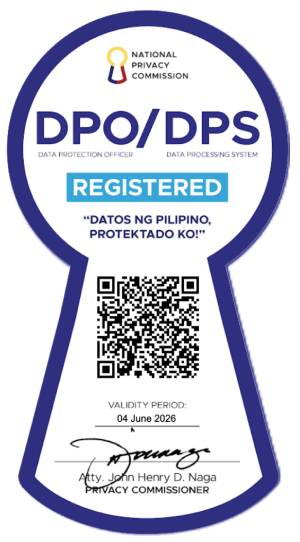
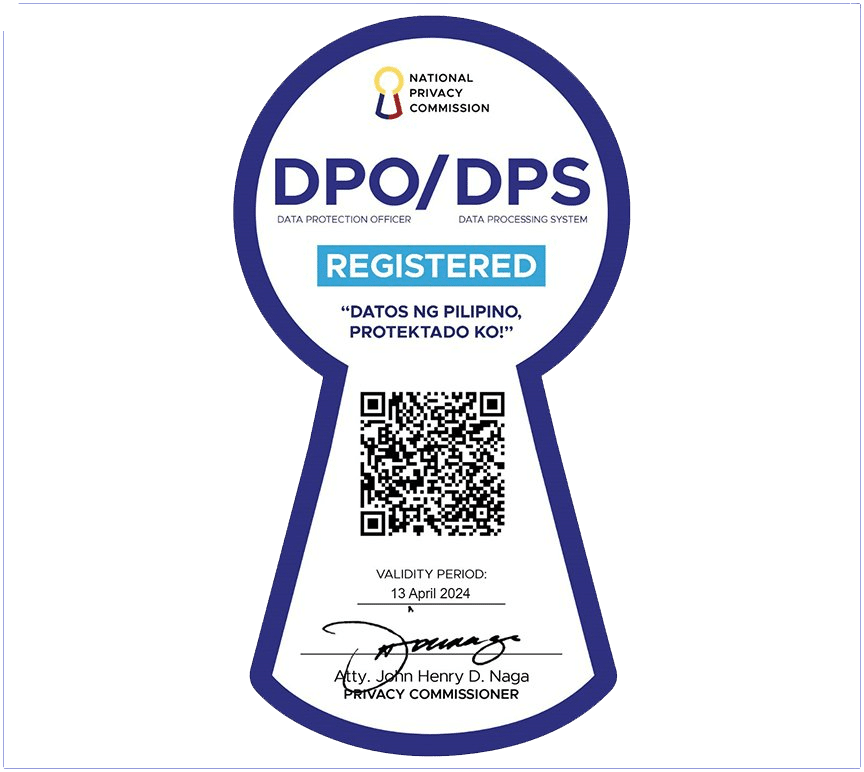
Clear security policies reduce the risk of unauthorized access and support responsible data management. The Philippines’ National Privacy Commission provides guidance on protecting personal data in work-from-home arrangements, including recommendations for device use, access controls, network security, and handling sensitive records.
4. Employee Classification
Businesses should correctly classify workers as employees or independent contractors based on local regulations. Incorrect classification may create financial penalties and administrative challenges.
Reviewing employment arrangements regularly helps organizations maintain compliance as business needs change. Companies should assess the actual working relationship, including the level of control, assigned responsibilities, and working arrangements, rather than relying only on the title used in a contract.
5. Workplace Policies
Remote employees still need clear workplace expectations even when they do not work from a physical office. Businesses should provide policies covering attendance, communication, equipment use, confidentiality, and performance expectations.
Consistent policies create fairness across the workforce. They also help managers address concerns using the same standards, regardless of where employees are based.
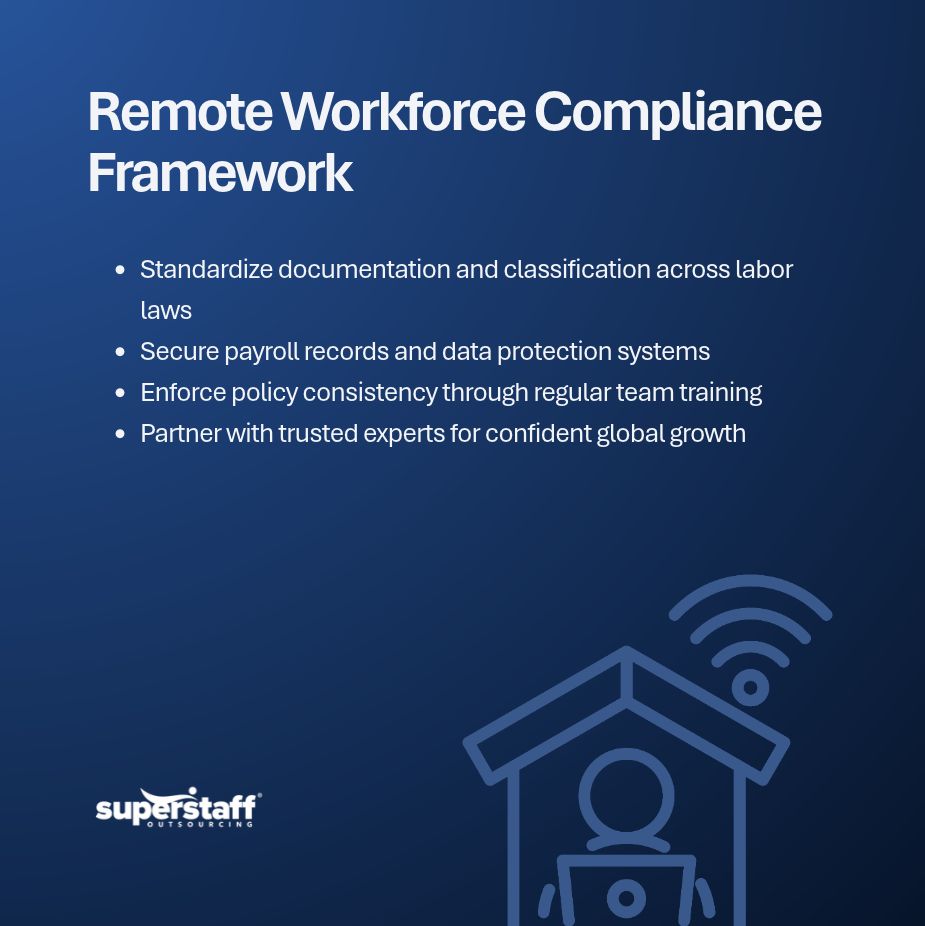
remote workforce compliance
Practical Solutions That Support Compliance
Compliance becomes easier when businesses create organized systems instead of relying on informal processes. These practical solutions help companies manage remote teams with greater confidence.
1. Develop Clear Documentation
Every remote employee should receive written employment agreements, company policies, and onboarding materials. Clear documentation reduces misunderstandings while creating consistent expectations.
Businesses should also review these documents regularly to reflect changing requirements. They should keep updated copies of employment agreements, policy acknowledgments, and other records that may be needed for internal reviews.
2. Standardize Onboarding
A structured onboarding process helps employees understand company policies from their first day. It should include training on workplace expectations, security procedures, communication tools, and reporting processes.
Consistent onboarding improves employee confidence while supporting operational efficiency. For companies managing distributed teams, a clear process also helps new hires receive the same information and support across locations.
3. Protect Company Information
Businesses should establish security practices that every remote employee follows. These may include secure passwords, multi-factor authentication, encrypted devices, and controlled access to sensitive information.
Simple security habits reduce unnecessary risks across remote teams. Companies should also explain how employees can report suspicious activity, lost devices, or possible data breaches so that concerns receive prompt attention.
4. Maintain Accurate Employee Records
Employee records should remain complete and updated throughout the employment relationship. Businesses should maintain documentation for payroll, contracts, tax information, training records, and performance reviews.
Well-organized records also support remote workforce compliance during internal reviews or external audits. Companies that handle large volumes of employee documents may benefit from structured document management outsourcing to help organize, update, and retrieve records more efficiently.
5. Work With Experienced Service Providers
Many organizations partner with experienced workforce providers to simplify payroll administration, HR support, recruitment, and Employer of Record services. These providers help businesses manage administrative responsibilities while allowing internal teams to focus on daily operations.
Reliable support also makes workforce expansion easier. Businesses should assess a provider’s experience, service scope, reporting practices, and ability to support the locations where their employees work.
Best Practices for Managing Remote Teams
Successful remote work depends on more than technology. Businesses should also create strong management practices that support compliance, communication, and employee engagement.
1. Communicate Regularly
Frequent communication helps employees stay informed and connected. Managers should schedule regular meetings, provide project updates, and encourage open discussions.
Strong communication also helps identify concerns before they become larger problems. Teams should agree on which communication channels to use for urgent matters, routine updates, and formal requests.
2. Train Employees Continuously
Policies and workplace requirements may change over time. Therefore, businesses should provide ongoing training on company procedures, security practices, and compliance expectations.
Regular learning helps employees perform their responsibilities with greater confidence. Managers should also keep records of completed training and provide updated materials whenever policies or processes change.
3. Monitor Compliance Regularly
Businesses should review employment records, payroll processes, and workplace policies on a regular schedule. These reviews help identify missing documentation or outdated procedures before they create larger issues.
Small improvements often strengthen long-term operations. Companies should also review how they monitor remote employees. Monitoring practices should have a clear purpose, follow applicable privacy requirements, and avoid collecting more personal information than necessary.
4. Use Reliable Technology
Remote teams depend on technology for communication, collaboration, and document management. Companies should invest in secure and user-friendly systems that support daily operations without creating unnecessary complexity.
Reliable technology also improves productivity across different locations. Access permissions should be reviewed regularly, and employees should receive guidance on using approved tools to store and share company information.
5. Plan for Future Growth
As remote teams expand, businesses should prepare their systems to support additional employees. Scalable HR processes, organized documentation, and reliable workforce partners make future growth easier to manage.
Planning ahead reduces operational pressure while supporting remote workforce compliance over time. Companies can also review their management structure and identify which administrative tasks may need additional support as headcount increases.
For businesses that need help managing distributed teams, remote team management strategies can provide useful ideas for setting expectations, improving communication, and maintaining accountability.
Build Strong Remote Teams With Confidence
Managing remote employees requires thoughtful planning, organized processes, and consistent communication. Businesses that invest in remote workforce compliance can reduce administrative risks while creating a better experience for employees across different locations. Strong compliance practices also support business growth, improve workforce management, and strengthen long-term operational stability.
SuperStaff helps businesses manage remote teams through Employer of Record solutions, recruitment support, HR services, payroll administration, and business process outsourcing. Whether you are building your first remote workforce or expanding internationally, our experienced team is ready to help. Contact SuperStaff today to discuss how our team can support your remote workforce compliance needs while helping your business grow with confidence.