Remote support is no longer limited to large companies. Small and growing businesses also depend on fast, organized assistance to keep daily operations running smoothly. As more processes move to digital platforms, technical issues can interrupt work, delay customer requests, and increase the workload of internal teams. This is why many companies turn to remote technical support services to manage service requests and maintain consistent support. With the right provider and clear processes, outsourcing can help businesses improve response times and deliver better customer experiences.
A successful outsourcing arrangement requires more than hiring additional support agents. Companies must understand their technical needs, choose a provider that fits their operations, and establish clear workflows. These steps help maintain service quality, improve communication, and make support easier to manage as business demands increase.
Why Structured Outsourcing Matters
A structured outsourcing plan gives support teams clear responsibilities and consistent procedures. It also helps businesses manage customer requests without creating unnecessary delays or confusion. Companies that establish these processes can benefit from:
1. Improved Service Flow
Clear workflows guide agents through each support request, reducing confusion and unnecessary transfers between departments.
2. Reduced Wait Times
Additional support agents help businesses manage higher request volumes, especially during peak hours.
3. Better Documentation
Accurate case records allow agents to review previous concerns, avoid repeated troubleshooting, and identify recurring problems.
4. Consistent Case Handling
Standard procedures ensure that similar issues receive the same level of attention and follow the correct resolution process.
5. Easier Performance Tracking
Managers can monitor response times, resolution rates, customer satisfaction, and other service metrics to identify areas that need improvement.
These practices also support the approach to technical support outsourcing in the Philippines, where service quality depends on combining technical knowledge with clear communication.
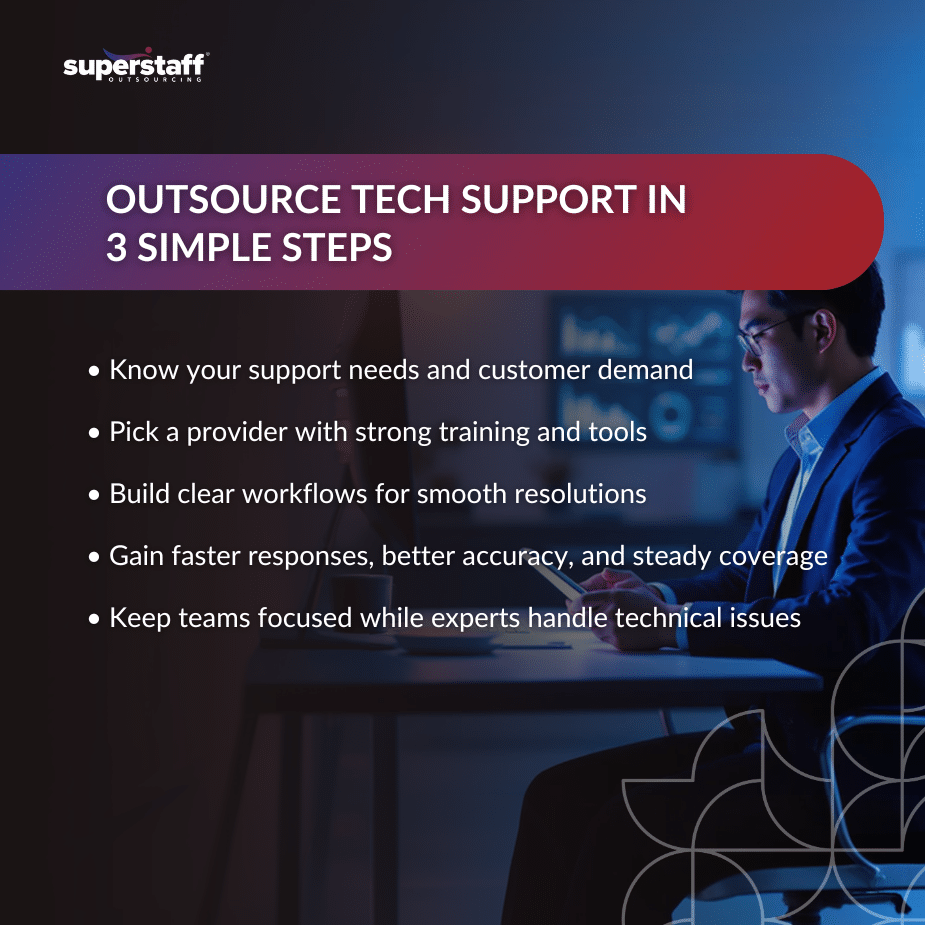
Step 1: Assess Your Technical Support Needs
Before outsourcing, businesses must understand their existing support requirements. This assessment helps determine which tasks need external assistance and what type of provider can handle them.
1. Customer Volume
Review the number of support requests received daily, weekly, and during peak periods. This information helps estimate how many agents are needed to maintain reasonable response times.
2. Common Technical Issues
Identify recurring problems, such as software errors, account access concerns, installation issues, and basic troubleshooting requests. Understanding these concerns helps determine the technical skills required from outsourced agents.
3. Communication Channels
Determine which channels customers and employees use to request assistance. These may include email, live chat, phone calls, and helpdesk platforms.
4. Internal Team Capabilities
Evaluate which technical tasks your existing employees can manage and which require additional expertise. This helps prevent overlapping responsibilities between internal and outsourced teams.
5. Workload Distribution
Decide which responsibilities should be handled externally. Businesses may outsource basic troubleshooting, ticket management, user assistance, or more specialized technical support, depending on their requirements.
A detailed assessment gives businesses a clearer idea of their staffing needs, expected service levels, and daily responsibilities before entering an outsourcing agreement.
Step 2: Choose the Right Technical Support Provider
After identifying your requirements, compare providers based on their experience, workforce capabilities, systems, and ability to meet your service expectations. The right partner should be able to work within your existing processes while supporting future business needs.
1. Industry Experience
Look for providers with experience handling technical concerns similar to yours. Familiarity with your industry, software, and business processes can help agents understand requests and provide appropriate assistance.
2. Training Standards
Ask how agents are trained before handling customer or employee concerns. Check whether the provider offers regular training to keep agents updated on software changes, troubleshooting procedures, and service standards.
3. System Compatibility
Make sure the provider can work with your existing tools, including ticketing platforms, communication software, and customer management systems. Compatible systems make it easier to share information and monitor ongoing requests.
4. Service Availability
Check whether the provider can support your required operating hours. If your business serves customers across different time zones, consider providers that offer extended or round-the-clock coverage.
5. Reporting and Accountability
Review the provider’s reporting process and the metrics used to measure performance. Businesses should receive regular updates on ticket volume, resolution times, unresolved cases, and customer feedback.
It is also important to understand how the provider manages customer concerns from the initial request to final resolution. Tech support outsourcing can help businesses manage support demands while giving internal employees more time to focus on their main responsibilities.
Before making a decision, review the provider’s service agreement, data handling practices, escalation procedures, and quality monitoring standards. These details help establish clear expectations and reduce possible issues after the partnership begins.
Step 3: Build Organized Support Workflows
Once you have selected a provider, establish procedures that guide agents through their daily responsibilities. Clear workflows help outsourced teams work consistently and coordinate with internal employees when technical issues require additional attention.
1. Set Documentation Requirements
Define the information agents must record for every support request. This may include the customer’s concern, troubleshooting steps, actions taken, and final resolution.
2. Provide Knowledge Base Access
Give agents access to updated guides, frequently asked questions, troubleshooting instructions, and other resources. Having reliable information available helps reduce errors and unnecessary escalations.
3. Establish Resolution Procedures
Create step-by-step instructions for common technical concerns. These procedures help agents follow approved solutions instead of relying on assumptions when handling customer requests.
4. Define Escalation Guidelines
Specify which issues agents can resolve independently and which must be forwarded to internal specialists. Include escalation contacts, response expectations, and procedures for urgent cases. The incident management and escalation procedures guide also highlights the importance of documenting responsibilities and keeping procedures accessible.
5. Set Performance Indicators
Establish key performance indicators (KPIs) to evaluate the quality of outsourced support. Useful measurements include first-response time, average resolution time, ticket accuracy, customer satisfaction, and unresolved request volume.
These guidelines give remote teams a consistent way to manage requests while helping businesses maintain visibility over daily support activities.
Benefits of Outsourcing Technical Support
Outsourcing technical support can help businesses manage operating costs, maintain service coverage, and respond to customer concerns more efficiently. Some of the main benefits include:
1. Lower Operating Costs
Businesses can reduce expenses associated with recruiting, hiring, training, and maintaining a full in-house support department. They can also adjust staffing based on actual service requirements.
2. Faster Response Times
An outsourced team provides additional manpower to handle incoming requests. This helps reduce backlogs and allows customers to receive assistance sooner.
3. More Consistent Support
Trained agents follow established procedures when handling technical concerns. Standardized documentation and quality checks also help reduce errors.
4. Flexible Staffing
Businesses can increase or reduce the number of support agents as demand changes. This is useful for companies experiencing seasonal increases in requests or planning to expand their operations.
5. Multichannel Assistance
Outsourcing providers can support different communication channels, including phone, email, live chat, and helpdesk platforms. This allows customers to contact the business through their preferred channel.
These benefits make outsourcing a practical option for companies that need additional technical support without expanding their internal workforce.
How Remote Support Improves Daily Operations
Beyond managing technical requests, outsourced teams can help improve how businesses handle daily activities. When support processes are properly established, internal employees can spend less time dealing with routine concerns.
1. Better Customer Experience
Timely responses and clear solutions help customers resolve technical concerns without unnecessary delays.
2. Greater Employee Productivity
Internal employees can focus on their main responsibilities instead of spending hours addressing basic technical requests.
3. Fewer Work Interruptions
Remote agents can help resolve common technical issues before they cause longer delays in daily operations.
4. Improved Service Accuracy
Standard procedures and updated support resources help agents provide consistent information and follow approved troubleshooting methods.
5. Better Visibility Into Support Activities
Regular reports allow managers to review ongoing cases, identify recurring issues, and determine where additional training or process improvements are needed.
When these processes work together, businesses can maintain reliable support coverage while keeping their internal operations organized.
How SuperStaff Supports Remote Technical Support Teams
SuperStaff provides technical and helpdesk support services for businesses that need trained agents to manage technical concerns and customer requests. Its support teams follow established procedures to help maintain service quality and consistent communication.
1. Skilled Support Agents
Agents receive training in technical troubleshooting and customer communication to help address different types of support requests.
2. Organized Workflows
Clear procedures guide agents through case documentation, troubleshooting, and escalation. This helps maintain consistency across daily support activities.
3. Scalable Support Teams
Businesses can adjust team size based on their workload and changing service requirements. This provides flexibility as customer demand increases.
4. Multichannel Assistance
Support teams can assist customers through different communication channels, including phone, email, and chat.
5. Performance Monitoring
Businesses can use service reports and performance metrics to review support activities, track results, and identify areas for improvement.
With the right staffing and processes, outsourced technical support can help businesses maintain service quality while allowing internal teams to focus on other priorities.
Build a Technical Support Team That Meets Your Needs
Outsourcing technical support requires careful planning, the right provider, and clear workflows. By following these three steps, businesses can build a support arrangement that manages requests efficiently, maintains service standards, and adapts to changing demands.
If your company needs additional technical support staff, SuperStaff can help you build a team that fits your operational requirements. Contact SuperStaff to discuss your needs and find the right support arrangement for your business.