Healthcare organizations handle large amounts of information every day. Patient records, billing details, appointment schedules, treatment histories, and compliance reports all generate valuable data. However, collecting data alone does not help organizations grow. They also need systems that organize information, improve accuracy, and support better decision-making.
This is where healthcare data tools play an important role. The right solutions help healthcare providers manage information efficiently, reduce administrative burdens, and improve patient experiences. As healthcare organizations expand, choosing the right technology becomes an important business decision.
Growth often depends on how quickly teams can access reliable information and respond to changing needs. Therefore, organizations should carefully evaluate their options before investing in new systems.
Why Healthcare Data Tools Matter for Growth
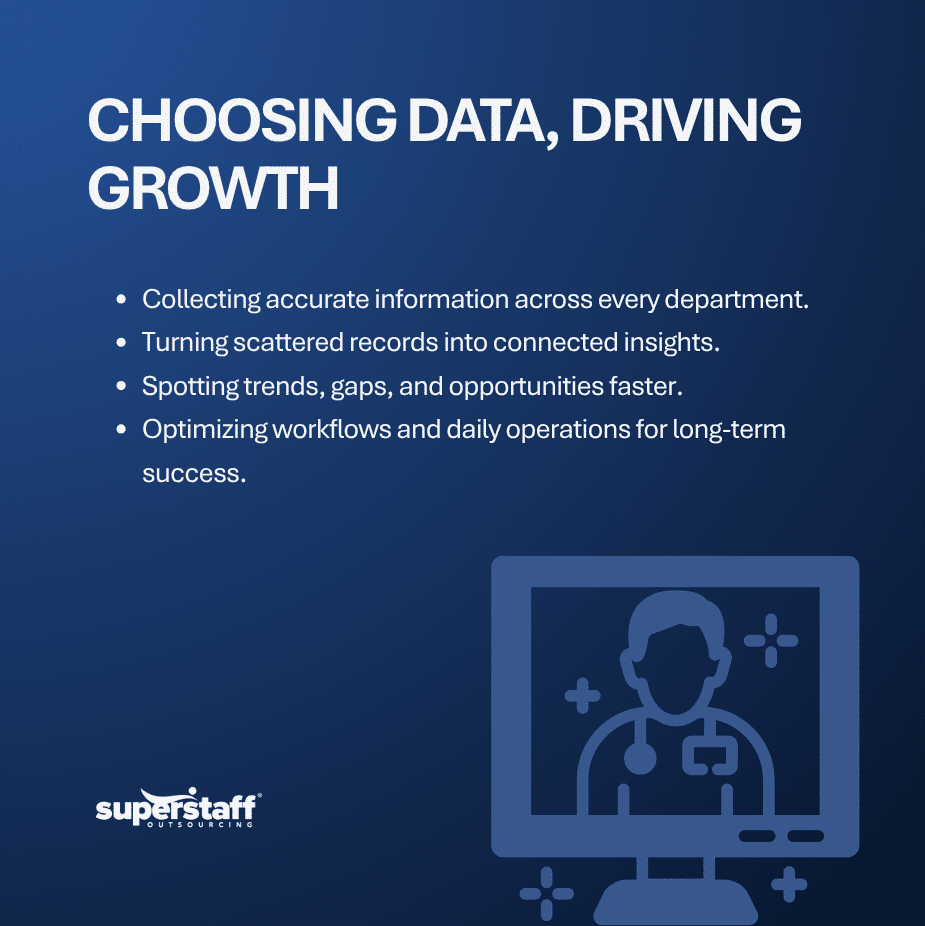
Growth requires accurate information, efficient workflows, and strong visibility into operations. Healthcare data tools support these goals by helping organizations collect, manage, and analyze information across departments.
When leaders have access to reliable data, they can make informed decisions faster. At the same time, staff members spend less time searching for information and more time supporting patients.
1. Improve Operational Efficiency
Healthcare teams often work with multiple systems and processes. Without proper tools, information may become scattered across departments.
Healthcare data tools bring information together in one place. Organizations can also combine technology with healthcare outsourcing services to support patient intake, records management, billing, claims, and other administrative processes.
2. Support Better Decision-Making
Leaders need accurate information when planning budgets, staffing, and service expansion.
With centralized reporting and analytics, organizations can identify trends, monitor performance, and make informed decisions. Consequently, they can respond more quickly to operational changes and new demands.
3. Strengthen Patient Experience
Patients expect timely communication and accurate records. Delays and errors can affect satisfaction and make administrative processes more difficult.
The right systems help staff access information quickly. Healthcare providers can also use healthcare BPO support for patient communication and other front- and back-office functions that support the overall patient experience.
4. Enhance Data Accuracy
Manual processes often increase the risk of mistakes. Duplicate records and missing information can create operational issues.
Modern tools can support data validation, record management, and standardized processes. As a result, organizations can maintain more consistent information across their systems.
5. Prepare for Future Expansion
Growth creates additional demands on staff and systems. Organizations need technology that can support increasing workloads.
Scalable solutions allow healthcare providers to manage larger volumes of data without regularly replacing their systems. This flexibility can support expansion into new services, facilities, or markets.
Key Features to Look for in Healthcare Data Solutions
Not all systems offer the same capabilities. Before making a decision, organizations should evaluate which features align with their goals.
Choosing the right healthcare data tools requires a clear understanding of both current needs and future requirements.
1. Easy Integration Capabilities
Healthcare organizations often use multiple software platforms, including electronic health records, billing systems, scheduling tools, and patient communication platforms.
Look for solutions that can exchange information with existing systems. The U.S. Office of the National Coordinator for Health Information Technology explains that health IT interoperability supports the secure access, exchange, and use of electronic health information across systems.
Integration should therefore be part of the evaluation process rather than an afterthought.
2. Real-Time Reporting
Access to current information helps leaders make timely decisions.
Real-time dashboards and reports can provide visibility into areas such as patient volumes, billing performance, staffing requirements, and administrative workloads. Consequently, managers can identify issues earlier and respond accordingly.
3. Strong Security Measures
Healthcare organizations handle sensitive patient information. For this reason, security should remain a top priority.
Organizations should evaluate access controls, encryption, authentication, audit capabilities, and other safeguards based on their regulatory and operational requirements. Security responsibilities should also be reviewed whenever third parties have access to protected information.
4. User-Friendly Design
Complicated systems can create frustration among staff members and increase training requirements.
Instead, organizations should evaluate whether employees can navigate common functions easily. A system that fits existing workflows can make adoption easier and reduce unnecessary administrative steps.
5. Scalability
Business needs change over time. Therefore, organizations should select solutions that can grow alongside their operations.
Scalable platforms should be able to support increasing data volumes, users, locations, and workflows without creating major performance or management problems.
Common Mistakes When Selecting Data Tools
Many organizations invest in technology without fully evaluating their needs. As a result, they may experience lower adoption rates or discover that the system does not fit their workflows.
Avoiding common mistakes can help healthcare providers make better technology decisions.
1. Focusing Only on Cost
Budget matters, but price should not be the only consideration.
A lower-cost solution may lack important features, integrations, security controls, or scalability. Therefore, organizations should evaluate overall value and long-term requirements rather than upfront cost alone.
2. Ignoring Staff Input
Employees use these systems every day. Their feedback can provide useful information during the selection process.
Including staff members in evaluations can reveal workflow problems, missing features, and training needs before implementation.
3. Overlooking Future Needs
Some organizations choose systems based only on current requirements.
However, growth may create new demands over time. Selecting flexible solutions can make it easier to add users, workflows, locations, and services as the organization expands.
4. Neglecting Training Requirements
Even the best technology requires proper training.
Without adequate support, employees may struggle to use new systems effectively. Organizations should consider training time, documentation, technical support, and ongoing learning before selecting a platform.
5. Skipping Vendor Evaluation
Technology providers vary in terms of service quality, security practices, implementation support, and system capabilities.
Before making a decision, healthcare organizations should review vendor experience, security documentation, integration capabilities, service agreements, and customer support options.
Building a Long-Term Data Strategy
Technology alone does not create growth. Organizations also need a clear strategy for managing and using information effectively.
Successful healthcare providers align their technology investments with broader operational goals. They may also use back-office outsourcing to support data management, administrative processes, and other tasks that work alongside healthcare technology systems.
A strong data strategy should include:
- Clear goals and performance metrics
- Consistent data governance policies
- Staff training and development programs
- Security and access management procedures
- Regular system evaluations
- Ongoing process improvement initiatives
Additionally, organizations should review their technology needs regularly. Business priorities change, and systems should continue supporting those changes.
Healthcare data tools deliver greater value when they work alongside well-defined processes and skilled teams. Therefore, organizations should consider technology, people, security, and workflows as part of the same strategy.
Smarter Data Choices Support Better Growth
Choosing the right healthcare data tools can help healthcare organizations improve efficiency, strengthen decision-making, and prepare for future expansion. The right solutions can simplify daily processes while giving teams better access to the information they need.
As an organization grows, reliable systems must also be supported by people who can manage records, administrative workflows, patient communication, and other operational responsibilities. SuperStaff provides healthcare outsourcing solutions designed to support these functions alongside existing technology.
If you’re looking for practical ways to strengthen your healthcare operations while getting more value from your healthcare data tools, reach out to SuperStaff today and discuss the support your organization needs.