Business operations can stop without warning. Power outages, system failures, or sudden demand changes can affect daily work and customer service. Because of this, companies need a clear plan to stay active and responsive. Many now turn to business continuity outsourcing to keep operations running without major interruptions.
Colombia stands out as a strong location for this strategy due to its skilled workforce and growing outsourcing sector. At the same time, outsourcing allows businesses to stay flexible while managing costs. As a result, business continuity outsourcing continues to grow as a practical solution for companies that want stability and steady performance.
Why Colombia Supports Strong Business Continuity
Colombia continues to attract companies that need reliable outsourcing support. Its growing industry and skilled workforce make it a practical option for business continuity outsourcing.
1. Skilled Workforce Across Key Roles
Colombia offers talent across customer service, IT, finance, and administrative functions. Because of this, companies can assign essential roles to outsourced professionals and maintain additional operational capacity when disruptions occur.
2. Time Zone Alignment With Global Markets
Colombia’s time zone aligns closely with North American business hours. As a result, outsourced and internal teams can communicate in real time. Companies exploring Colombia outsourcing solutions can use this alignment to support daily collaboration and maintain operational flexibility.
3. Strong Infrastructure and Connectivity
Technology and connectivity play an important role in maintaining outsourced operations. Providers with suitable infrastructure, backup systems, and remote work capabilities can give businesses additional options when normal operations are affected.
4. Growing Outsourcing Environment
Colombia has developed a growing business process outsourcing sector that serves companies across different industries. This gives organizations access to providers with experience managing customer-facing and back-office operations.
5. Cost Efficiency With Consistent Quality
Outsourcing gives companies another way to manage staffing and operational expenses. Businesses can build teams around specific functions while maintaining defined service standards and performance requirements.
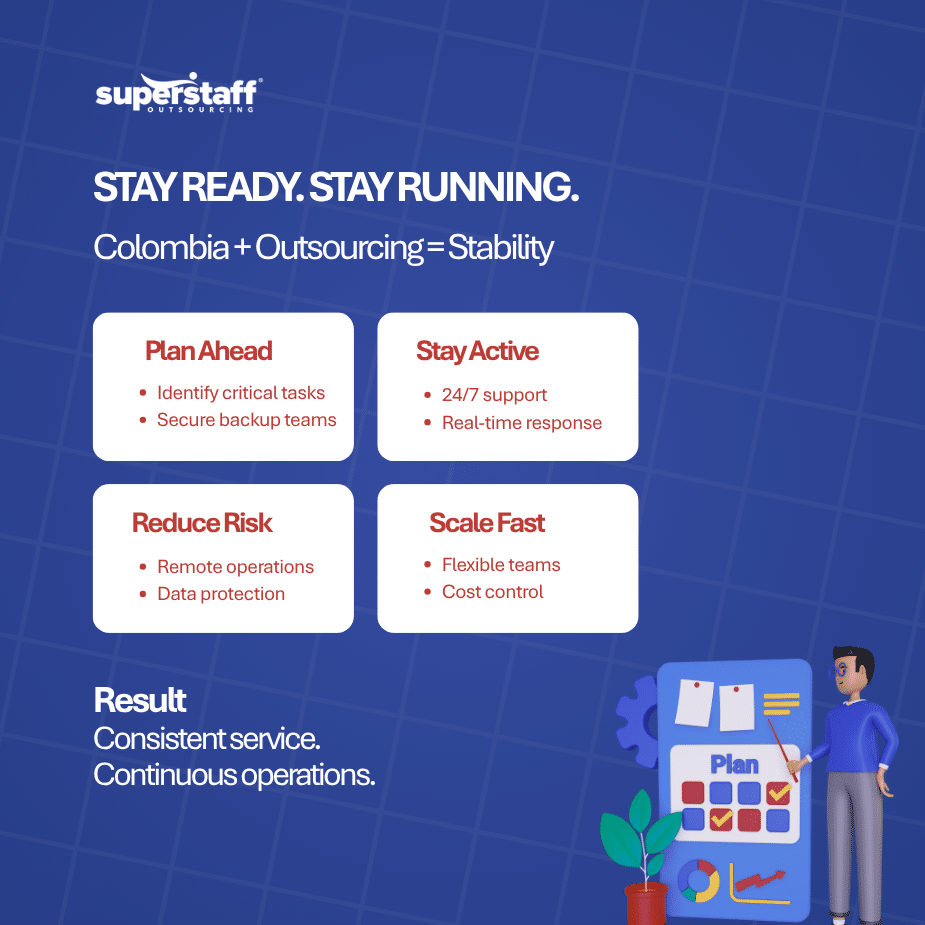
Key Services That Support Continuity
Business continuity outsourcing can cover customer-facing and internal functions that need to remain active during disruptions. The specific services depend on which operations a company considers essential.
1. Back-Office Continuity Support
Administrative tasks such as billing, data processing, reporting, and documentation may still need to continue during a disruption. Back-office continuity support provides additional capacity for these functions when internal resources are limited.
2. Customer Service Continuity
Customers still expect support when a company experiences operational problems. Outsourced customer service teams can provide additional coverage for calls, emails, chats, and other communication channels.
3. IT and Technical Support
System problems can affect employee productivity and customer service. Outsourced technical teams can support troubleshooting, ticket management, and other approved IT functions based on their assigned responsibilities.
4. Crisis Management Outsourcing
Unexpected events require defined responsibilities and clear communication. Companies can use crisis management outsourcing for selected support functions while internal leaders focus on business decisions, recovery priorities, and other critical responsibilities.
5. Data Backup and Recovery Support
Protecting information is an important part of continuity planning. The U.S. government’s business continuity planning guidance recommends preparing for disruptions and identifying the resources and processes needed to maintain or restore operations.
How Business Continuity Outsourcing Improves Operations
Business continuity outsourcing can provide additional capacity during emergencies while also supporting everyday operations. A well-planned outsourcing model gives companies access to teams that already understand their assigned processes.
1. Faster Response to Disruptions
Teams that already know their responsibilities can respond more efficiently when workloads shift or normal processes become unavailable. Clear continuity procedures reduce the time spent deciding who should handle essential tasks.
2. Scalable Support Based on Needs
Demand can change quickly during service interruptions, seasonal peaks, or unexpected events. Outsourcing gives businesses additional options for adjusting support capacity without relying entirely on internal hiring.
3. Reduced Operational Risk
Distributing selected functions across different teams or locations can reduce dependence on a single workforce or site. SuperStaff’s guide to outsourced business continuity explains how external teams can provide additional staffing, specialized skills, and operational support during disruptions.
4. Focus on Core Business Functions
During a disruption, internal teams may need to focus on recovery, customer decisions, leadership responsibilities, or technical issues. Outsourced professionals can continue handling assigned support functions while internal employees address higher-priority concerns.
5. Consistent Service Delivery
Customers may continue contacting a business even when internal operations are affected. Defined backup workflows and additional staffing can make it easier to maintain customer communication and other essential services.
Steps to Build a Strong Outsourcing Strategy
A clear strategy helps companies define how outsourcing fits into their broader continuity plan. Responsibilities, communication channels, systems, and recovery procedures should be established before a disruption occurs.
1. Identify Critical Business Functions
Start by identifying the activities that must continue during a disruption. These may include customer service, billing, IT support, data processing, order management, or other essential functions.
2. Choose the Right Outsourcing Partner
Evaluate providers based on relevant experience, infrastructure, staffing capabilities, security, communication, and continuity procedures. Companies considering Colombia BCP outsourcing solutions should also confirm how a provider manages its own operational risks.
3. Set Clear Communication Channels
Internal and outsourced teams need to know how they will communicate during normal operations and emergencies. Establish primary and backup communication channels, points of contact, and escalation procedures.
4. Test Continuity Plans Regularly
A continuity plan should be tested before an actual disruption occurs. Simulations and exercises can reveal unclear responsibilities, technology gaps, communication problems, and other weaknesses that need attention.
5. Monitor Performance and Adjust
Track relevant measures such as response times, service availability, workload, quality, and recovery performance. These results can show where continuity procedures need to be updated.
Common Challenges and How to Handle Them
While business continuity outsourcing can provide additional operational support, companies still need to address communication, security, integration, and service quality.
- Communication gaps
Clear procedures, regular meetings, and defined points of contact reduce misunderstandings between internal and outsourced teams. - Cultural differences
Training on company expectations, communication standards, and internal processes can improve collaboration across locations. - Data security concerns
Companies should evaluate access controls, security policies, confidentiality requirements, and applicable compliance standards before providing outsourced teams with sensitive information. - Integration with internal teams
Proper onboarding allows outsourced professionals to understand workflows, systems, responsibilities, and escalation procedures. - Maintaining service quality
Regular performance reviews and clear service standards allow businesses to identify gaps and improve processes over time.
Build Resilient Teams With Trusted Support
Reliable operations depend on planning, clear responsibilities, and the ability to adjust when conditions change. Business continuity outsourcing can provide additional staffing and operational capacity while allowing companies to distribute selected functions across teams and locations.
SuperStaff provides outsourcing solutions for customer service, back-office operations, technical support, and other business functions. Companies can build teams based on their operational needs, service requirements, and continuity goals.
If you are considering business continuity outsourcing as part of your continuity strategy, contact SuperStaff to discuss your requirements and explore an outsourcing model that fits your operations.