Delivery and fleet companies handle a steady flow of customer requests. Customers want tracking updates, report delays, and expect clear answers when delivery problems occur. Managing these requests with an in-house team can put pressure on resources and affect response times. Transportation customer service outsourcing gives businesses another way to maintain responsive support without expanding every role internally.
Dedicated support also allows internal employees to spend more time on routing, fleet management, dispatch, and delivery planning. With trained agents managing customer communication, companies can keep customers informed while their operational teams focus on moving deliveries forward.
Why Transportation Customer Service Outsourcing Works
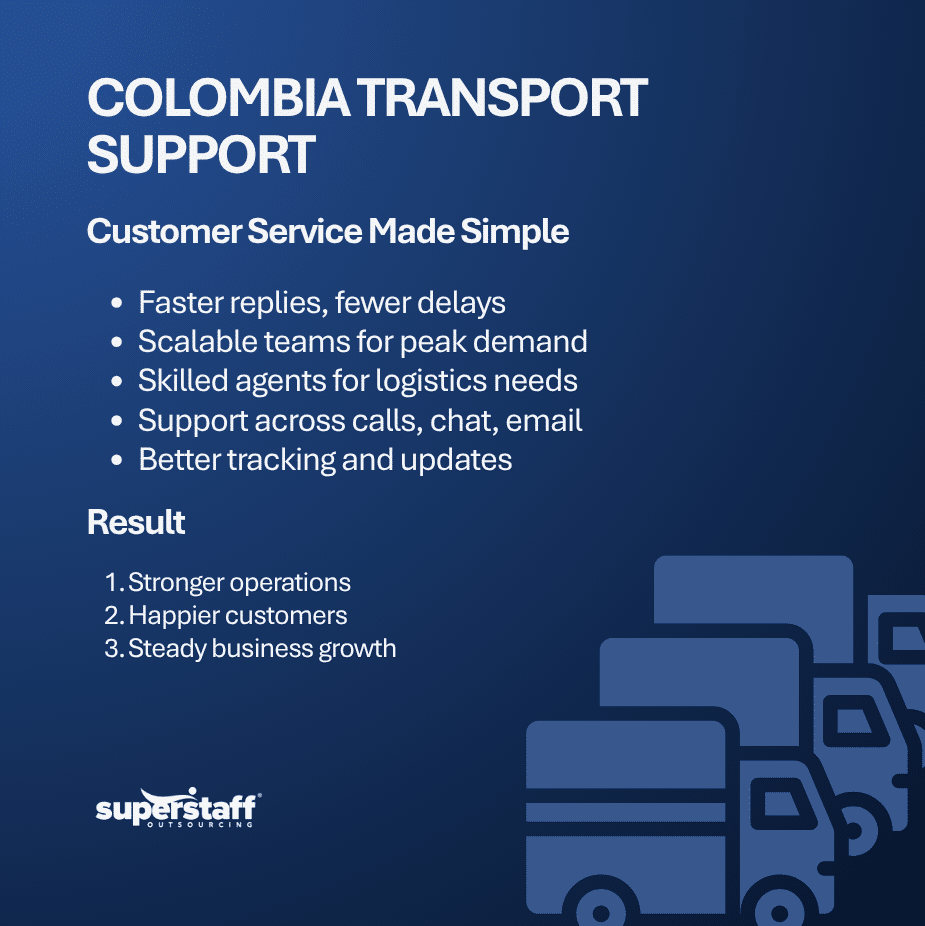
Fleet and delivery companies need reliable customer support throughout the delivery process. Transportation customer service outsourcing provides additional service capacity while allowing businesses to maintain clear performance standards.
1. Faster Response Times
Customers expect timely information about deliveries, delays, and other concerns. Trained agents can manage these inquiries and provide available updates based on approved systems and processes. Faster access to support can reduce the need for customers to make repeated contact.
2. Scalable Support for Busy Periods
Delivery volumes often increase during holidays, promotions, and seasonal peaks. Additional outsourced staff can give businesses more capacity when customer inquiries rise. Team size can also be adjusted as service requirements change.
3. Cost Control and Predictable Spending
Building an internal customer service department may involve recruitment, salaries, benefits, technology, training, and management expenses. Transportation customer service outsourcing provides another staffing model that companies can consider when planning their operational budgets.
4. Access to Skilled Support Teams
Dedicated providers can train agents on client-specific logistics processes, terminology, systems, and customer service requirements. Businesses exploring logistics customer service outsourcing can assign customer communication tasks to trained teams while internal employees concentrate on transportation operations.
5. More Focus on Core Operations
Internal employees already need to manage drivers, routes, vehicles, schedules, and deliveries. Moving selected customer inquiries to an external team can reduce interruptions and give operational staff more time for their primary responsibilities.
Key Services Offered by Outsourcing Providers
Fleet, courier, and delivery companies can outsource several customer-facing and administrative functions. The exact services depend on the company’s workflows, customer channels, and operational requirements.
1. Fleet Customer Support Outsourcing
Fleet customer support outsourcing can cover inquiries about schedules, delivery status, delays, and related concerns. Agents follow established processes when providing information or directing more complex issues to the appropriate team.
2. Dispatch Support Outsourcing
Dispatch teams coordinate information among drivers, customers, and internal operations. Dispatch support outsourcing can provide additional assistance with updates, scheduling information, documentation, and other assigned activities.
3. Customer Service for Courier Companies
Courier businesses may receive frequent questions about package tracking, delivery windows, missed deliveries, and proof of delivery. Customer service for courier companies provides dedicated agents who can manage these requests across approved channels.
4. Multichannel Customer Support
Phone calls are only one way customers contact transportation companies. Email, live chat, social media, and messaging platforms may also form part of the customer journey. Transportation customer service outsourcing can provide coverage across selected channels based on business needs.
5. Back-Office and Data Support
Transportation operations generate large amounts of information related to customers, orders, deliveries, invoices, and drivers. Dedicated teams can assist with data entry, documentation, reporting, and other logistics back-office services that keep operational information organized.
How Colombia Supports Transportation Outsourcing
Colombia has developed a growing outsourcing sector that serves international companies across customer service, back-office operations, logistics, and other business functions.
1. Skilled Workforce with Strong Communication
Businesses can recruit Colombian professionals based on the language skills, communication abilities, and customer service experience needed for each account. Bilingual professionals can also support companies serving English- and Spanish-speaking customers.
2. Alignment with International Customers
Account-specific training gives agents a better understanding of customer expectations, company terminology, brand voice, and communication standards. Clear guidelines also make it easier to maintain a consistent approach across customer interactions.
3. Cost-Effective Operations
Staffing expenses are an important consideration for growing transportation companies. Colombia gives businesses another labor market to consider when comparing service models and operating costs. Actual savings will depend on team size, roles, technology, and provider requirements.
4. Infrastructure and Connectivity
Reliable technology is necessary for agents working with tracking platforms, CRM systems, communication tools, and other logistics applications. Before selecting a partner, businesses should evaluate connectivity, backup systems, security controls, and continuity procedures.
5. Time Zone Advantage
Colombia’s working hours overlap closely with many North American markets. Internal and outsourced teams can therefore communicate during the same business day. This alignment can also support real-time customer service during important operating hours.
Best Practices for Successful Outsourcing
A clear outsourcing plan establishes how internal and external teams will work together. Responsibilities, service standards, communication methods, and performance expectations should be defined before customer interactions begin.
1. Set Clear Service Goals
Start by defining response times, resolution targets, escalation procedures, and quality standards. Measurable expectations give teams clear performance goals and make results easier to evaluate.
2. Choose the Right Partner
Look for a provider with relevant experience in customer service, logistics, or transportation support. Businesses should also review recruitment practices, training methods, quality controls, security procedures, and scalability.
3. Provide Training and Process Guides
Detailed documentation gives agents a reliable reference when handling customer requests. Training should cover workflows, tracking systems, common customer concerns, communication standards, and escalation procedures.
4. Monitor Performance Regularly
Response time, resolution rate, customer satisfaction, quality scores, and ticket volume can provide useful information about team performance. Transportation companies can also use resources from the U.S. Department of Transportation to stay informed about transportation-related programs, policies, and industry information.
5. Maintain Open Communication
Regular meetings allow both teams to discuss delivery changes, customer concerns, process updates, and performance results. Clear communication also makes it easier to address problems before they affect more customers.
Improve Delivery Support with Expert Teams
Transportation customer service outsourcing gives fleet and delivery companies additional capacity to manage inquiries, tracking requests, delivery concerns, and other customer communication. A structured outsourcing model can also allow internal teams to spend more time managing drivers, routes, vehicles, and daily transportation operations.
SuperStaff provides outsourcing solutions for transportation and logistics companies that need customer service, back-office, and operational support. Businesses can build teams around their customer channels, workloads, processes, and service requirements.
Ready to expand your transportation customer service outsourcing operation? Contact SuperStaff to discuss your requirements and build a support team suited to your fleet or delivery business.