A new technology investment not only creates demand for engineers and factory workers. It also creates work that keeps businesses running every day. Companies entering a new market need people to manage records, support employees, process documents, monitor operations, handle finance tasks, and respond to customers.
That raises an important question for the Philippines as the country develops its role in Pax Silica. Could the demand for BPO services extend beyond the customer support work that helped build the Philippine outsourcing industry?
The proposed Pax Silica development in New Clark City is tied to artificial intelligence, semiconductors, advanced manufacturing, and logistics. Therefore, the support work around these industries could involve far more than call center services.
Pax Silica Could Expand BPO Needs
The planned development involves more than one type of business activity. That matters because each activity can create different support requirements. The potential for these services is also explored in SuperStaff’s article on how Pax Silica could create new opportunities for BPO services.
1. Technology Firms Need Back-Office Support
Technology companies still need people to manage routine business operations. They may require help with data entry, document processing, scheduling, reporting, procurement support, and administrative tasks.
As more firms establish operations around the Pax Silica ecosystem, these functions could become suitable areas for outsourcing. Companies can keep specialized technical roles in-house while assigning repeatable support work to external teams.
2. Manufacturing Creates Operational Work
Manufacturing companies need more than production workers. They also need teams that support purchasing, inventory records, order processing, documentation, logistics coordination, and supplier communication.
Consequently, the growth of advanced manufacturing could create BPO opportunities that have little connection to traditional customer service. These roles can support the operational side of businesses producing technology-related products. Similar needs are covered in SuperStaff’s guide to outsourcing manufacturing operations in the Philippines.
3. Logistics Needs Coordination
A technology and manufacturing hub depends on the movement of materials, equipment, components, and finished products. The Philippine government has described the planned hub as part of a broader AI and technology value chain that includes advanced manufacturing and logistics.
Therefore, companies may need support teams for shipment tracking, dispatch coordination, proof-of-delivery checks, inventory updates, and logistics documentation.
4. Finance Teams Need Support
Every company needs financial processes, regardless of its industry. Accounts payable, invoice processing, payment follow-ups, expense review, and financial data management can require significant staff time.
BPO providers can support these functions while internal finance leaders retain control over approvals and financial decisions. This arrangement can help growing companies expand operations without immediately building large administrative departments.
5. Technical Support May Grow
Customer support is only one form of support that technology companies need. Employees and business clients may also need technical assistance with software, devices, systems, and internal tools.
Therefore, BPO demand could move toward technical support roles that require stronger product knowledge and problem-solving skills. This could create opportunities for Philippine workers with technology-related backgrounds.
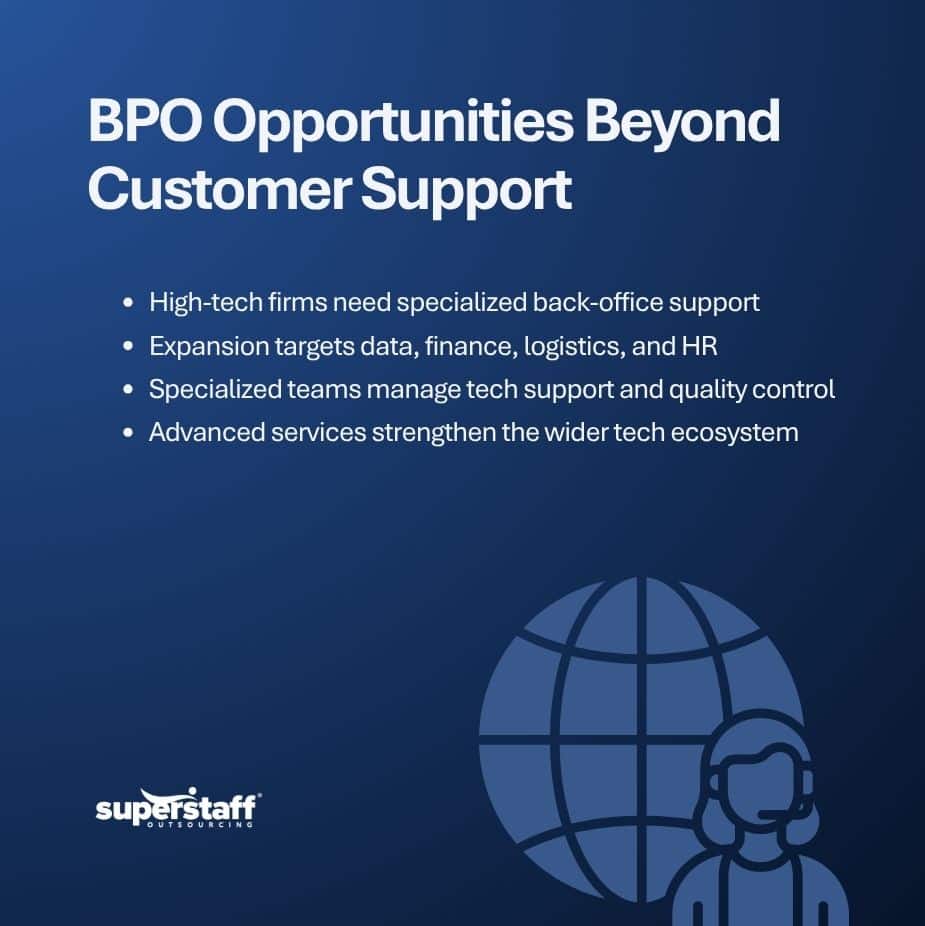
New Industries Need Different BPO Skills
If BPO demand expands around Pax Silica, companies may look for skills that differ from traditional call center requirements. The Philippines already has an established IT-BPM workforce, which gives companies a base for developing these services.
1. Data Operations
Technology companies work with large amounts of information. Teams may need to classify records, validate data, update databases, and identify inconsistencies.
These tasks can often follow clear processes, making them suitable for specialized outsourcing teams. However, companies still need strong quality controls when the information affects business decisions.
2. Procurement Support
Manufacturing and technology firms work with suppliers, vendors, and contractors. Employees may need to compare documents, update purchase records, follow up on orders, and maintain supplier information.
A BPO team can handle these repetitive activities while procurement managers focus on supplier relationships and purchasing strategy.
3. Compliance Support
Companies operating in technology and manufacturing may need extensive documentation. Teams can support compliance work by organizing records, checking required information, maintaining documentation, and preparing reports.
However, outsourced employees should work within clear procedures and escalation rules. Final legal or regulatory decisions should remain with the appropriate internal professionals.
4. Human Resources Operations
New companies need employees, and employees create administrative work. Recruitment coordination, employee records, onboarding documents, payroll support, and scheduling can require dedicated resources.
BPO teams can handle these operational tasks while internal HR leaders focus on workforce planning, culture, and employee strategy.
5. Human-in-the-Loop Services
AI systems can process information and automate routine decisions. However, businesses may still need people to review exceptions, verify outputs, and handle cases that require context.
This creates another possible BPO opportunity. Companies could outsource human review while keeping AI systems and final decision-making under internal control.
What Could Drive Pax Silica BPO Demand?
The size of the opportunity will depend on how the Pax Silica ecosystem develops. Current plans point to a large industrial and technology project, but implementation will take time.
1. More Companies Mean More Support Work
According to the Philippine News Agency’s report on the planned Pax Silica AI hub, the first phase could cover around 500 hectares of the 1,620-hectare site, with development expected to begin in three to five years.
As more companies enter the ecosystem, each one could create demand for administrative, technical, financial, and operational support.
2. Global Firms May Need Local Teams
Foreign companies entering the Philippines may understand their technology or manufacturing processes well. However, they may still need local teams to manage day-to-day support functions.
BPO providers can offer an existing workforce and operational structure. Therefore, outsourcing may help companies establish support functions without building every team from the ground up.
3. Specialized Work Can Support Higher-Value Services
The Philippine government has projected more than 130,000 high-quality jobs from the proposed Pax Silica development, including opportunities for engineers, researchers, computer science graduates, and other skilled professionals.
BPO services could complement these roles by handling the operational work that surrounds them. This creates room for outsourcing models that focus on specialized business support rather than only high-volume customer interactions.
4. Companies May Want Flexible Operations
New businesses often need to control costs while they establish their operations. Outsourcing can provide access to trained employees without requiring companies to immediately build every support department internally.
As operations grow, companies can also expand specific outsourced functions based on workload.
5. The BPO Industry Can Adapt
The Philippine outsourcing sector has already developed experience in customer service, IT support, finance, healthcare, and other business functions. The next opportunity may involve applying those capabilities to newer industries.
Pax Silica does not guarantee new BPO demand. However, its focus on technology, manufacturing, and supply chains creates potential areas for outsourcing beyond customer support.
BPO Could Support the Wider Ecosystem
The most interesting BPO opportunities may come from the work surrounding Pax Silica rather than from customer support alone.
1. Operations Need People
Even highly automated companies need employees to manage processes. Someone still needs to check records, follow procedures, coordinate tasks, and handle exceptions.
Therefore, outsourcing can support the human side of technology-driven operations.
2. Quality Still Matters
Technology companies cannot simply produce information and move on. They need people to check whether records, reports, orders, and customer interactions meet their standards.
BPO teams can provide structured quality checks that support internal teams.
3. Local Knowledge Has Value
Companies entering the Philippines may need support with local processes, workforce coordination, and administrative requirements. Local outsourcing teams can provide knowledge that foreign companies may not have internally.
This can make BPO useful even when the core business focuses on advanced technology.
4. Support Functions Can Scale
A company may begin with a small administrative team and later need more support as its operations expand. Outsourcing can provide a way to increase capacity without changing the entire internal structure.
As a result, BPO can remain useful across different stages of business growth.
5. The Opportunity Should Stay Balanced
Pax Silica remains a developing project, and its full impact will depend on investment, infrastructure, workforce readiness, and execution. Current plans indicate a long development timeline rather than an immediate expansion of every expected service.
Therefore, businesses should treat broader BPO demand as a potential opportunity, not a guaranteed outcome.
Pax Silica Could Expand Outsourcing Roles
Pax Silica could create opportunities that reach beyond traditional customer support. Technology companies, manufacturers, logistics providers, and other businesses may need help with data operations, finance, procurement, HR, technical support, quality checks, and other back-office functions.
The Philippine BPO industry can prepare by developing teams with specialized skills that match these needs. This approach can help companies entering the ecosystem access operational support while allowing them to focus on their core technical and commercial work.
SuperStaff provides outsourcing services for customer support, finance, recruitment, logistics, and back-office operations. As the Pax Silica ecosystem develops, businesses can consider how the right BPO partner can support the operational work behind their growth.
Businesses preparing for these opportunities can contact SuperStaff to discuss outsourcing solutions for their technology, manufacturing, and business operations.