
Every customer call can shape how people view a company. A helpful response can build trust, resolve concerns, and give customers a reason to continue doing business with the brand. A customer care business provides trained professionals who manage these interactions with clear communication and consistent service.
As companies grow, handling higher call volumes while maintaining service quality can become difficult. Therefore, many businesses work with outsourcing partners to expand customer support without placing more pressure on their internal teams.
How Customer Care Supports Stronger Customer Relationships
Customer care goes beyond answering questions or resolving complaints. Instead, it focuses on maintaining positive customer relationships across different stages of the customer journey.
1. What Customer Care Includes
Customer care teams manage communication through phone calls, email, live chat, social media, and other channels. They answer questions, provide information, resolve concerns, and guide customers toward the right next step.
In addition, agents represent the company’s brand during direct customer interactions. Their communication skills and knowledge can influence how customers view the overall business.
2. Customer Care vs. Customer Service
Customer service usually focuses on answering questions and resolving specific customer issues. Customer care takes a broader approach by considering how customers feel throughout their interactions with the company.
However, the two functions often work together. Strong support teams solve immediate concerns while also maintaining professional and respectful customer relationships.
3. The Role of Outsourcing
Companies can use customer experience outsourcing to gain access to trained professionals without building every support function internally. An outsourcing provider can recruit agents, train teams, manage schedules, and support day-to-day service operations.
As a result, internal teams can spend more time on product development, sales, strategy, and other core functions. Meanwhile, outsourced teams focus on maintaining consistent customer communication.
4. Benefits for Businesses
A customer care business can give companies greater flexibility when customer demand increases. For example, businesses can expand support capacity during seasonal peaks, product launches, or periods of rapid growth.
Furthermore, outsourcing can reduce the need to manage additional recruitment, infrastructure, and support resources internally. Companies can instead work with a provider that already has the people and processes required for customer support.
5. Benefits for Customers
Customers benefit when they can reach knowledgeable agents without unnecessary delays. Faster access to clear information can reduce frustration and make the overall support experience easier.
Consistent service also matters across different channels. When agents follow clear processes and understand the brand, customers receive a more reliable experience regardless of how they contact the company.
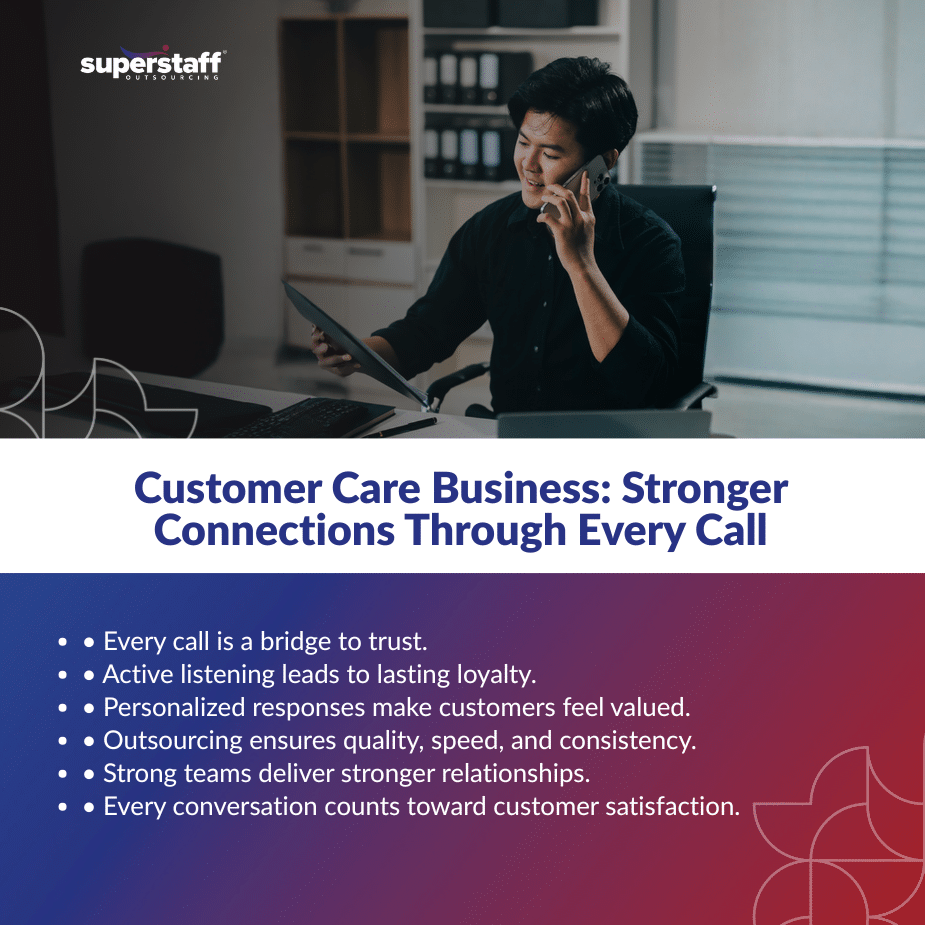
How to Build Stronger Customer Connections Through Calls
Strong customer relationships require more than answering the phone quickly. Agents also need communication skills, product knowledge, and clear processes to manage each conversation effectively.
1. Listen Actively
Agents should allow customers to explain their concerns before offering a solution. By listening carefully, they can understand the actual issue and avoid asking customers to repeat information unnecessarily.
Moreover, active listening allows agents to identify details that customers may not state directly. They can then provide responses that better match the customer’s situation.
2. Communicate Clearly
Agents should use simple language and explain solutions in a way customers can easily understand. Clear communication reduces confusion, especially when agents discuss technical issues, account information, policies, or next steps.
Additionally, agents should confirm that customers understand the solution before ending the conversation. This small step can prevent repeat calls about the same concern.
3. Maintain a Professional Tone
Tone can affect how customers respond during a call. Therefore, agents should remain calm, respectful, and professional even when customers feel frustrated.
A steady approach can keep difficult conversations focused on solving the issue. It also allows agents to represent the brand consistently during both positive and challenging interactions.
4. Follow Up When Necessary
Some concerns require additional work after the first call. In these cases, agents should explain what will happen next, who will handle the issue, and when the customer can expect an update.
Then, teams should follow through within the agreed timeframe. Reliable follow-ups show customers that the company takes their concerns seriously.
5. Personalize Customer Interactions
Agents can use available customer information to make conversations more relevant. For example, they can review previous interactions, purchases, account details, or support history before recommending the next step.
However, personalization should always serve a clear purpose. Agents should use customer information to reduce repetition and provide more useful support rather than simply making conversations sound personal.
Benefits of a Strong Customer Care Model
Companies can improve both customer experience and internal operations when they build a clear support structure. A strong customer care business combines trained people, defined processes, and suitable technology to deliver consistent service.
1. Strengthens Brand Reputation
Customers often remember how a company responds when they need assistance. Therefore, professional and reliable support can contribute to a stronger brand reputation over time.
Positive experiences can also influence reviews, referrals, and future purchasing decisions. For this reason, customer care directly affects more than the support department.
2. Supports Customer Retention
Customers may stay with a company when they receive reliable support and clear answers. Although service alone does not determine retention, it can influence whether customers continue their relationship after experiencing a problem.
Companies should therefore treat support interactions as part of the overall customer experience. Each conversation gives the business useful information about customer concerns and expectations.
3. Improves Operational Efficiency
Outsourced teams can manage routine inquiries while internal employees focus on higher-priority work. As a result, companies can distribute workloads more effectively without requiring every department to handle customer requests.
In addition, structured processes can improve routing and escalation. Agents can resolve common concerns directly and send more complex cases to the appropriate team.
4. Supports Business Growth
Growing businesses often receive more calls, messages, and service requests. Consequently, support teams need enough capacity to manage higher volumes without allowing response times or quality to decline.
Outsourcing can provide additional staffing as demand changes. SuperStaff also discusses how customer success outsourcing can support client relationships as companies expand.
5. Maintains Service Quality
Companies should set clear performance standards for response time, resolution, customer satisfaction, and other relevant metrics. Managers can then use these results to identify service gaps and improve processes.
Regular quality reviews also give agents useful feedback. Over time, coaching and performance monitoring can strengthen consistency across the team.
Key Qualities of Effective Customer Care Teams
Technology can make customer support faster, but people still manage many important conversations. Therefore, businesses need agents with the right combination of communication skills, knowledge, and judgment.
1. Empathy and Active Listening
Agents should recognize customer concerns and respond respectfully. They do not need to agree with every complaint, but they should show that they understand the issue before moving toward a solution.
2. Product Knowledge
Customers expect accurate answers when they contact support. Therefore, companies should provide agents with updated product information, policies, procedures, and knowledge resources.
3. Problem-Solving Skills
Not every customer concern follows a script. Skilled agents assess the available information, identify possible solutions, and determine when they need to escalate a case.
4. Consistency
Customers should receive the same basic level of service across phone, chat, email, and social channels. Clear guidelines, training, and quality checks allow teams to maintain those standards.
5. Adaptability
Customer needs and communication channels continue to change. As a result, agents must adapt to new tools, policies, customer expectations, and service situations while maintaining quality.
How Outsourcing Partners Support Customer Care
An experienced outsourcing partner can provide the people, technology, and management structure required to run customer support operations. However, companies should choose providers based on service capabilities, training, security, reporting, and their ability to meet business requirements.
1. Structured Agent Training
Providers can train agents on products, policies, communication standards, and brand guidelines before they handle customer interactions. Ongoing coaching can then address performance gaps and reinforce service standards.
2. Customer Support Technology
Support teams can use customer relationship management systems, call platforms, ticketing tools, and reporting software to manage interactions. These systems also allow teams to record customer concerns and track cases from initial contact through resolution.
3. Performance Monitoring
Managers can review metrics such as response times, first-contact resolution, customer satisfaction, and quality scores. They can then use the findings to create a customer service improvement plan based on actual performance data.
4. Scalable Support
Companies may need more agents during holidays, promotions, product launches, or periods of rapid growth. An outsourcing partner can adjust staffing based on agreed requirements and available resources.
5. Data Protection
Customer support teams may handle personal, financial, or account information. Therefore, companies should review a provider’s security controls, access policies, employee training, and compliance practices before sharing customer data.
Build Better Customer Connections With SuperStaff
A customer care business gives companies a structured way to manage customer conversations while supporting growth and service consistency. By combining skilled agents, clear processes, useful technology, and regular performance reviews, businesses can create better support experiences across multiple channels.
SuperStaff provides customer experience outsourcing solutions for businesses that need scalable support across voice and digital channels. Its customer experience services cover multiple support functions and communication channels.
Ready to strengthen your customer support operations? Contact SuperStaff to discuss your customer care requirements and find a support model that fits your business.