Software development can slow down when development and operations teams follow separate processes. Code may be ready for release, but testing, deployment, or infrastructure issues can cause delays. When these problems happen often, teams spend more time fixing workflows than improving the product.
DevOps consulting services address these gaps by reviewing how software moves from development to production. Consultants can improve collaboration, introduce automation, strengthen monitoring, and create clearer deployment processes. The goal is to make software delivery faster and more reliable without losing control over quality or security.
Create a More Connected Development Process
DevOps works best when development and operations share responsibility for software throughout its lifecycle. Instead of treating development, testing, deployment, and maintenance as separate activities, teams work through a connected process.
DevOps consulting services can review current responsibilities and identify where communication breaks down. Consultants may recommend shared dashboards, documentation standards, issue-tracking systems, and clear escalation paths. Companies facing technical talent gaps can also consider outsourcing specialized developers to add skills and capacity to existing teams.
This gives developers better visibility into production issues while operations teams gain earlier insight into upcoming releases. Teams can also define who is responsible for testing, approvals, deployment, monitoring, and incident response.
The result is a clearer workflow where fewer tasks are delayed because information or ownership is missing.
Automate Repetitive Development and Deployment Tasks
Manual processes can create unnecessary work and increase the chance of errors. A developer may need to repeat the same testing or deployment steps every time code changes.
Automation reduces this workload. DevOps consulting services can identify processes that are suitable for automation, including:
- Code testing and validation
- Software builds
- Deployment processes
- Infrastructure provisioning
- Configuration management
- Security and compliance checks
- System monitoring and alerts
Continuous integration and continuous delivery, commonly known as CI/CD, are also important parts of this approach. Developers can submit smaller code changes more frequently, while automated checks verify whether those changes meet defined requirements.
Instead of waiting for a large release, teams can identify problems earlier and make corrections while changes are still manageable.
Improve Software Reliability Through Monitoring
Releasing software is only part of the development process. Teams also need to know what happens after an application reaches production.
DevOps consulting services can establish monitoring practices that provide visibility into application performance, infrastructure health, errors, and other important system activity. Alerts can notify teams when predefined thresholds or conditions are reached.
This information supports several operational tasks. Teams can investigate performance problems, identify recurring failures, review resource use, and respond to incidents based on current system data. Businesses can also use outsourced IT support services to add technical coverage for troubleshooting, system maintenance, and other ongoing support needs.
Consultants may also review incident response procedures. Clear escalation rules and documented recovery steps can reduce confusion when an outage or system failure occurs.
Over time, information from monitoring and incidents can guide changes to development and infrastructure processes.
Make Infrastructure Easier to Scale and Manage
Infrastructure requirements change as applications grow. More users, larger datasets, and new services can increase demand on computing, storage, and network resources.
Managing these environments manually can become difficult as infrastructure expands. DevOps consulting services can introduce infrastructure as code, or IaC, to define and manage infrastructure through configuration files.
This approach provides several practical advantages:
- Infrastructure configurations can be documented and version controlled.
- Teams can create environments using repeatable processes.
- Changes can be reviewed before implementation.
- Development, testing, and production environments can follow consistent configurations.
- Resources can be adjusted as application requirements change.
Cloud and hybrid environments can also benefit from clearer resource management. Teams gain better visibility into what infrastructure exists, how it is configured, and which applications depend on it.
Build Security Into the Development Workflow
Security reviews performed only near the end of development can create delays. If teams discover a serious issue shortly before release, developers may need to change code that has already passed other stages of testing.
A DevOps approach can introduce security checks earlier in the software lifecycle. This practice is often associated with DevSecOps, where security becomes part of development and operations rather than a separate final step.
Depending on the environment, DevOps consulting services may recommend automated vulnerability scanning, dependency checks, access controls, secrets management, configuration reviews, and security testing within CI/CD pipelines. Teams can also follow the NIST Secure Software Development Framework for guidance on secure software development practices.
Teams can define approval requirements for sensitive changes as well. Logs and deployment records provide additional visibility into what changed, when it changed, and who authorized the action.
These controls do not remove security risks, but they can make risks easier to identify and address throughout development.
Use DevOps Data to Improve Performance
DevOps produces useful information about how software moves through development and production. Teams can use this data to identify delays instead of relying only on assumptions.
For example, organizations may track:
- Deployment frequency
- Time required to move a change into production
- Failed deployment rates
- Recovery time after an incident
- Build and testing failures
- Application availability and performance
DevOps consulting services can help determine which measurements are useful for a specific organization. Not every team needs to track the same metrics.
The important part is connecting measurements to actual problems. If deployments frequently fail, teams can review testing and release procedures. If approvals create long delays, they can examine whether parts of the process can be simplified or automated.
This creates a practical process where operational data guides future improvements.
Support Growth Without Losing Process Control
A development process that works for a small team may become difficult to manage as the organization grows. More developers can mean more code changes, environments, approvals, and dependencies.
DevOps consulting services can create standards that make growth easier to manage. Teams may introduce common development practices, reusable pipeline templates, documented deployment procedures, and shared monitoring standards.
Consultants can also review existing tools before recommending new ones. In some cases, teams already have the technology they need but are not using it consistently. Improving existing workflows may be more useful than adding another platform.
Businesses that need additional technical capacity can explore SaaS development outsourcing to add developers and other specialized technical professionals to their operations.
This structured approach allows development processes to expand while keeping responsibilities and workflows clear.
Strengthen Development and Operations With the Right Support
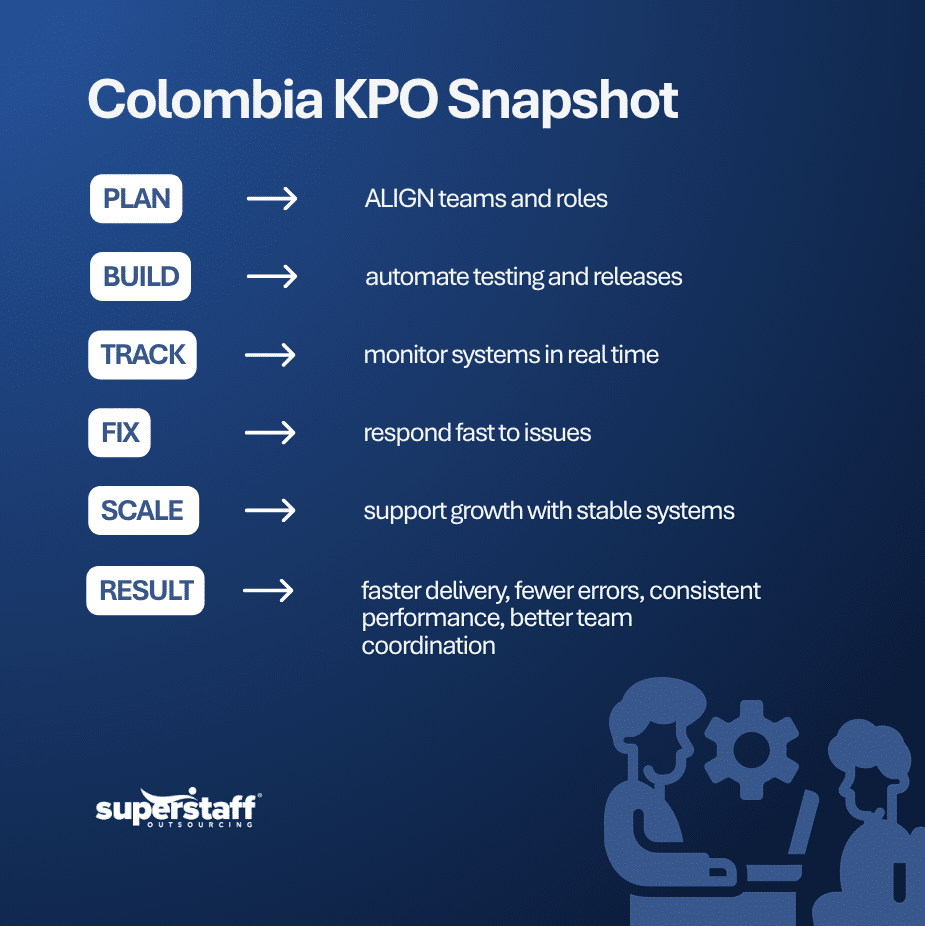
DevOps consulting services can improve how development and operations teams plan, test, release, monitor, and maintain software. Automation reduces repetitive work, monitoring provides better system visibility, and shared processes make responsibilities clearer across teams.
For businesses with growing technical operations, the right DevOps strategy can also make software delivery easier to manage as systems and workloads expand.
SuperStaff provides skilled professionals and outsourced teams that can support technical and operational requirements. Businesses can add specialized talent to improve workflows, expand technical capacity, and support ongoing operations.
Need additional technical support for your development and operations teams? Contact SuperStaff to discuss your requirements.