

E-commerce growth continues to accelerate, but returns are rising alongside it. Higher return volumes create operational strain across customer support, logistics coordination, and financial reconciliation.
Brands that treat returns as an afterthought risk margin erosion and customer dissatisfaction. Many companies are now investing in return management services to create structured, scalable workflows.
Outsourcing these functions to experienced global teams allows organizations to protect margins while improving customer experience.
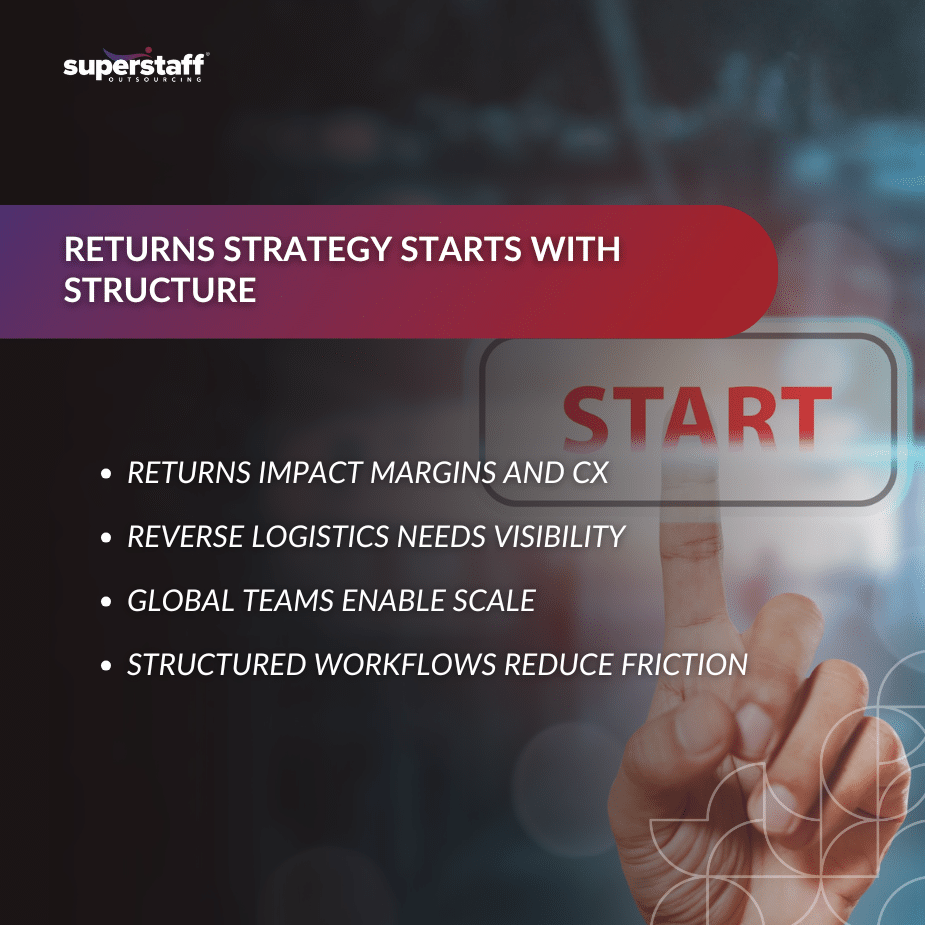
Why E-Commerce Returns Keep Increasing
Return rates are climbing across most online retail categories. Apparel, consumer electronics, and home goods see particularly high volumes due to sizing issues, product expectations, and impulse purchases.
More online shopping means more reverse logistics. Flexible policies also encourage trial purchases, which naturally increase return frequency. Cross-border commerce also adds complexity, as international orders tend to generate higher return ratios due to shipping times and fit uncertainty. These trends are forcing brands to rethink how they manage post-purchase operations.
The Financial Impact of Returns on E-Commerce Brands
Returns create significant operational and financial pressure. Every returned item triggers multiple workflows that affect margins and inventory planning.
Processing refunds requires labor, reconciliation, and customer support time. Inventory becomes harder to forecast when return cycles stretch across weeks. Warehouse congestion and resale depreciation further erode margins. This is why many organizations are investing in ecommerce returns management services that bring structure to the process.
Returns Are Now a Customer Experience Issue
Customers evaluate brands based on how easy returns feel. Fast refunds and responsive support influence loyalty just as much as product quality.
Support teams must handle refund inquiries, status updates, and policy clarifications. Delays can erode trust quickly. A frictionless return experience often determines whether a first-time buyer becomes a repeat customer. As expectations rise, outsourced returns processing services are becoming a key part of CX strategy.
Why Internal Teams Struggle With Returns Scaling
Many e-commerce teams are built for growth functions like marketing and fulfillment. Returns often remain under-resourced until volumes spike.
Customer service teams become overwhelmed during seasonal surges. Manual workflows create inconsistencies. Internal dashboards rarely capture the full returns lifecycle, creating blind spots in decision-making. This is where return management outsourcing for ecommerce brands introduces structure and operational stability.
The Operational Benefits of Outsourcing Returns
External partners bring standardized processes that internal teams may not have time to build. Clear workflows reduce errors and improve turnaround time.
Outsourced teams implement documentation standards, escalation protocols, and reporting structures. These systems ensure consistency across every return interaction. Dedicated teams also create knowledge continuity that internal rotations often disrupt. As a result, return management services become a strategic operational lever.
Why the Philippines Is a Strong Returns Hub
The Philippines has long supported global customer experience operations. Its workforce combines strong communication skills with process discipline.
Teams are trained to handle complex service scenarios with empathy and clarity. Many providers also specialize in back-office workflows, which are critical for ecommerce return processing services in the Philippines. Cultural alignment with U.S. consumers further strengthens communication quality. This combination supports both CX and operational accuracy.
Omnichannel Returns Require Coordinated Support
Returns rarely happen in a single channel. Customers may initiate requests through email, live chat, social platforms, or marketplaces.
Each channel has unique workflows and expectations. Coordinating responses across platforms requires trained teams and unified processes. Marketplace policies also evolve frequently, requiring constant monitoring and compliance adjustments. This is why ecommerce returns management services increasingly rely on global delivery models supported by return management services providers.
Improving Visibility Through Returns Data
Returns generate valuable operational insights. When managed properly, they reveal product issues, logistics bottlenecks, and customer behavior patterns.
Structured reporting enables brands to identify trends and reduce repeat returns. Outsourced returns processing services often include analytics dashboards that support better decision-making. Insights from returns can even inform product design, sizing charts, and packaging improvements. These insights improve both operations and product strategy and reinforce the value of return management services.
Scaling During Peak Retail Periods
Return volumes typically spike after major retail events. Holiday seasons, promotional campaigns, and product launches all create surges.
Maintaining service levels during these periods is challenging for internal teams. Outsourced return management services provide flexible staffing that adapts to fluctuating demand. This prevents service delays without overextending internal resources. It also protects internal teams from burnout during sustained peak cycles.
Turning Returns Into a Strategic Advantage
Efficient returns workflows can strengthen customer loyalty. When refunds are processed quickly and communication is clear, customers are more likely to repurchase.
Brands that manage returns well differentiate themselves in crowded markets. Return management outsourcing for ecommerce brands allows organizations to deliver consistent experiences without expanding internal overhead. Over time, reliable returns processes build brand trust that supports long-term lifetime value and highlights the importance of return management services.
Building Long-Term Operational Resilience
Returns will remain a permanent part of e-commerce operations. The question is not whether returns will grow, but how brands will handle them.
Companies that build structured workflows today position themselves for long-term scalability. Ecommerce return processing services in the Philippines offer a blend of cost efficiency and operational maturity that supports sustained growth. A distributed returns strategy also improves business continuity and operational agility supported by reliable return management services.
Managing Returns Strategically With the Right Partner
Rising return volumes are reshaping how e-commerce brands operate. Returns influence profitability, customer loyalty, and operational complexity. Investing in return management services provides the structure needed to manage this reality effectively.
SuperStaff helps brands build scalable returns workflows through experienced Philippine teams that combine customer care expertise with process discipline. From omnichannel coordination to analytics-driven insights, the right outsourcing partner transforms returns from a cost center into a strategic advantage supported by reliable return management services.
If your organization is preparing for sustained e-commerce growth, now is the time to evaluate how return management services can strengthen operational resilience. Explore how SuperStaff can help you modernize returns management and support sustainable growth.