
Growing businesses rely on customer communication, and the way support teams operate shapes the overall service experience. Many companies notice rising inquiry volumes, longer handling times, and inconsistent follow-ups as they expand. These challenges make it important to understand how emerging contact center trends guide improvements in service delivery. Clear workflows, organized tools, and structured support systems help teams respond faster and maintain accuracy. This article explains how these trends support daily operations and help teams plan for better service quality. The primary focus is on practical steps businesses can apply as they explore the future of contact centers.
Why Contact Center Trends Matter for Growing Businesses
Support teams work better when they use systems that reduce manual work and repetitive tasks. These improvements help companies respond with consistent information and manage larger inquiry volumes. By following emerging contact center trends, organizations gain access to tools that streamline communication. These changes also connect with wider contact center industry trends that shape long-term service growth.
1. Faster Response Times Through Better Tools
Clear systems help agents find information quickly. Organized platforms reduce delays in customer interactions.
2. Improved Accuracy With Structured Workflows
Teams avoid missed steps when every task follows a defined process.
3. Higher Inquiry Capacity
Support teams can handle more calls, chats, and emails without reducing service quality.
4. Reliable Service Channels
Customers receive the same level of support whether they contact the business through phone, chat, or email.
5. Stronger Alignment With Business Goals
Service delivery becomes more organized and supports long-term growth.
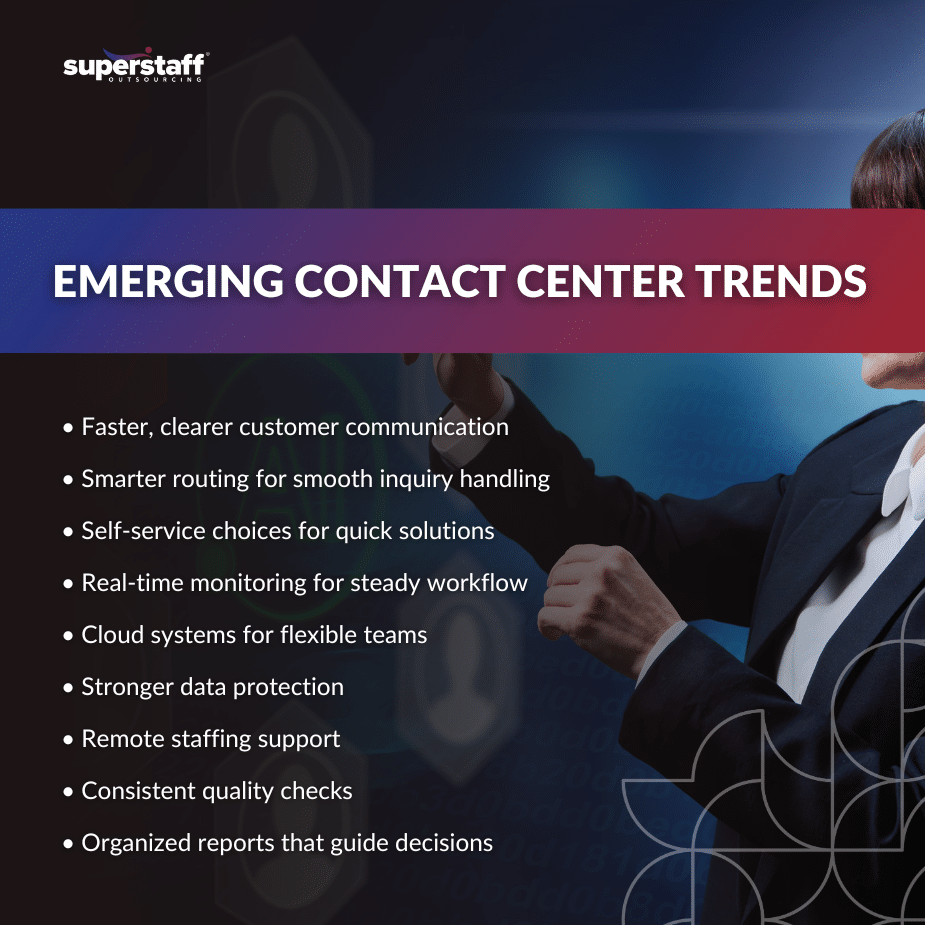
Key Emerging Contact Center Trends
Many companies monitor emerging contact center trends to understand what supports fast-growing service teams. These changes shape the latest contact center trends for small businesses and large operations.
1. Omnichannel Communication
Customers expect to reach businesses through multiple channels. A unified platform keeps every message connected.
2. Automated Ticket Routing
Routing tools assign inquiries to the right agent. This reduces handling time and improves accuracy.
3. Enhanced Self-Service Options
Knowledge bases and FAQ systems help customers solve simple concerns without waiting for an agent.
4. Real-Time Performance Monitoring
Supervisors track service activity and resolve workflow issues before they grow.
5. Cloud-Based Contact Center Systems
Cloud platforms support remote teams, easy scaling, and wider accessibility.
6. Data Protection Improvements
Secure systems protect customer information and strengthen compliance.
7. Workforce Support and Remote Staffing Models
Businesses can build flexible teams and extend service hours.
8. Structured Quality Assurance Processes
QA programs help maintain consistency and track service performance.
9. Reporting Tools That Guide Service Decisions
Accurate data helps leaders plan staffing, training, and workflow adjustments. It also shows how contact center technology impacts business growth.
How to Evaluate Trends That Fit Your Business Needs
Business leaders review emerging contact center trends by looking at gaps in their current workflows. Careful evaluation ensures that every adjustment serves a clear purpose.
1. Identify Current Service Gaps
List delays, recurring issues, and limitations in customer communication. This guides which solutions are needed.
2. Review Technology Compatibility
Check if new systems work well with existing tools. Smooth integration prevents workflow disruptions.
3. Assess Workflow and Process Requirements
Teams perform better when workflows are defined. Structured processes improve consistency in all channels.
4. Evaluate Data Security and Compliance Needs
Secure platforms protect customer information and reduce risk.
5. Check Reporting and Analytics Capabilities
Strong reporting tools help leaders understand patterns and make service decisions.
6. Assess Support Availability and Staffing Models
Flexible staffing improves coverage during peak hours and supports business expansion.
How These Trends Influence Daily Contact Center Operations
Emerging contact center trends shape daily support tasks. They guide how agents respond, record information, and track customer needs.
1. Organized Tools for Agents
Agents work faster when they use systems that support quick navigation.
2. Accurate Data Tracking
Every interaction is logged in an organized system that helps maintain clear communication history.
3. Consistent Workflows
Standard processes reduce errors and improve customer satisfaction.
4. Scalable Support Operations
Teams can adjust to higher inquiry volumes without lowering service quality.
5. Better Coordination Across Channels
Phone, email, and chat operate in one connected platform.
Use Cases of Emerging Contact Center Trends
Daily operations show how the future of contact centers continues to evolve.
1. Handling High Call Volumes
Routing tools and structured scripts help reduce wait times.
2. Managing Email and Chat Inquiries
Unified systems show every message in a single dashboard.
3. Tracking Service Tickets
Every inquiry moves through recorded stages for full visibility.
4. Supporting Self-Service Knowledge Bases
Customers access answers anytime without agent assistance.
5. Monitoring Agent Performance
Supervisors track real-time activity to support coaching and training.
6. Coordinating Remote Support Teams
Cloud systems connect on-site and remote agents with the same tools.
7. Ensuring Compliance in Customer Interactions
Data protection features help businesses maintain consistent standards.
How Trends Support Internal Teams
Emerging contact center trends benefit internal operations as much as customer-facing tasks.
1. Reduced Manual Work
Automation removes repetitive tasks and shortens handling time.
2. Organized Data for Supervisors
Clear records help supervisors track performance and provide guidance.
3. Consistent Service Delivery
Teams follow repeatable processes that support accurate communication.
4. Better Role Assignment
Routing tools ensure tasks reach the right team members.
5. Stronger Planning
Leaders use reports to make staffing and workflow decisions.
Choosing the Right Contact Center Solutions
Companies evaluate emerging contact center trends by reviewing reliability, structure, and scalability.
1. Proven Reliability
Select systems that support stable operations.
2. Clear Workflow Documentation
Processes must be easy to follow for all agents.
3. Scalable Communication Tools
Platforms should grow with the business.
4. Consistent Performance Monitoring
Tracking tools help maintain service quality.
5. Secure Data Management
Protecting customer information must be a priority.
6. Flexible Support Options
Teams should be able to expand quickly.
7. Organized Reporting Structure
Accurate reports guide long-term planning.
Modern Contact Center Support for Growing Teams
SuperStaff provides trained customer support staff who follow structured workflows built for accuracy and dependable communication. Our team uses organized systems that support clear reporting, consistent responses, and growing service needs. We help businesses adopt emerging contact center trends that match their goals and operational requirements. Reach out to us today for reliable contact center solutions that strengthen customer support.