Hiring employees across different countries sounds exciting at first. However, tax rules quickly become a problem when businesses start handling payroll, deductions, and government filings in multiple locations. A missed deadline or incorrect tax calculation can lead to penalties, employee complaints, and damaged business operations. Because of this, many companies now look for safer ways to manage global payroll.
EOR payroll services help businesses handle employee taxes, payroll processing, and labor compliance without building large internal payroll teams. Instead of struggling with changing tax laws, companies can work with experts who already understand local requirements. As a result, businesses reduce risks, improve payroll accuracy, and keep employees paid correctly and on time.
Common Payroll Tax Problems Businesses Face
Managing payroll across different regions creates several compliance risks. Even small mistakes can become expensive when companies expand quickly.
1. Incorrect Tax Calculations
Tax rates often change depending on location, employee classification, and government regulations. Because of this, businesses may accidentally withhold the wrong amount from employee salaries.
Wrong calculations can also create problems during audits. Employees may lose trust when payroll errors happen repeatedly. Following proper payroll compliance practices can help businesses understand common requirements and reduce avoidable mistakes.
2. Missed Filing Deadlines
Each country follows different payroll schedules and tax filing periods. Some businesses struggle to track these deadlines while handling daily operations.
Late submissions often result in penalties and added fees. In some cases, businesses may face further action from local tax authorities.
3. Employee Misclassification Issues
Some companies incorrectly classify workers as contractors instead of employees. Although this may seem simple at first, tax agencies often review these arrangements carefully.
Once authorities identify classification errors, businesses may need to pay unpaid taxes, benefits, or penalties. The IRS worker classification guidance explains some of the factors used to distinguish employees from independent contractors in the United States.
4. Constant Regulatory Changes
Payroll laws can change as governments update tax rates, reporting systems, and employee contribution requirements.
Without proper monitoring, companies may continue using outdated payroll practices. Consequently, compliance gaps become harder to fix later.
5. Poor Record Keeping
Payroll records support tax filings and employee payment history. However, some businesses fail to maintain organized payroll documentation.
Missing records create problems during audits or tax reviews. Furthermore, incomplete payroll files can delay reporting processes.
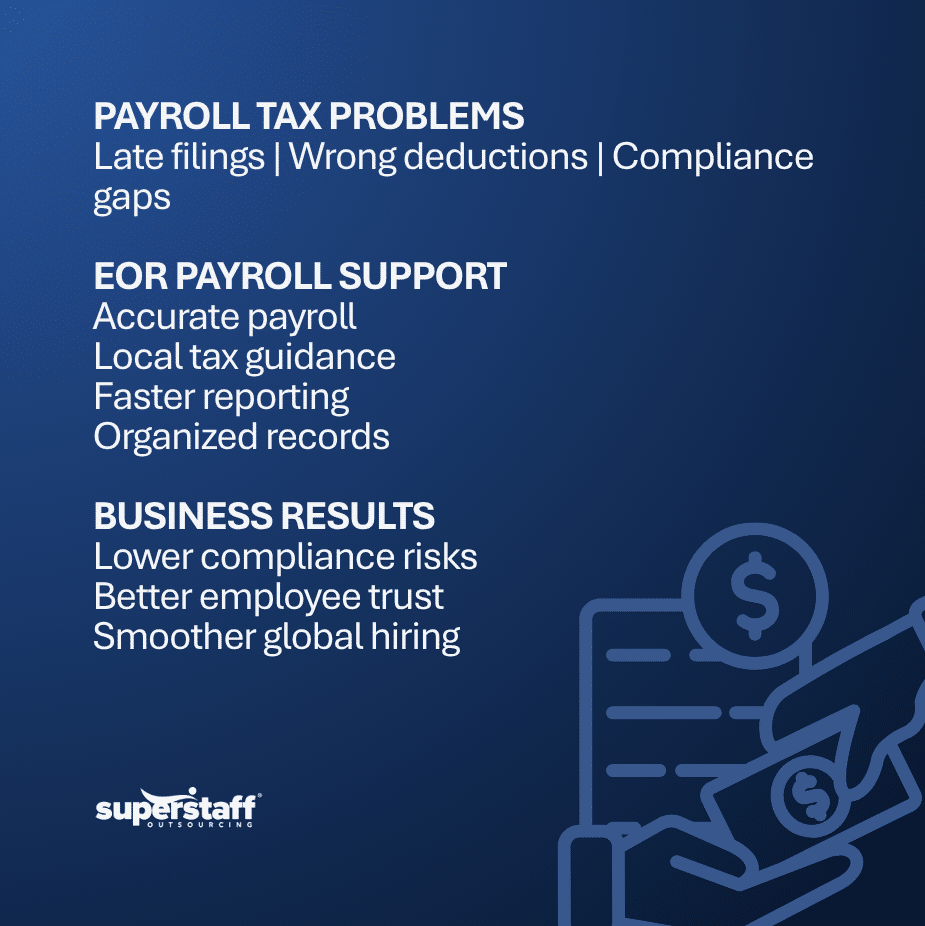
How EOR Payroll Services Improve Compliance
Businesses need reliable systems to manage payroll taxes correctly. That is where EOR payroll services provide strong support.
1. Local Tax Expertise
EOR providers work with country-specific payroll regulations and tax systems. They can monitor relevant changes and update payroll processes based on local requirements.
As a result, businesses can reduce common filing mistakes and lower the risk of relying on outdated payroll procedures.
2. Accurate Payroll Processing
Payroll accuracy matters because even one error can affect employee trust. EOR teams calculate applicable taxes, deductions, and benefits before payroll is released.
Moreover, payroll outsourcing can reduce the amount of manual payroll work handled by internal teams and provide additional support for recurring payroll processes.
3. Timely Government Filings
EOR providers can manage payroll submission schedules and applicable tax deadlines. Therefore, businesses have additional support for meeting filing requirements.
This becomes especially useful for companies operating in several countries at once. Instead of managing every local process internally, businesses can work with payroll specialists familiar with the relevant market.
4. Proper Employee Classification
EOR providers can support businesses in applying local employment requirements when hiring workers internationally. This can reduce risks related to worker classification and employment administration.
Companies can also review the U.S. Department of Labor’s worker classification guidance when assessing employee and independent contractor arrangements in the United States.
5. Organized Payroll Documentation
Payroll audits require accurate and complete records. EOR payroll services can maintain employee payroll files, tax reports, and related compliance documents.
Because of this, businesses can retrieve records more efficiently during audits or government reviews. Better documentation also improves internal payroll visibility.
Why Businesses Choose EOR Payroll Support
Many companies use outsourced payroll support because managing tax compliance internally requires significant time and resources.
Reduced Administrative Work
Internal HR teams already handle recruitment, onboarding, and employee concerns. Payroll tax management adds another layer of responsibility.
With EOR support, businesses can reduce administrative pressure. Companies can also use broader back-office outsourcing to support repetitive administrative functions that take time away from internal teams.
Faster International Expansion
Opening operations in another country may require payroll setup, tax registration, and compliance with local employment rules. These requirements can add time and complexity to expansion plans.
An Employer of Record can serve as the legal employer of workers in locations where a business does not have its own entity, depending on the service arrangement and local laws.
Lower Compliance Risks
Tax penalties and compliance violations can affect business finances and operations. Even small payroll mistakes may become expensive over time.
Businesses using EOR payroll services gain additional support for monitoring local payroll requirements and maintaining organized processes.
Better Employee Experience
Employees expect accurate salaries and timely payments. Payroll errors can create frustration and reduce employee confidence.
Reliable payroll systems improve the employee experience by supporting correct deductions, clear payroll records, and consistent payment schedules.
Easier Multi-Country Payroll Management
Handling payroll across different countries creates operational complexity because each location may follow different tax systems, contribution requirements, and reporting rules.
EOR providers can bring these processes under a more centralized management structure. Because of this, businesses gain better visibility across global teams.
Key Features Businesses Should Look For
Not all payroll providers offer the same level of support. Businesses should evaluate payroll partners carefully before making a decision.
Important Features Include
- Strong knowledge of local tax laws
- Accurate payroll reporting systems
- Employee self-service payroll access
- Fast payroll processing support
- Secure payroll data handling
- Compliance monitoring and updates
- Multi-country payroll capabilities
Companies should also review how providers handle sensitive employee information. Resources on data privacy and security can provide additional guidance when assessing how service providers protect personal and business data.
These features help businesses maintain smoother payroll operations while reducing compliance concerns.
Signs Your Business Needs Payroll Support
Some companies wait too long before seeking payroll assistance. However, several warning signs often appear before compliance problems become serious.
Common Warning Signs
- Payroll errors happen frequently
- Tax filing deadlines get missed
- HR teams struggle with payroll workloads
- International hiring creates confusion
- Employee payroll complaints increase
When these issues continue, payroll operations become harder to manage internally. Businesses may need additional HR outsourcing services to reduce administrative workloads and support growing teams.
Smarter Payroll Support For Growing Companies
Payroll compliance problems can slow down business growth, especially when companies expand into new markets. Tax filing mistakes, inaccurate deductions, and missed deadlines create unnecessary risks that affect both operations and employee trust. Fortunately, EOR payroll services give businesses a more organized way to manage payroll responsibilities across different locations.
SuperStaff provides outsourcing solutions that support payroll processes, employee administration, and other back-office responsibilities. With scalable support, businesses can reduce administrative pressure while keeping their internal teams focused on growth.
Reach out to SuperStaff today and discover how EOR payroll services can support your growing workforce while reducing payroll compliance risks.