
Many companies are working harder to keep payment cycles steady while controlling overdue accounts. As invoice volumes grow, so do the challenges of tracking balances, managing disputes, and sending payment reminders. These tasks require employees who understand the collection process and can handle financial records with accuracy. Hiring skilled accounts receivable staff helps businesses manage these responsibilities and improve collection efficiency.
Trained accounts receivable professionals help organizations maintain accurate records, follow up on outstanding payments, and communicate clearly with customers. Their work supports cash flow management and helps prevent collection delays. When companies hire experienced AR specialists or build an outsourced accounts receivable team, they gain dedicated support for daily financial tasks and growing transaction volumes.
Understanding Accounts Receivable Management
Accounts receivable management covers the process of recording customer invoices, tracking outstanding balances, collecting payments, and updating financial records. A well-organized process helps businesses understand how much customers owe and when payments are expected.
Skilled AR professionals handle these responsibilities while coordinating with customers and other departments. Their work helps finance teams maintain reliable records and identify accounts that need attention.
1. Clear Tracking of Invoices
Accounts receivable staff record issued invoices and monitor their payment status. They check due dates, outstanding balances, and payment terms to ensure that each account is properly tracked.
Keeping invoice information updated helps businesses identify overdue payments and prioritize collection activities. It also gives finance managers a clearer view of which customers have paid and which accounts still need follow-up.
2. Timely Customer Communication
Regular communication helps customers understand their outstanding balances and payment deadlines. AR professionals send reminders, answer billing questions, and follow up on overdue invoices based on established procedures.
Clear and professional communication can prevent misunderstandings. Keeping records of customer interactions also gives the finance team a reference when handling payment concerns or disputes.
3. Reduced Risk of Bad Debt
Unpaid invoices can become harder to collect as they remain outstanding. Consistent monitoring allows AR teams to identify delayed payments early and take appropriate action.
Staff can review payment histories, send reminders, and escalate accounts that require additional attention. Although these steps cannot prevent every unpaid balance, they help businesses manage collection risks more effectively.
4. Better Payment Forecasting
Accurate accounts receivable records help finance managers estimate when customer payments may arrive. This information supports cash flow planning and helps businesses prepare for upcoming expenses.
When payment information is updated regularly, managers can make better decisions about supplier payments, payroll, and operating costs.
5. Organized Financial Records
Proper documentation keeps invoice details, payment updates, and customer communications organized. This makes it easier for finance teams to review account histories and prepare financial reports.
Complete records also help when investigating discrepancies or responding to audit requests. Businesses managing large invoice volumes benefit from having consistent documentation procedures.
Companies looking to improve these processes can read about outsourcing accounts receivable services to a Philippine BPO team and how dedicated professionals can support collection activities.
Common Challenges That Affect Collections
Even companies with established finance departments can experience collection delays. High invoice volumes, limited staffing, manual processes, and unresolved billing concerns can affect how quickly payments are received.
Recognizing these problems helps businesses determine where additional staff, better procedures, or updated systems may be needed.
1. Late or Missed Payments
Customers may delay payments because of unclear invoice details, internal approval processes, or missed reminders. Without consistent follow-ups, overdue accounts can remain unresolved for longer periods.
AR staff help address this issue by monitoring due dates and contacting customers according to the company’s collection schedule.
2. Limited Staff Capacity
Small finance teams may struggle to manage growing invoice volumes while handling other accounting responsibilities. Employees who divide their time between billing, reconciliation, reporting, and collections may not have enough time to follow up on every account.
Additional AR support helps distribute these tasks and gives employees more time to focus on their assigned responsibilities.
3. Incomplete Documentation
Missing payment records, outdated customer details, and unclear account notes can slow down collection activities. Staff may need to spend extra time checking previous transactions before responding to a customer.
Maintaining complete records helps prevent repeated work and allows team members to understand an account’s status more quickly.
4. Unresolved Billing Disputes
Customers may question invoice amounts, product details, service charges, or payment terms. These concerns can delay payment while the business reviews the account and gathers supporting documents.
A structured dispute process helps AR staff record the concern, coordinate with the relevant department, and provide updates until the issue is resolved.
5. Manual Processing Errors
Manual data entry increases the possibility of incorrect amounts, payment dates, and customer details. These mistakes can affect account balances and create additional work during reconciliation.
Standard procedures and suitable accounting software help reduce errors. Regular reviews also allow staff to identify and correct discrepancies before they affect financial reports.
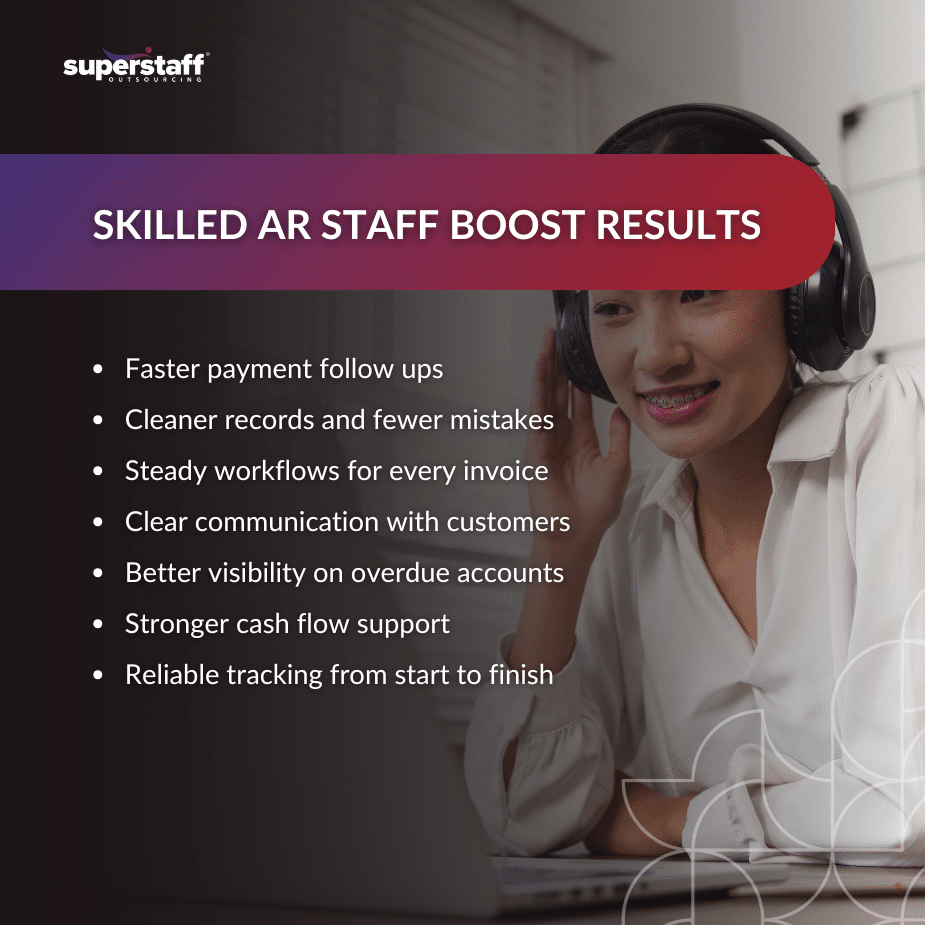
Why Skilled AR Staff Improve Collection Outcomes
Hiring qualified accounts receivable professionals helps businesses maintain consistent collection procedures. Their knowledge of invoice management, customer communication, and financial documentation supports more organized daily operations.
1. Accurate Invoice Preparation
Trained staff review invoice details before sending them to customers. They check billing amounts, customer information, payment terms, and supporting documents to reduce the risk of incorrect invoices.
Accurate invoices help customers understand what they need to pay and reduce delays caused by billing corrections.
2. Structured Follow-Up Plans
Experienced AR professionals follow an established schedule for payment reminders. They monitor due dates, identify overdue accounts, and record each follow-up to ensure that important accounts are not overlooked.
A consistent process also helps businesses apply their collection policies fairly across different customers.
3. Faster Response to Customer Concerns
Customers may need clarification about charges, payment records, or outstanding balances. Skilled staff can review account details and coordinate with other departments to provide accurate responses.
Addressing concerns promptly helps prevent unnecessary delays and keeps communication organized.
4. Reliable Accounts Receivable Reporting
AR professionals prepare reports that show outstanding balances, overdue invoices, payment activity, and collection progress. These reports help managers identify accounts that require attention and understand overall collection performance.
Regular reporting also gives finance leaders useful information for reviewing payment trends and adjusting collection procedures.
5. Consistent Collection Processes
A dedicated AR team helps businesses follow the same procedures across customer accounts. This includes invoice monitoring, payment reminders, dispute documentation, and account reconciliation.
Consistency makes it easier to review performance, identify process gaps, and maintain reliable financial records.
Collection efficiency also depends on how businesses measure and review their procedures. APQC explains several ways to improve collections, including accurate invoicing, timely follow-ups, and the use of performance data in its guide to improving the collections process.
Key Benefits of Hiring Skilled AR Professionals
Bringing in qualified accounts receivable staff can improve the way businesses manage payments and customer accounts. Whether companies hire internally or work with an outsourced provider, the right professionals can help strengthen daily collection activities.
1. Faster Collection Follow-Ups
Dedicated AR staff can focus on monitoring due dates and contacting customers with outstanding balances. Regular follow-ups help businesses address overdue invoices before they remain unpaid for extended periods.
The timing and approach should follow company policies and the terms agreed upon with each customer.
2. Improved Cash Flow Visibility
Updated payment records help managers understand how much money is expected and which invoices remain unpaid. This information supports better financial planning and helps businesses prepare for operating expenses.
Although AR staff cannot control when every customer pays, they can provide accurate information that supports cash flow decisions.
3. Fewer Documentation Errors
Qualified professionals understand the importance of checking invoice details, payment records, and account balances. Careful documentation helps reduce mistakes that could affect financial reports or customer accounts.
Standard review procedures also make it easier to identify errors and correct them before they create larger problems.
4. Better Customer Communication
Professional communication helps customers understand payment requirements and resolve billing concerns. AR staff can provide clear explanations, send reminders, and document discussions without making the collection process unnecessarily difficult.
This approach helps businesses maintain customer relationships while following their payment policies.
5. Stronger Financial Oversight
Organized reports give managers a clearer view of outstanding balances, overdue accounts, and collection activity. With reliable information, leaders can identify recurring payment issues and decide where process improvements are needed.
Businesses can also review why companies outsource accounts receivable to understand how external support can help manage these responsibilities.
Tasks Handled by Skilled AR Staff
Accounts receivable professionals handle several responsibilities throughout the payment cycle. Their work begins with invoice preparation and continues through payment posting, collection follow-ups, dispute handling, and reporting.
1. Invoice Preparation
AR staff prepare and review invoices before sending them to customers. They verify billing amounts, payment terms, due dates, and customer details to help ensure that invoices contain the correct information.
They may also coordinate with sales or operations teams when supporting documents or service details need to be confirmed.
2. Payment Posting
When customers make payments, AR staff record the transactions and apply them to the correct accounts. They compare payment information with outstanding invoices to ensure that balances are updated accurately.
This process helps prevent incorrect account totals and makes it easier to identify payments that cannot be matched to specific invoices.
3. Payment Follow-Ups
AR professionals contact customers about upcoming and overdue payments. They may send email reminders, make calls, or provide account statements based on the company’s collection procedures.
Each interaction should be documented so that other team members can review the account history and continue the follow-up process when needed.
4. Dispute Management
When customers question an invoice, AR staff record the concern and coordinate with the appropriate department. They may review purchase orders, delivery records, contracts, or other supporting documents to help resolve the issue.
Clear documentation helps the business understand the reason for the dispute and determine the next steps.
5. Reporting and Forecasting Support
AR staff prepare aging reports, payment summaries, and collection updates. These documents help managers monitor outstanding balances and identify customers with repeated payment delays.
Their reports can also support cash flow forecasts by showing expected payments and the current status of receivables.
Industries That Depend on Efficient AR Teams
Accounts receivable management is important across industries that issue invoices, extend payment terms, or handle recurring customer transactions. Each sector has different billing requirements, but all need accurate records and consistent payment monitoring.
1. Manufacturing
Manufacturers often manage large orders, purchase agreements, and payments from business customers. AR teams track invoices against order and delivery records to confirm that billing details are correct.
They also follow up on outstanding balances and coordinate with sales or logistics teams when customers raise concerns about deliveries or charges.
2. Healthcare
Healthcare providers and related businesses handle billing processes that may involve patients, insurance companies, and other organizations. Accurate records and timely follow-ups help finance teams monitor unpaid balances and resolve billing questions.
AR staff may also coordinate with billing and administrative departments to check account details and supporting documents.
3. Retail and Ecommerce
Retail and ecommerce businesses manage frequent transactions, customer accounts, and payment records. Companies that offer credit terms or business-to-business sales need reliable processes for tracking invoices and matching payments.
AR professionals help maintain accurate account information and identify transactions that require review.
4. Professional Services
Consulting firms, agencies, and other service providers often bill customers based on projects, milestones, retainers, or completed work. AR teams monitor payment terms and follow up when invoices remain unpaid.
They may also coordinate with account managers to confirm project details and address questions about billed services.
5. Logistics and Distribution
Logistics companies manage invoices connected to shipments, delivery schedules, and service agreements. AR staff help verify billing information and coordinate with operations teams when customers question charges or delivery records.
Consistent account monitoring helps these businesses manage payment delays and maintain updated financial records.
Building an Effective AR Team
Businesses need clear responsibilities, reliable procedures, and suitable tools to manage accounts receivable effectively. Hiring skilled professionals is one part of the process. Companies must also create a work structure that supports accuracy and consistent communication.
1. Define Roles and Responsibilities
Each employee should understand the tasks they are expected to handle. Some staff may focus on invoice preparation and payment posting, while others manage overdue accounts, customer disputes, or reporting.
Clear role assignments help prevent duplicated work and ensure that every stage of the collection process has an assigned owner.
2. Establish Standard Procedures
Written procedures help employees follow consistent steps when processing invoices, recording payments, and contacting customers. Businesses should define follow-up schedules, escalation requirements, documentation rules, and approval processes.
These guidelines make it easier to train new employees and maintain consistent work standards across the team.
3. Use Suitable Accounting Tools
Accounting and finance systems help staff track invoices, record payments, and prepare reports. Depending on the business, these tools may include accounting platforms, enterprise resource planning systems, customer relationship management software, and payment applications.
The right systems can reduce repetitive data entry and make account information easier to review.
4. Provide Communication Training
AR professionals regularly communicate with customers about financial matters. They should know how to explain invoice details, respond to concerns, and follow up on overdue balances in a professional manner.
Training can also help employees handle difficult conversations while following company policies and maintaining accurate records.
5. Monitor Key Performance Metrics
Businesses should review collection results using measurable indicators. Common metrics include days sales outstanding (DSO), overdue invoice percentages, collection rates, dispute resolution time, and accounts receivable aging.
Tracking these measures helps managers identify delays and decide where improvements are needed. It also provides a basis for evaluating whether staffing changes and updated procedures are improving collection results.
How to Choose an Accounts Receivable Outsourcing Partner
Companies that need additional AR support should evaluate potential providers based on their experience, staffing capabilities, and ability to follow established financial procedures. The right partner should understand the company’s collection requirements and provide employees who can work within its existing systems.
1. Review Finance and Accounting Experience
Look for a provider with experience supporting accounts receivable, payment processing, reconciliation, and collections. Familiarity with different industries can also help when a business has specific billing requirements.
2. Check Staff Qualifications and Training
Ask how the provider recruits, screens, and trains its finance professionals. Employees should have the accounting knowledge, software skills, and communication abilities needed for their assigned responsibilities.
3. Assess Data Security Procedures
Accounts receivable employees may access customer records, financial information, and payment details. Businesses should review the provider’s data protection policies, access controls, confidentiality procedures, and security practices before sharing sensitive information.
4. Understand Reporting and Performance Reviews
The provider should be able to explain how it monitors work quality and reports collection activity. Businesses should agree on relevant performance measures, reporting schedules, and procedures for addressing issues.
5. Confirm Staffing Flexibility
As invoice volumes change, companies may need to adjust the number of employees supporting their AR operations. Discuss how the provider handles additional staffing needs, employee training, and changes in workload.
SuperStaff provides finance and accounting outsourcing services that include accounts receivable processing, invoice management, payment monitoring, and reconciliation support. Businesses can review these capabilities when considering external support for their finance operations.
How Skilled AR Staff Support Long-Term Stability
Skilled accounts receivable professionals help businesses maintain a dependable payment process. Their work supports accurate forecasting, organized financial records, and better coordination between finance, sales, and customer service teams.
1. More Consistent Payment Monitoring
Regular monitoring helps businesses identify overdue invoices and follow up according to established procedures. This reduces the chance of accounts being overlooked and gives managers a clearer view of collection activity.
2. Better Coordination Across Departments
Collection issues may involve sales, customer service, billing, or operations. AR staff help coordinate with these teams when they need information to resolve disputes or confirm transaction details.
Clear communication between departments can reduce delays and prevent repeated requests for the same information.
3. Improved Financial Planning
Updated accounts receivable reports help leaders understand expected payments and outstanding balances. This information supports decisions about budgets, supplier payments, payroll, and other operating expenses.
4. A More Scalable Collection Process
As businesses grow, invoice volumes and customer accounts may increase. A dedicated AR team or outsourced support arrangement can help companies manage additional work without placing every responsibility on a small internal finance department.
Companies should review staffing needs regularly to ensure that the team has enough capacity to maintain service quality and meet collection targets.
Stronger Payment Cycles Through Skilled AR Teams
Hiring skilled accounts receivable staff helps organizations maintain accurate records, follow up on outstanding payments, and manage customer billing concerns. A well-organized AR process gives finance leaders better visibility into collections and supports more informed cash flow planning.
For businesses handling growing invoice volumes, additional staffing support can help manage daily tasks while allowing internal finance teams to focus on other responsibilities. The right arrangement should reflect the company’s transaction volume, collection requirements, and long-term operating goals.
If your business needs support with accounts receivable operations, contact SuperStaff to discuss your staffing requirements and find an outsourcing arrangement that fits your finance team.