
Finding the right people is one of the biggest challenges for growing businesses. Many companies are no longer limiting their search to one city or one country because skilled professionals are available around the world. Hiring internationally allows businesses to fill critical roles faster, expand into new markets, and build diverse teams with specialized expertise. However, hiring employees in another country also brings legal, administrative, and payroll responsibilities that many organizations are not prepared to handle.
A clear plan for international hiring compliance helps businesses avoid unnecessary delays while creating a better experience for both employers and employees. Instead of navigating unfamiliar employment rules alone, companies can work with experienced partners that simplify global hiring. As a result, international hiring compliance becomes easier to manage, allowing businesses to focus on growth while building successful international teams.
Understanding the Challenges of Global Hiring
Hiring employees in another country involves more than signing an employment contract. Every country has different employment laws, tax requirements, and workplace regulations. Understanding these challenges allows businesses to prepare before expanding internationally.
1. Different Employment Laws
Every country has its own employment regulations. These rules often cover minimum wages, working hours, paid leave, termination procedures, and employee benefits.
Therefore, businesses should understand local employment requirements before hiring. The International Labour Organization’s guidance on employment relationships explains how employment relationships establish rights and obligations under national laws. Following local regulations supports international hiring compliance and helps companies avoid unnecessary legal concerns.
2. Payroll and Tax Responsibilities
Paying employees across borders requires more than processing salaries. Employers must also consider tax obligations, mandatory contributions, reporting requirements, and local payroll regulations.
Accurate payroll builds employee trust while helping businesses remain organized. Companies should establish reliable payroll processes before onboarding international employees. They can also review global payroll tips for paying offshore team members to understand the administrative considerations involved in managing payments across different locations.
3. Employment Contracts
Employment contracts should reflect local labor requirements while clearly defining job responsibilities, compensation, benefits, and work expectations.
Well-written agreements reduce misunderstandings and create a stronger working relationship between employers and employees. Businesses should have local legal professionals review employment agreements to confirm that their terms meet applicable requirements.
4. Administrative Requirements
International hiring includes document collection, employee records, onboarding, payroll administration, and ongoing reporting. As businesses expand, these responsibilities continue to grow.
Organized administrative processes save time and improve efficiency across HR and operations teams.
5. Managing Teams Across Different Locations
Global teams often work across multiple time zones and cultures. Therefore, businesses should prepare communication strategies that support collaboration and consistency.
Regular meetings, shared project tools, and clear reporting structures help employees stay connected regardless of location.
Practical Ways to Simplify International Hiring
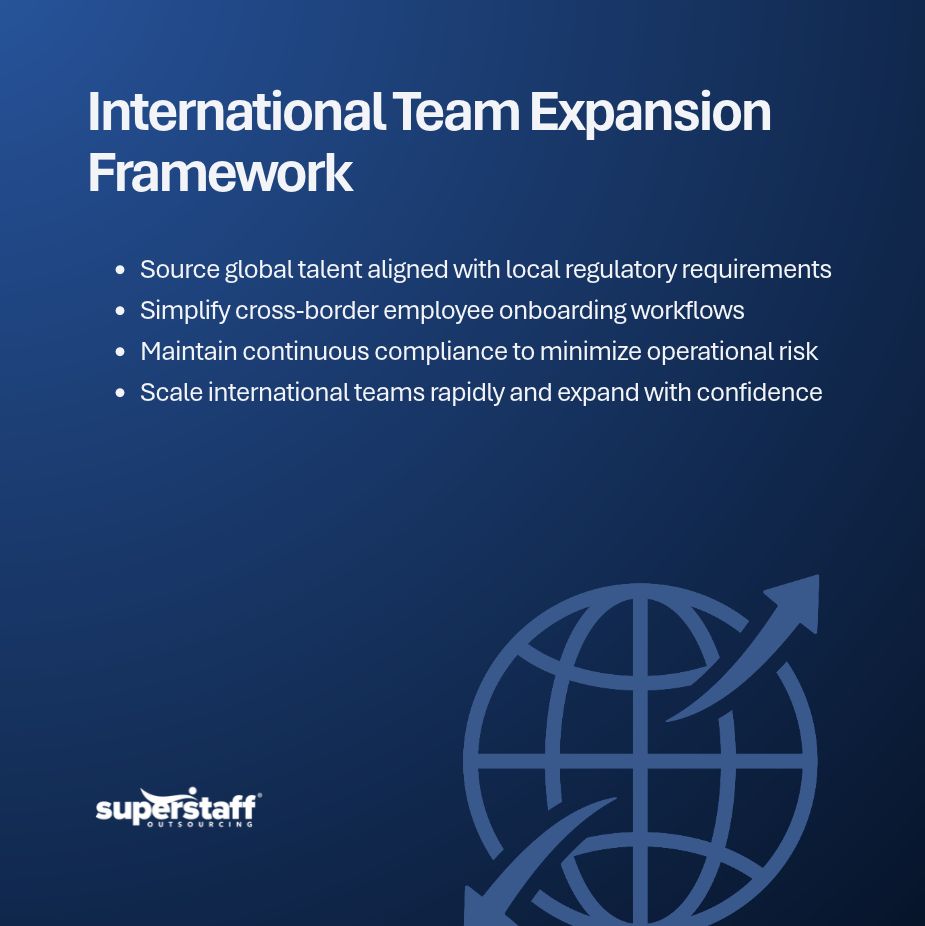
Many businesses successfully hire internationally because they use proven systems instead of managing every requirement alone. These strategies help reduce complexity while improving workforce management.
1. Work With an Employer of Record
Many organizations choose an Employer of Record (EOR) when expanding into new countries. An EOR becomes the legal employer for the worker in the relevant jurisdiction, while the client company generally directs the employee’s day-to-day work under the agreed arrangement.
This model can allow businesses to hire internationally without establishing their own local legal entity immediately. It can also simplify employment administration, payroll, and compliance responsibilities.
However, companies should understand the responsibilities retained by each party and confirm that the arrangement is suitable under local law.
2. Standardize Recruitment Processes
Consistent hiring procedures create a smoother experience for candidates and internal teams. Businesses should develop clear recruitment, interview, onboarding, and documentation processes for every international hire.
Standardized workflows also reduce hiring delays as organizations continue expanding. Companies can strengthen their recruitment approach by reviewing cross-border recruitment strategies that help reduce hiring risks.
3. Keep Employee Documentation Organized
Employee records should remain accurate and updated throughout the employment relationship. This includes contracts, payroll information, identification documents, performance records, and required employment forms.
Well-organized records support international hiring compliance while making audits and internal reviews much easier to manage.
4. Build Strong Internal Communication
Successful international teams depend on regular communication. Managers should schedule frequent check-ins, establish clear expectations, and encourage employees to ask questions whenever needed.
Open communication improves teamwork while helping remote employees stay engaged with company goals.
5. Choose Technology That Supports Growth
Modern workforce management tools simplify onboarding, payroll tracking, document storage, and employee communication. However, businesses should choose systems that match their size and long-term goals.
Simple technology often produces better results than overly complicated systems that employees struggle to use.
Best Practices for Long-Term Success
Hiring internationally should support sustainable business growth instead of creating operational challenges. Companies that prepare carefully often experience stronger employee retention and smoother expansion.
1. Plan Before Hiring Begins
Businesses should define their hiring goals before recruiting internationally. They should identify which positions they need, where talent is available, and how those employees will support business objectives.
Planning ahead reduces rushed hiring decisions and improves recruitment outcomes.
2. Train Managers to Lead Global Teams
Managing international employees requires effective communication and cultural awareness. Therefore, managers should understand how to lead remote teams with consistency and respect.
Leadership training improves collaboration while helping employees feel supported regardless of location.
3. Protect Employee Information
International employers collect personal information during recruitment, onboarding, payroll, and performance management. Businesses should establish secure processes for storing and managing this information.
Strong data management practices build employee confidence while supporting responsible business operations.
4. Review Employment Processes Regularly
Employment regulations and business needs continue to change over time. Therefore, companies should review hiring procedures, documentation, payroll processes, and internal policies regularly.
Small adjustments help businesses remain efficient while supporting international hiring compliance as operations grow.
5. Partner With Experienced Workforce Providers
Experienced workforce partners understand the operational requirements involved in international hiring. They can support recruitment, onboarding, payroll administration, HR services, and ongoing workforce management.
For example, businesses expanding into the Philippines may need help understanding local employment rules, statutory benefits, and employee documentation. A guide to HR compliance services for U.S. businesses in the Philippines explains some of the responsibilities companies should consider when managing employees in this market.
Working with trusted providers allows businesses to focus on customers, growth, and innovation instead of administrative tasks.
Common Mistakes Businesses Should Avoid
Even well-planned hiring strategies can face challenges. However, avoiding common mistakes helps businesses build stronger international teams.
- Rushing into new markets without understanding local employment requirements.
- Using employment contracts that do not reflect local regulations.
- Delaying payroll setup until after employees start working.
- Failing to maintain accurate employee records.
- Assuming every country follows the same employment practices.
- Choosing service providers without evaluating their experience and support capabilities.
Recognizing these risks early allows businesses to create smoother hiring processes while protecting both the organization and its employees.
Build Global Teams With Confidence
Expanding internationally creates exciting opportunities for businesses that want to access skilled talent and support long-term growth. However, successful expansion depends on careful planning, organized processes, and a strong approach to international hiring compliance. Companies that prepare early can reduce administrative challenges, improve workforce management, and create a better experience for employees across different countries.
SuperStaff helps businesses simplify international hiring through Employer of Record solutions, recruitment support, payroll administration, HR services, and business process outsourcing. Whether you are hiring your first international employee or expanding into multiple markets, the right workforce support can help you manage the process more efficiently.
Reach out to SuperStaff to discuss your international hiring needs and find support for building a strong global workforce.