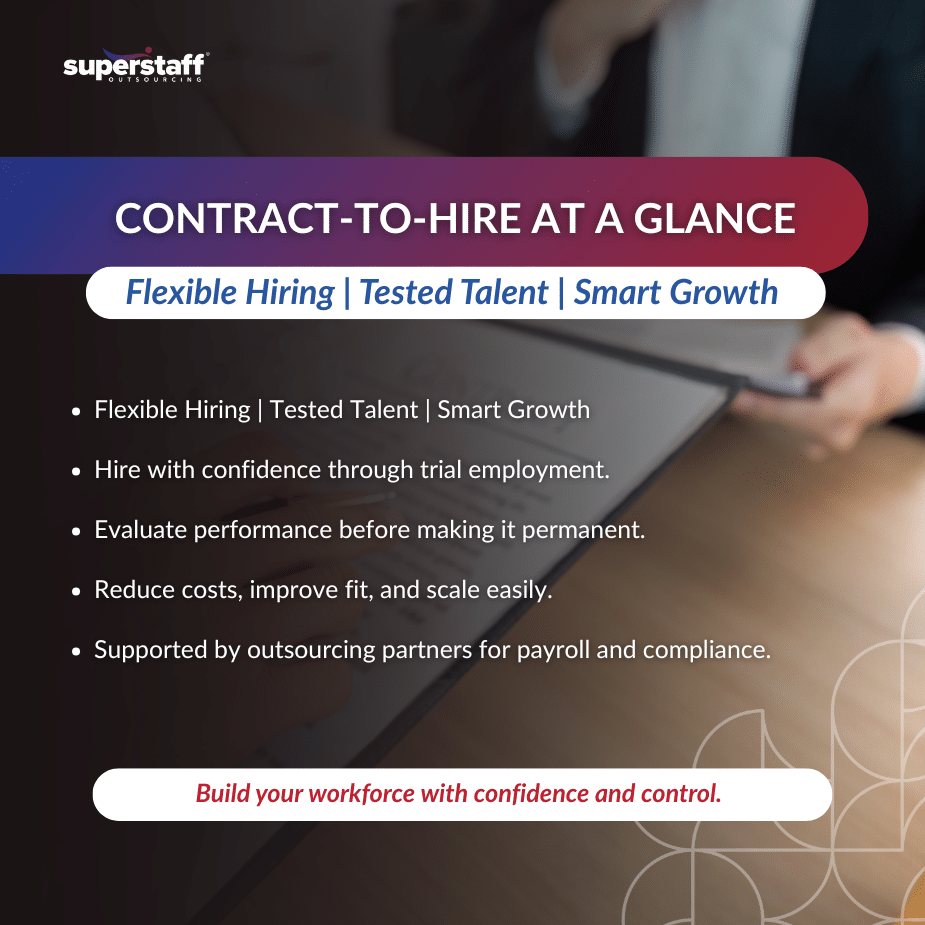
Businesses need hiring options that allow them to adjust their workforce without making an immediate long-term commitment. Contract-to-hire offers this flexibility by allowing companies to bring in skilled professionals for a set period before deciding whether to offer permanent employment.
This approach also gives employers time to assess skills, work quality, communication, and team fit through actual work experience. At the same time, professionals can learn about the role, company culture, and expectations before considering a permanent position.
Understanding This Employment Model
Before choosing this hiring approach, businesses should understand how the arrangement works and what responsibilities each party takes on. In many outsourcing arrangements, a staffing provider manages the worker during the initial employment period while the client company oversees daily tasks and performance.
1. How the Employment Setup Works
A company hires a professional for a defined period, often through an outsourcing or staffing provider. During this period, the professional performs the assigned role while the company evaluates their skills, reliability, and overall performance.
If the arrangement works well for both sides, the company may offer the professional a permanent role. However, the exact conversion process depends on the terms agreed upon by the company, provider, and worker.
2. Why Companies Use This Hiring Approach
Companies often choose this setup when they want more time to evaluate a candidate before making a permanent hiring decision. As a result, managers can assess actual performance instead of relying only on resumes, interviews, and references.
This approach can also support companies with changing staffing requirements. For example, a business can add professionals for growing workloads while determining whether those roles require permanent employees.
3. The Role of Outsourcing Workforce Providers
Outsourcing providers can manage recruitment, onboarding, payroll, employment documentation, and other administrative tasks based on the service agreement. Therefore, the client company can focus more closely on managing the employee’s work and measuring performance.
Providers may also support compliance with applicable employment requirements in the locations where they operate. However, companies should still review responsibilities carefully because labor rules and employment arrangements vary by country and jurisdiction.
4. Timeframe and Conversion
The length of the initial employment period depends on the company’s needs, the role, and the agreement with the staffing provider. Some arrangements last several months, while others may continue longer before the company makes a conversion decision.
During this period, managers should conduct regular performance reviews and communicate expectations clearly. This process gives both parties enough information to decide whether permanent employment makes sense.
5. Common Use Cases
Companies may use this model for IT, accounting, marketing, customer service, administrative, and other professional roles. In particular, it can work well when businesses need specific skills quickly but want more time before adding a permanent employee.
Companies can also use the model when entering new markets or expanding departments. This approach allows them to build capacity while evaluating their longer-term staffing requirements.
Comparing Different Employment Models
Companies have several ways to add talent, so they should understand how each employment structure differs. Contract-to-hire sits between temporary staffing and direct employment because it starts with a defined employment period but includes the possibility of permanent conversion.
1. Contract-Based Hiring vs. Direct Hire
With direct hiring, a company brings a candidate into a permanent role from the start. The employer usually handles the employment relationship directly and provides compensation and benefits according to its policies and applicable laws.
In comparison, a conversion-based arrangement starts with a defined employment period, often through a staffing or outsourcing company. Therefore, the employer has more time to evaluate the worker before deciding whether to offer direct employment.
2. Conversion-Based Hiring vs. Temporary Staffing
Temporary staffing usually fills a short-term business need, such as seasonal demand, employee absences, or specific projects. The company may not plan to convert the temporary worker into a permanent employee.
A conversion-based role, however, includes the possibility of permanent employment from the beginning. This difference gives both the business and the professional a clearer idea of what may happen after the initial period.
3. Hiring Through an Outsourcing Workforce
When a business works with an outsourcing provider, the provider may manage recruitment, payroll, onboarding, and employment documentation. Meanwhile, the client can concentrate on work assignments, performance goals, and operational requirements.
This structure can reduce the administrative work involved in adding new team members. In addition, companies can use recruitment process outsourcing when internal teams need additional support sourcing and screening professionals for difficult-to-fill positions.
4. Hybrid Workforce Models
Some businesses combine permanent employees with outsourced, temporary, and project-based professionals. This approach allows companies to maintain a stable internal team while adding specialized skills or extra capacity when needed.
For example, a company may keep leadership and core operational roles in-house while using external professionals for seasonal workloads or specialized projects. As staffing needs change, the business can adjust its outsourcing workforce based on current and long-term requirements.
5. Long-Term Talent Planning
Businesses can use conversion-based hiring as part of a broader workforce strategy rather than only as a short-term staffing option. Managers can use performance information from the initial period to make more informed hiring decisions.
In addition, this approach can support workforce expansion when companies expect future growth but need time to confirm staffing requirements. Clear evaluation standards can make these decisions more consistent.
Benefits for Employers and Professionals
A well-planned contract-to-hire arrangement can give both employers and professionals more information before they make a long-term commitment. However, companies should set clear expectations, evaluation standards, and employment terms from the beginning.
1. Lower Hiring Risk
Employers can observe how professionals perform in real work situations before considering permanent employment. As a result, managers can evaluate technical skills, communication, reliability, and ability to work with the existing team.
This process can provide more information than interviews alone. It may also reduce the risk of making a permanent hiring decision without enough evidence about actual job performance.
2. More Efficient Recruitment
An outsourcing or staffing provider can handle candidate sourcing, screening, onboarding, and employment administration. Therefore, internal HR teams can spend less time managing early recruitment stages.
Providers may also maintain existing talent pools for common or specialized roles. This access can shorten the time required to identify suitable candidates when businesses need additional staff.
3. Career Opportunities for Professionals
Professionals gain an opportunity to demonstrate their skills through actual work rather than relying only on an application or interview. They can also gain practical experience and build knowledge within a specific industry or role.
At the same time, workers can evaluate the employer before accepting a permanent offer. They can consider management style, workload, team structure, and career opportunities based on direct experience.
4. Greater Workforce Flexibility
Businesses often face changing workloads, new projects, and evolving staffing requirements. A flexible hiring structure allows them to add talent without immediately expanding the permanent workforce.
For instance, a growing company may need additional customer support or technical staff during expansion. It can bring in professionals based on current needs and later determine whether those positions should become permanent.
5. Better Workforce Planning
Managers can collect performance information throughout the initial employment period. Consequently, they can base hiring decisions on measurable results, feedback, attendance, work quality, and other relevant factors.
Regular evaluations also allow managers to identify areas that require additional training or support. This information can improve future recruitment and workforce planning decisions.
Industries That Can Use This Hiring Model
Different industries can use flexible hiring arrangements depending on their staffing requirements and the types of roles they need to fill. Companies should consider workload patterns, skill requirements, compliance needs, and long-term staffing plans before selecting this approach.
1. Information Technology and Software
Technology companies often need specialized skills for development, cybersecurity, cloud services, data management, and technical support. Because these roles can require specific technical knowledge, companies may want to evaluate practical skills before making permanent hiring decisions.
Additionally, project requirements can change as companies launch new systems or products. Flexible hiring allows IT teams to add expertise based on current technical demands.
2. Finance and Accounting
Finance teams may need additional professionals during audits, tax periods, system migrations, or periods of business growth. Companies can use flexible staffing to increase capacity without immediately expanding their permanent finance department.
However, employers should carefully review qualifications and compliance requirements for finance-related roles. Clear responsibilities and access controls also remain important when professionals handle sensitive financial information.
3. Customer Service and Support
Customer service demand can change because of seasonal sales, product launches, business expansion, or higher customer volume. Therefore, companies may add support professionals to maintain service levels during periods of increased demand.
Managers can then evaluate communication skills, productivity, attendance, and customer service quality over time. Strong performers may become candidates for permanent roles when the business needs long-term support.
4. Healthcare and Administration
Healthcare organizations may require additional administrative staff for scheduling, billing, records management, and other non-clinical functions. Flexible staffing can provide additional capacity when workloads increase or departments experience staffing gaps.
However, healthcare organizations must consider privacy, data security, training, and applicable regulations. They should also define access permissions clearly before new team members handle sensitive information.
5. Marketing and Creative Services
Marketing teams frequently need writers, designers, SEO specialists, social media professionals, and analysts for campaigns or ongoing projects. A defined employment period allows managers to review work quality, communication, creativity, and ability to meet deadlines.
Furthermore, professionals can become familiar with the company’s brand, processes, and marketing goals. This experience can provide useful information if the company later considers permanent employment.
Key Considerations Before Using This Hiring Approach
Before adopting this model, companies should create a clear process for recruitment, employment, evaluation, and possible conversion. Clear expectations can reduce confusion for the employer, outsourcing provider, and professional.
1. Review Legal and Compliance Requirements
Companies should confirm which party handles employment contracts, payroll, taxes, benefits, and other legal responsibilities. Since requirements vary across locations, businesses should review applicable labor laws before starting the arrangement.
They should also choose providers with established compliance processes in the locations where workers will perform their roles. When necessary, businesses should seek appropriate legal or HR guidance for specific employment questions.
2. Establish Clear Employment Terms
The agreement should explain compensation, responsibilities, working hours, contract length, performance expectations, and potential conversion terms. Clear documentation allows everyone to understand the arrangement from the beginning.
Additionally, companies should explain what happens when the initial period ends. This includes the decision process, required notice, conversion procedures, and any conditions included in the agreement.
3. Set Performance Standards
Managers should identify how they will measure performance before the employee begins work. For example, they may track work quality, productivity, attendance, communication, customer feedback, or role-specific targets.
Regular reviews also give employees clear feedback about their progress. As a result, both sides can address issues before the company makes a final employment decision.
4. Maintain Clear Communication
Managers should communicate regularly with both the professional and the outsourcing provider. Frequent updates can clarify expectations, resolve concerns, and keep everyone informed about performance.
In addition, companies should discuss potential conversion decisions before the initial employment period ends. Early communication gives workers and managers enough time to prepare for the next step.
5. Choose the Right Outsourcing Partner
A reliable provider should have clear recruitment processes, employment procedures, and experience with the roles the company needs. Businesses should also review the provider’s communication practices, compliance capabilities, and approach to employee support.
Most importantly, companies should understand exactly which responsibilities the provider will manage. Clear responsibilities can prevent administrative gaps and make workforce management easier.
Build a More Flexible Workforce With SuperStaff
Using contract-to-hire as part of an outsourcing strategy gives businesses time to assess professionals through actual work before considering permanent employment. With clear terms, regular performance reviews, and the right outsourcing partner, companies can make hiring decisions based on direct experience and business needs.
SuperStaff provides outsourcing and workforce solutions that support recruitment, onboarding, payroll, and other employment processes based on your staffing requirements. Contact us to discuss how a flexible hiring model can support your workforce plans and long-term business goals.