Hiring pressure does not always come from fast growth. Sometimes, it comes from scattered processes, slow approvals, inconsistent candidate communication, and recruiters spending more time on admin than actual talent engagement. For SMEs and midmarket companies, this creates a common problem. The business needs better hiring support, but building a large internal recruitment team can be costly and difficult to manage.
That is where an HR shared services delivery model can support a stronger recruitment process outsourcing strategy. Instead of treating recruitment as a set of disconnected tasks, companies can centralize repeatable hiring functions, standardize workflows, and give internal HR leaders more visibility across every stage of talent acquisition.
For U.S. businesses hiring across locations, roles, and time zones, this model can reduce recruitment friction while keeping decision-making close to the business.
What an HR Shared Services Delivery Model Means in RPO
An HR shared services delivery model brings common HR and recruitment tasks into one organized support structure. In an RPO setup, this can include candidate sourcing, screening coordination, interview scheduling, background check support, recruitment reporting, onboarding documentation, and applicant tracking system updates.
The goal is not to remove control from internal HR. The goal is to remove repetitive work that slows internal HR down.
With the right partner, an HR shared services delivery model creates a clear division of labor. Internal leaders focus on hiring strategy, workforce planning, culture fit, and final decisions. The RPO team handles the operational work that keeps the hiring engine moving.
For SMEs and midmarket companies, this setup can be especially useful because recruitment needs often fluctuate. One month may require steady hiring for support roles. The next may involve urgent backfills, seasonal staffing, or expansion into a new market.
Why Traditional Hiring Support Often Breaks Down
Many companies start with a lean internal HR team. That works until hiring demand increases.
The first signs of pressure are usually easy to spot.
- Recruiters spend too much time coordinating interviews
• Hiring managers receive inconsistent candidate updates
• Applicants wait too long for feedback
• Job postings vary by department
• Reports are delayed or incomplete
• Onboarding documents move through too many hands
These issues may seem operational, but they affect business outcomes. A delayed interview can mean losing a strong candidate. A missed follow-up can damage the employer brand. A poorly documented process can create compliance risks.
An HR shared services delivery model helps fix these gaps by giving recruitment operations a more reliable structure. Instead of every recruiter or department managing tasks differently, the company follows one repeatable system.
The RPO Advantage for Growing Companies
Recruitment process outsourcing works best when it does more than fill vacancies. It should improve how hiring gets done.
An RPO provider can support the HR shared services delivery model by adding trained recruitment specialists, process discipline, and scalable execution. This gives companies access to hiring support without the cost and complexity of building a larger in-house team from the ground up.
For example, a healthcare provider may need support roles filled quickly while maintaining careful screening standards. A logistics company may need volume hiring for customer support or dispatch coordination. A technology company may need structured sourcing for hard-to-find roles.
In each case, the HR shared services delivery model helps keep recruitment organized. The internal team defines the need. The RPO team supports the process. Hiring managers receive better updates. Candidates move through the pipeline with fewer delays.
What Functions Can Move Into Shared Recruitment Services
The right scope depends on the company’s hiring goals, internal capacity, and compliance requirements. However, many RPO partnerships include shared recruitment services that support the full hiring cycle.
Common functions include:
- Job posting and requisition support
• Candidate sourcing and database management
• Resume screening and shortlist preparation
• Interview scheduling and calendar coordination
• Candidate communication and follow-ups
• Background check coordination
• Offer letter support
• Onboarding document collection
• Recruitment dashboard updates
• Hiring manager status reports
A well-designed HR shared services delivery model does not treat these tasks as low-value work. These are the operational details that determine whether recruitment feels smooth or frustrating.
When these activities are handled consistently, internal HR teams gain more time for strategic work. They can focus on workforce planning, retention, hiring manager alignment, and improving the overall talent experience.
Why the Philippines Is a Strong Location for RPO Support
The Philippines has long been a trusted destination for business process outsourcing because of its English proficiency, service culture, and strong experience supporting U.S. companies. For recruitment support, these strengths matter.
RPO requires clear communication, careful documentation, and a professional approach to candidate interaction. The work is people-centered, but it also requires process discipline.
A Philippine-based team can support U.S. hiring operations during extended business hours, handle candidate coordination, and help internal HR teams stay responsive. For SMEs and midmarket companies, this can create meaningful operational relief without losing quality.
SuperStaff’s experience in customer support, back-office operations, and talent support makes the HR shared services delivery model practical for companies that need both structure and flexibility.
How Shared Services Improve the Candidate Experience
Candidates judge companies by how they are treated during the hiring process. Slow responses, unclear next steps, and repeated requests for the same information can weaken confidence before employment even begins.
An HR shared services delivery model helps create a more consistent candidate journey. Every applicant receives clearer communication. Interview schedules move faster. Recruiters have better visibility into pipeline status. Hiring managers can make decisions with more complete information.
This matters because candidate experience is no longer only an HR concern. It affects employer reputation, offer acceptance, and long-term talent access.
For companies competing for skilled professionals, a more organized recruitment process can become a practical advantage.
Building Better Visibility for HR Leaders
Many HR leaders do not lack effort. They lack clean visibility.
They need to know which roles are moving, where candidates are dropping off, how long approvals take, and which hiring managers need support. Without reliable data, recruitment decisions become reactive.
An HR shared services delivery model supports better reporting because tasks, updates, and candidate movements are managed through a more consistent process. This gives HR leaders clearer insight into hiring performance.
With an RPO partner managing recruitment operations, companies can track progress more easily and identify bottlenecks earlier. The result is a hiring function that feels less scattered and more accountable.
When Companies Should Consider This Model
An HR shared services delivery model is a strong fit when hiring needs are growing but internal HR capacity is stretched.
It may be time to consider this model if:
- Your recruiters are spending too much time on admin
• Hiring managers often ask for status updates
• Candidate follow-ups are inconsistent
• Your company has recurring backfills or seasonal hiring needs
• Your HR team needs better reporting
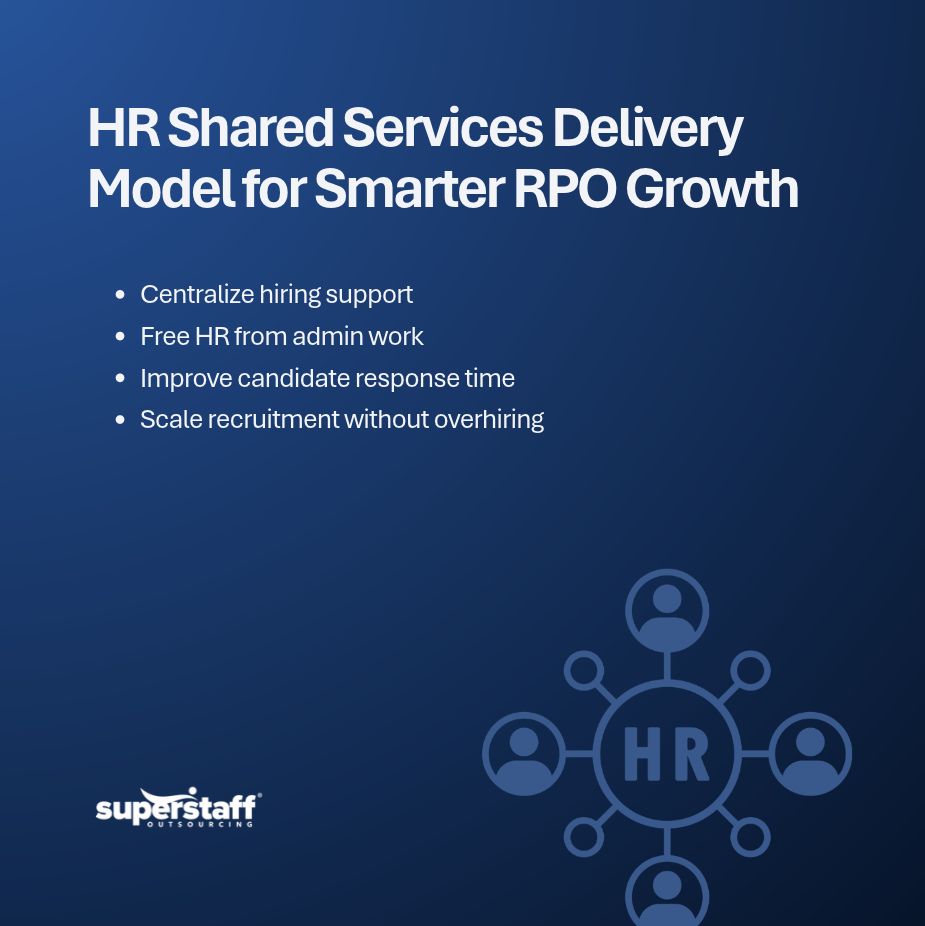
• You want to scale recruitment without overbuilding internal headcount
This model is also useful when companies want to professionalize recruitment operations before entering a new growth phase. Instead of waiting for hiring problems to become urgent, leaders can build a stronger system early.
What to Look for in an RPO Partner
A good RPO partner should understand more than recruitment tasks. They should understand business priorities, hiring urgency, candidate communication, and the importance of operational consistency.
When evaluating a provider, companies should look for:
- Clear recruitment workflows
• Strong communication standards
• Experience supporting U.S. businesses
• Flexible team structures
• Reporting discipline
• Candidate-centered process management
• Ability to support both volume and specialized hiring
The HR shared services delivery model works best when the partner acts as an extension of the internal HR function. That means the provider should support the company’s process, protect its employer brand, and make recruitment easier to manage.
Make Recruitment More Structured Without Losing Control
RPO is not about giving recruitment away. It is about building a better operating system for hiring.
With the right HR shared services delivery model, SMEs and midmarket companies can reduce recruitment bottlenecks, improve candidate communication, and give HR leaders more time to focus on strategic priorities. The model creates structure without making the process rigid. It adds capacity without forcing companies to expand internal headcount too quickly.
SuperStaff helps growing companies build recruitment support teams that improve hiring operations while keeping business leaders in control. If your HR team needs more capacity, better process discipline, and a scalable way to support recruitment, explore SuperStaff’s RPO services and see how the right offshore team can strengthen your hiring function.