Companies face different challenges depending on their industry. Healthcare providers deal with patient records and strict privacy rules, while financial companies manage sensitive transactions and compliance requirements. E-commerce businesses, on the other hand, must keep orders, inventory, and customer service running smoothly. These demands make general outsourcing arrangements less suitable for businesses that need specialized knowledge.
As a result, more companies are looking for outsourcing partners who understand their industry’s processes, standards, and daily challenges. Instead of hiring teams that handle basic tasks across different sectors, businesses want people with the right skills and experience.
Healthcare is a good example of this shift. Providers use an outsourced healthcare workforce to manage administrative tasks, patient communication, and other support functions. These arrangements allow clinical employees to focus on their responsibilities while trained remote teams help manage daily operations. As healthcare outsourcing 2026 trends continue to develop, industry-specific solutions are becoming an important part of business planning.
Why Industry-Specific Outsourcing Is Growing
Companies need more than additional employees to manage their operations. They also need people who understand the work, the systems involved, and the standards they must follow. Several factors are driving the demand for specialized outsourcing.
- Industry rules require specific knowledge
Different sectors follow rules that affect how employees handle information, complete tasks, and communicate with customers. Healthcare, for example, requires careful handling of patient information. Financial services involve strict transaction and reporting procedures. Working with people who understand these requirements helps reduce mistakes and compliance risks.
- General support teams may lack the right experience
A team trained to handle basic customer inquiries may not have the knowledge needed to answer industry-specific questions. Without proper training, employees may provide incomplete information or send requests to the wrong department. Specialized outsourcing gives companies access to workers with relevant experience and role-specific training.
- Customers expect accurate answers
Customers want more than quick responses. They also expect employees to understand their concerns and provide useful information. Industry-trained support teams can handle inquiries with better context, making customer interactions more efficient and reliable.
- Business processes are becoming more complex
Many companies use several platforms to manage transactions, records, communication, and reporting. Employees must understand how these systems work together. Industry-specific outsourcing helps reduce the learning curve and makes it easier to maintain consistent workflows.
- Leaders want better control over results
Companies need outsourcing arrangements that support measurable business goals. Experienced teams can follow established procedures, work with existing systems, and meet clearly defined performance targets. This gives managers a better way to monitor service quality and operational results.
The healthcare workforce challenges covered in the American Hospital Association’s 2026 Health Care Workforce Scan also show why healthcare organizations need to review their staffing models and find ways to manage growing operational demands.
Healthcare Shows the Value of Specialized Outsourcing
Healthcare is one of the clearest examples of why industry knowledge matters. Providers handle sensitive information, complex administrative processes, and patient requests that require accuracy and proper coordination.
An outsourced healthcare workforce can support these responsibilities through clearly defined administrative and non-clinical roles.
- Patient information requires careful handling
Healthcare employees work with private records, insurance details, and other sensitive information. Remote support teams must understand the provider’s privacy policies, access controls, and documentation procedures. Proper training helps protect patient information and maintain consistent records.
- Remote support roles help manage daily operations
Providers can assign remote employees to appointment scheduling, patient inquiries, records management, and other approved administrative tasks. This allows doctors and nurses to spend more time on patient care while support teams handle routine responsibilities.
- Staffing challenges create demand for additional support
Healthcare organizations may struggle to find enough employees for administrative and operational positions. Outsourcing gives providers another way to access qualified support staff without handling every recruitment and onboarding task internally.
- Compliance affects partner selection
Healthcare outsourcing 2026 decisions involve more than staffing costs. Providers must check whether potential partners understand data security, confidentiality, and applicable healthcare requirements. Clear procedures and regular monitoring help maintain accountability.
- Patient experience depends on reliable communication
Missed calls, delayed appointment updates, and unanswered questions can affect how patients view a healthcare provider. Trained support teams help manage these interactions and make sure requests reach the appropriate department.
Specialized Roles That Businesses Can Outsource
Industry-specific outsourcing is not limited to healthcare. Companies across different sectors can delegate selected responsibilities to employees with the right technical knowledge and experience.
Healthcare provides several examples of how specialized teams can support daily operations.
- Remote medical administrative support
These employees manage patient intake, update records, prepare documents, and assist with administrative requests. Their work helps keep information organized and makes it easier for clinical staff to access the details they need.
- Patient care coordination support
Care coordination teams help manage referrals, appointment reminders, and follow-up schedules. They also communicate with patients about approved administrative next steps and direct clinical concerns to the appropriate healthcare professionals.
- Medical documentation and billing support
These employees assist with records management, claims processing, billing documentation, and related administrative tasks. Accuracy is important because incomplete information can lead to delays and additional work.
- Appointment and referral management
Scheduling teams organize appointments, confirm availability, and track referral requests. Their support helps healthcare providers manage patient access and reduce scheduling backlogs.
- Patient communication support
Support representatives handle general inquiries through phone, email, and other communication channels. They provide approved information, document requests, and refer more complex concerns to the appropriate staff.
Businesses can also use specialized teams for technical support, financial administration, legal processes, and e-commerce operations. The important part is matching each responsibility with employees who have the right training and experience.
Healthcare organizations considering these options can benefit from healthcare outsourcing in the Philippines, particularly when looking for support in patient coordination, medical billing, coding, and administrative operations.
How Specialized Outsourcing Improves Daily Operations
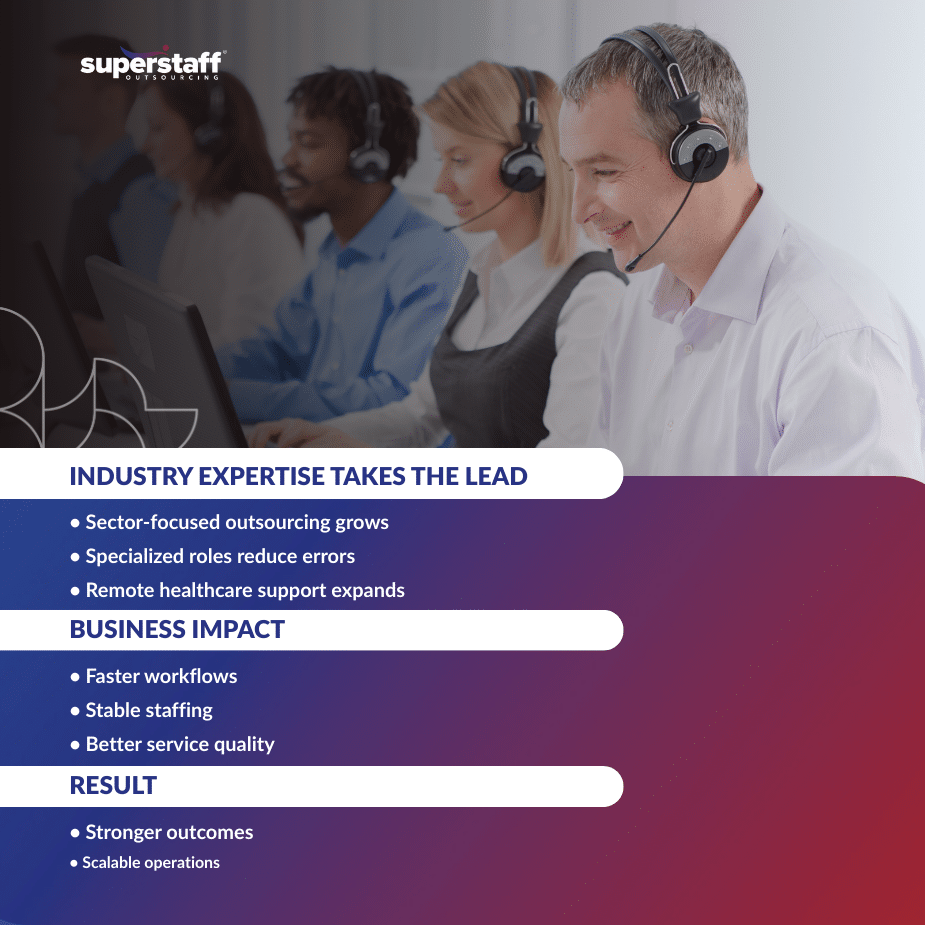
Industry knowledge can make a difference in how quickly employees complete tasks and how well they follow established procedures. When outsourcing partners understand the work, businesses spend less time correcting basic errors and explaining routine processes.
Here are several ways specialized outsourcing can improve operations.
- Workloads become easier to manage
Dedicated support teams handle selected responsibilities, allowing internal employees to focus on their primary duties. This is especially helpful in industries where employees already manage detailed processes and demanding workloads.
- Teams complete tasks more efficiently
Employees who are familiar with industry systems and procedures can work through routine responsibilities with less guidance. This helps reduce delays and unnecessary back-and-forth communication.
- Staffing becomes more flexible
Companies can add support based on their current workload and business requirements. This is useful when demand increases, new services are introduced, or internal teams need additional coverage.
- Service quality becomes more consistent
Trained employees follow documented procedures and understand the standards expected in their roles. Regular performance reviews help maintain quality across different shifts and teams.
- Managers gain more time for important decisions
When experienced outsourcing teams handle daily support tasks, business leaders can focus on planning, process improvements, and long-term goals instead of managing every routine issue.
Cost and Business Value of Specialized Outsourcing
Outsourcing is often considered a way to control operating expenses. However, specialized outsourcing offers value beyond reducing staffing costs. Companies can also gain access to relevant skills, improve workflows, and avoid expenses caused by repeated errors.
- Shorter training periods
Employees with relevant experience may need less time to understand industry processes. They still require company-specific training, but their existing knowledge can make onboarding more efficient.
- Fewer avoidable mistakes
Industry-trained employees are more familiar with common procedures and potential issues. This can reduce incorrect entries, incomplete requests, and unnecessary corrections.
- More predictable staffing expenses
Companies can define the number of employees, assigned responsibilities, and service requirements based on their needs. This makes workforce planning easier.
- Better use of internal employees
Instead of spending time on routine administrative work, in-house employees can focus on responsibilities that require their direct knowledge and decision-making.
- Greater value from long-term partnerships
A partner who understands the company’s operations can provide more consistent support over time. As the relationship develops, teams become more familiar with internal procedures, reporting requirements, and performance expectations.
How Companies Choose the Right Outsourcing Partner
Finding an outsourcing provider requires more than comparing service rates. Companies must evaluate whether a potential partner has the right experience, workforce, and operating processes to handle their specific requirements.
The following factors can help guide the selection process.
- Relevant industry experience
Review the provider’s experience with businesses in the same sector. Ask about the types of tasks they have handled, the systems they use, and the training provided to employees.
- Clearly defined responsibilities
Every outsourced role should have an agreed scope of work. This prevents overlapping duties and helps employees understand which tasks they can handle and which issues need escalation.
- Strong training and onboarding
Industry experience alone is not enough. Outsourced employees must also understand the client’s internal systems, communication standards, and procedures before handling assigned responsibilities.
- Reliable communication processes
Regular updates help internal and outsourced teams stay aligned. Companies should establish clear reporting schedules, escalation procedures, and communication channels.
- Measurable performance standards
Service-level agreements and performance indicators help businesses evaluate results. Depending on the role, these may include response times, task accuracy, processing speed, and customer satisfaction.
- Proper security and quality controls
Companies should review how providers manage confidential information, restrict system access, train employees, and monitor performance. For healthcare organizations, this includes checking applicable privacy and security requirements. HIPAA-related procedures should be reviewed as part of the provider evaluation process.
Preparing for Long-Term Outsourcing Success
Choosing an outsourcing partner is only the beginning. Companies must also make sure that remote teams understand their responsibilities and have the tools needed to complete their work.
A good working relationship requires regular communication between internal managers and outsourced employees. Both sides should review performance, discuss operational concerns, and make changes when business requirements shift.
Companies should also review their outsourcing arrangements as they grow. A team that handles basic administrative work today may need additional training or specialized skills as the business introduces new services. Regular reviews help ensure that the arrangement continues to meet operational needs.
Most importantly, businesses should treat outsourced employees as part of their wider workforce. Clear expectations, proper onboarding, and regular feedback help create better working relationships and more consistent results.
Specialized Expertise for Changing Business Needs
Industry-specific outsourcing is becoming a practical choice for companies that need more than general administrative support. As business processes become more detailed, organizations need employees who understand their systems, responsibilities, and industry requirements.
Healthcare providers, in particular, can benefit from an outsourced healthcare workforce that supports patient communication, records management, billing, and other approved administrative functions. Similar arrangements can help companies in finance, technology, e-commerce, and other sectors improve daily operations.
Healthcare outsourcing 2026 trends also show why businesses must look beyond basic staffing when choosing a partner. The right outsourcing arrangement should provide relevant expertise, clear responsibilities, reliable processes, and consistent performance.
Healthcare organizations that need help with administrative and financial workflows can consider SuperStaff’s healthcare and revenue cycle management services.
Build a Team With the Right Industry Experience
SuperStaff helps businesses build dedicated outsourcing teams based on their industry, operational needs, and service requirements. From healthcare administration and patient support to customer service and back-office operations, our teams work within established processes to help companies manage their daily workload.
If your company needs specialized support to manage growing business demands, contact SuperStaff to discuss a workforce solution that fits your goals.