
Insurance companies manage large volumes of policy records, claims, customer inquiries, and financial transactions. Each task requires accurate information, timely processing, and careful handling of sensitive data. As workloads increase, internal teams may struggle to maintain efficiency while meeting customer expectations. Insurance BPO services give insurers access to trained professionals who can manage routine operations and allow internal staff to focus on business priorities.
By outsourcing selected administrative and support functions, insurers can manage costs, improve workflows, and adjust staffing to changing demand. Back office support can cover data entry, document management, billing assistance, and policy administration. When these services follow clear procedures and security standards, they can support consistent operations and better service for policyholders.
Why Companies Rely on Insurance BPO Services
Insurance operations involve detailed processes that require accuracy and consistent follow-through. Outsourcing selected tasks allows companies to add capacity, manage workloads, and improve the use of internal resources without transferring every business responsibility to an external provider.
1. Access to Skilled Talent
Insurance BPO providers can supply professionals trained in administrative support, claims documentation, policy records, and customer service. Businesses can assign suitable tasks to these teams while keeping specialized decisions and approvals with authorized internal staff.
2. Improved Cost Control
Recruiting, training, and maintaining an in-house team can increase operating expenses. Insurance BPO services provide another way to manage these costs by assigning specific tasks to an external team. Businesses should compare provider fees, training requirements, technology costs, and management needs before choosing an arrangement.
3. More Organized Workflows
Insurance processes often involve several steps, from collecting documents to updating records and preparing reports. Outsourced teams can follow standardized procedures to reduce manual work, track pending tasks, and maintain consistent records.
4. Extended Customer Support
Policyholders may need assistance outside regular office hours, especially when dealing with urgent questions or claims updates. Depending on the service agreement, outsourced teams can provide extended support hours and coordinate inquiries across different time zones.
5. Support for Compliance Processes
Insurance companies must follow applicable rules for customer information, financial records, and policy administration. Outsourced teams can maintain documentation, follow approved procedures, and prepare records for internal review. Insurers remain responsible for ensuring that their operations and outsourcing arrangements meet relevant regulatory requirements.
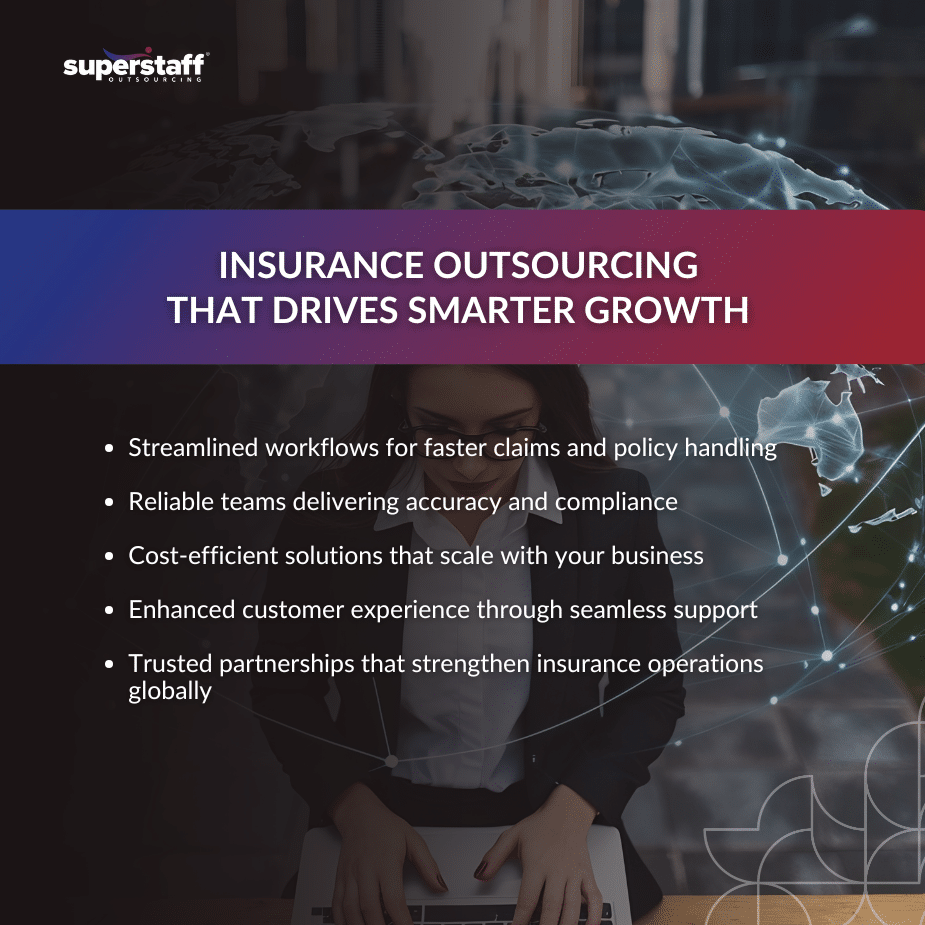
Core Areas of Insurance BPO Services
Insurance BPO services can cover several administrative and customer-facing functions. The right combination depends on the insurer’s size, product range, workload, and internal capabilities.
1. Claims Processing Support
Claims processing involves collecting information, checking documents, updating case records, and tracking progress. Outsourced staff can support these administrative steps so authorized claims professionals can review cases and make decisions. Clear workflows help reduce missing information and unnecessary delays.
2. Policy Administration
Policy administration includes updating customer details, preparing renewal documents, recording endorsements, and processing routine policy changes. Outsourced teams can maintain accurate records and flag incomplete requests for review.
3. Underwriting Support
Underwriting teams need reliable information to assess applications and determine risk. Outsourced staff can organize supporting documents, enter application details, and check records for missing information. Risk assessments and underwriting decisions should remain with appropriately authorized professionals.
4. Billing and Collection Support
Premium billing requires accurate transaction records, payment updates, and reconciliation. Outsourced teams can assist with invoice processing, payment tracking, and routine account updates under approved procedures.
5. Customer Service
Policyholders contact insurers to ask about coverage, premiums, claims, and renewal dates. Trained agents can answer routine questions, provide status updates, and direct complex requests to the appropriate department. Clear communication helps customers understand what information they need and what happens next.
How Insurance BPO Improves Business Efficiency
Outsourcing can improve operational performance when tasks are clearly defined and the provider has the right skills and systems. The results should be measured against agreed targets rather than assumed from the decision to outsource alone.
1. Faster Processing Times
Dedicated teams can manage recurring administrative tasks according to established procedures and deadlines. This can reduce backlogs and help internal employees focus on cases that require specialized review.
2. More Accurate Records
Data validation, document checks, and regular quality reviews can reduce errors in policy and claims records. Businesses should establish clear accuracy standards and procedures for correcting mistakes.
3. Greater Focus on Core Business Goals
When routine administrative tasks are handled externally, internal teams can devote more time to product development, risk management, customer relationships, and business planning.
4. Flexible Staffing Capacity
Insurance workloads can change during renewal periods, severe weather events, and other high-demand periods. Outsourcing can provide additional capacity when needed, subject to the provider’s staffing arrangements and service commitments.
5. Better Information Management
Organized records make it easier to retrieve information, track pending work, and prepare reports. Providers should use approved systems, access controls, and secure data handling procedures to protect confidential information.
The Value of Insurance Back Office Outsourcing
Insurance back office outsourcing focuses on administrative functions that support policy management, claims operations, finance, and reporting. These tasks are essential to daily operations, even when they do not involve direct customer contact.
1. Documentation and Record Management
Outsourced teams can organize policy documents, claims records, customer files, and supporting paperwork. Consistent naming conventions and document controls make information easier to locate and review.
2. Data Entry and Validation
Accurate data entry supports reliable policy records, billing information, and operational reports. Outsourced staff can enter details, check records against source documents, and flag missing or conflicting information for correction.
3. Financial Administration
Providers can assist with invoice processing, commission records, expense tracking, and routine reconciliation. Internal finance teams should retain control over financial approvals and other restricted activities.
4. Audit Preparation and Documentation
Insurance back office outsourcing can include organizing records, maintaining document logs, and preparing information for authorized reviews. These tasks support audit readiness, but they do not replace an insurer’s own compliance responsibilities.
5. Process Improvement
Regular performance reviews can reveal repeated errors, unnecessary steps, and delays. Insurers can use these findings to update procedures, improve training, and make better use of their internal and outsourced resources.
Businesses looking to assign routine administrative work externally can consider SuperStaff’s back office support services when evaluating which functions fit their needs.
Industries That Benefit From BPO Solutions for Insurance Companies
BPO solutions for insurance companies can support different business models, from established insurers to firms that provide specialized coverage and digital insurance products.
1. Life Insurance
Life insurers manage applications, beneficiary information, premium records, and policy updates. Outsourced teams can maintain documentation and assist with routine administrative processing.
2. Health Insurance
Health insurers handle eligibility information, billing inquiries, claims documentation, and policyholder questions. Outsourced teams need appropriate training and secure processes when handling health-related information.
3. Property and Casualty Insurance
Property and casualty insurers manage claims, policy changes, incident records, and supporting documents. Administrative support can help organize case information and track pending requests, especially when claim volumes increase.
4. Reinsurance Firms
Reinsurance operations involve contracts, financial records, exposure information, and reporting requirements. Outsourced administrative teams can help organize data and maintain records for review by authorized specialists.
5. Insurtech Companies
Digital insurance businesses may need support with customer records, application processing, data entry, and service inquiries as their customer base grows. Outsourcing can provide additional operational capacity without requiring every support function to be built internally.
Best Practices for Outsourcing Back Office Support for Insurance Agencies
A successful outsourcing arrangement requires clear responsibilities, secure systems, and regular performance reviews. Insurance agencies should establish these requirements before transferring tasks to an external provider.
1. Set Clear Goals and Service Standards
Define expected turnaround times, accuracy rates, reporting schedules, and responsibilities. Both teams should understand which tasks the provider can complete independently and which require approval.
2. Maintain Open Communication
Schedule regular meetings to review workloads, pending cases, policy changes, and service issues. Clear communication helps internal and outsourced teams resolve questions before they affect customers.
3. Provide Process Documentation
Give outsourced staff current instructions, templates, and examples for recurring tasks. Update these materials whenever procedures change so that records remain consistent.
4. Protect Sensitive Information
Assess the provider’s access controls, security procedures, employee training, and incident response process. Contracts should define data handling responsibilities and the steps required if a security issue occurs.
5. Monitor Performance and Quality
Track accuracy, turnaround time, backlog levels, and service quality. Use the results to identify recurring problems and make targeted improvements rather than relying only on productivity figures.
Why the Philippines Is a Choice for Insurance BPO Services
The Philippines has an established business process outsourcing industry serving international clients across customer support and administrative functions. For insurers considering offshore support, the country offers access to professionals with experience in documentation, data management, and customer communication.
English communication skills can support coordination with international teams, while outsourcing arrangements can provide flexibility in staffing and service coverage. However, insurers should evaluate each provider’s insurance experience, security controls, training program, and ability to meet their specific requirements.
The most suitable partner is one that understands the assigned tasks, follows documented procedures, protects sensitive information, and reports performance against agreed standards.
Building Efficiency and Growth Through Insurance Outsourcing
Insurance BPO services can give insurers additional capacity for administrative work, claims support, customer service, and record management. When paired with effective insurance back office outsourcing, these services can reduce routine workloads and help internal teams focus on decisions that require industry knowledge and direct oversight.
Successful outsourcing depends on more than cost savings. Insurers need clear workflows, suitable technology, reliable communication, and regular reviews of service quality. They should also define which responsibilities remain in-house and how the provider will handle sensitive information.
By matching outsourced services to actual operational needs, insurers can improve consistency, manage changing workloads, and support a better experience for policyholders.
Strengthen Insurance Operations With SuperStaff
Managing insurance records and customer requests requires dependable processes and careful attention to detail. SuperStaff provides outsourcing solutions for businesses seeking support with administrative workloads and customer service operations.
Insurers should assess their current processes, identify tasks that can be delegated, and establish clear service standards before choosing an outsourcing arrangement. These steps can help ensure that external support fits existing operations and meets business requirements.
To discuss your company’s administrative and customer support needs, contact SuperStaff to identify suitable outsourcing options.