Every product on a shelf has a journey behind it. Raw materials move across borders. Finished goods travel through ports, warehouses, and distribution centers. At the center of all this movement is logistics freight management, a system that ensures goods arrive where they need to be, on time and in good condition.
Companies today face pressure to move faster while controlling costs. At the same time, supply chains have become more complex. Because of this, many businesses are looking beyond traditional hubs. Colombia is now gaining attention as a strong player in global logistics. Its location, workforce, and infrastructure make it a practical choice for managing freight operations.
As a result, logistics freight management is no longer limited to large global hubs. Colombia is proving that it can support modern supply chain needs with speed and efficiency.
Understanding Logistics Freight Management
Logistics freight management refers to the planning, coordination, and execution of moving goods from one place to another. It involves multiple steps, each requiring accuracy and timing.
1. Core Functions of Logistics Freight Management
- Route planning and shipment scheduling
- Carrier coordination and vendor management
- Customs documentation and compliance
- Real-time tracking and reporting
- Inventory and warehouse coordination
Each step plays a role in ensuring smooth delivery. When one part fails, delays and added costs follow.
2. Why It Matters to Businesses
Efficient logistics freight management helps companies:
- Reduce shipping costs
- Improve delivery timelines
- Maintain product quality
- Increase customer satisfaction
Therefore, businesses that invest in strong logistics systems gain a clear advantage.
Why Colombia Is Gaining Attention
Colombia has become a strategic location for supply chain operations. Several factors contribute to its growing role in logistics freight management.
1. Strategic Geographic Location
Colombia connects North America and South America. It also has access to both the Pacific Ocean and the Caribbean Sea.
This means:
- Faster shipping routes to the U.S.
- Easier access to Latin American markets
- Reduced transit times for key trade routes
Because of this positioning, companies can manage shipments more efficiently.
2. Expanding Infrastructure
Colombia continues to invest in logistics infrastructure.
Key developments include:
- Modernized ports such as Cartagena and Buenaventura
- Improved road networks connecting major cities
- Expansion of airport cargo facilities
These improvements support better logistics freight management by reducing bottlenecks and delays.
3. Skilled Workforce
Colombia offers a growing pool of trained professionals in logistics and supply chain operations.
Many workers are skilled in:
- Freight coordination
- Data tracking systems
- Customer support for logistics operations
In addition, bilingual capabilities make communication easier for U.S. companies.
Key Components of Freight Management in Colombia
Colombia’s strength in logistics freight management comes from how different elements work together.
1. Port Operations
Ports play a central role in freight movement.
- Cartagena handles large volumes of container traffic
- Buenaventura connects to Pacific trade routes
- Santa Marta supports bulk cargo shipments
Efficient port operations reduce waiting times and improve shipment flow.
2. Inland Transportation
Once goods arrive at ports, they move inland through:
- Trucking networks
- Rail systems in select areas
- Regional distribution hubs
Improved road infrastructure allows faster movement across the country.
3. Technology Integration
Technology supports modern logistics freight management in Colombia.
Common tools include:
- GPS tracking systems
- Warehouse management software
- Automated reporting dashboards
These tools provide visibility and help businesses make better decisions.
Benefits of Using Colombia for Freight Management
Companies that choose Colombia for logistics freight management often see clear advantages.
1. Cost Efficiency
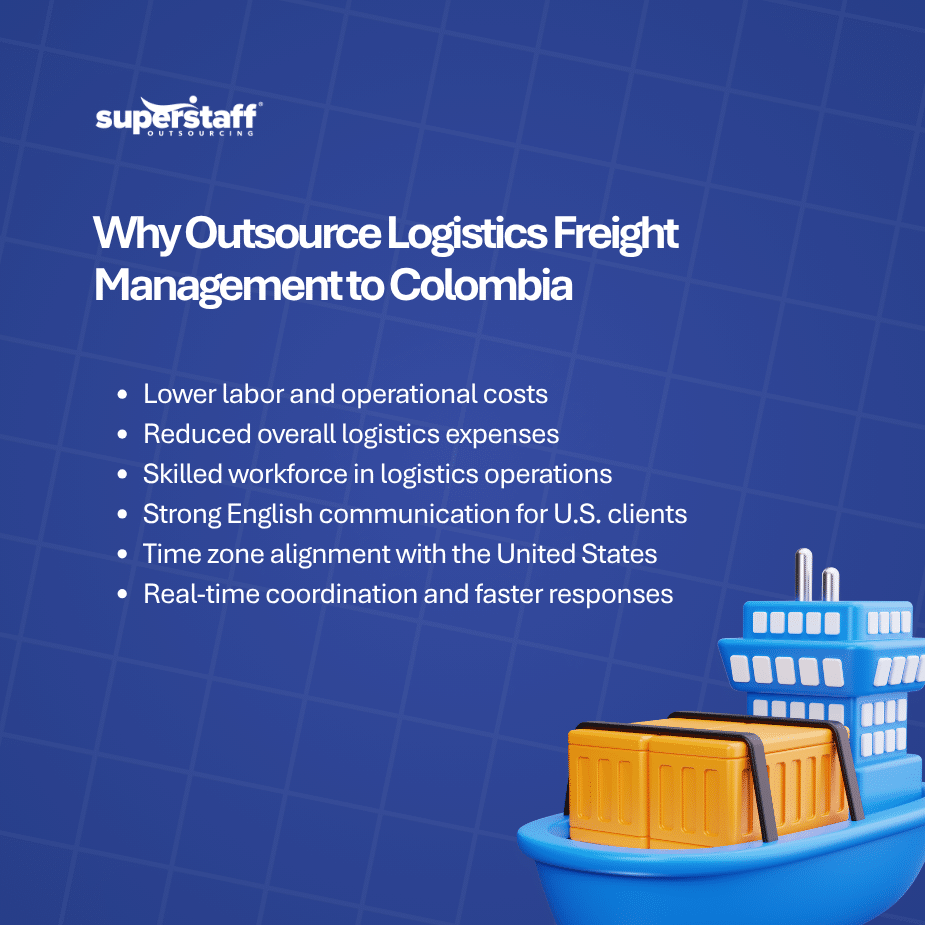
Operating costs in Colombia are lower compared to many global hubs.
This includes:
- Labor costs
- Facility expenses
- Operational overhead
As a result, businesses can reduce total logistics spending.
2. Time Zone Alignment
Colombia’s time zone aligns closely with the United States.
This allows:
- Real-time communication
- Faster decision-making
- Better coordination with U.S. teams
Because of this, daily operations run more smoothly.
3. Scalability
Businesses can scale operations based on demand.
- Add more agents during peak seasons
- Expand support teams quickly
- Adjust workflows without major disruptions
This flexibility supports growing supply chains.
Challenges to Consider
While Colombia offers strong advantages, companies should also prepare for certain challenges in logistics freight management.
1. Regulatory Compliance
Each shipment must meet local and international regulations.
- Customs documentation must be accurate
- Import and export rules must be followed
- Delays can occur if compliance is not handled properly
2. Infrastructure Gaps in Some Areas
Although major cities are well-developed, some rural areas still face limitations.
- Limited road access in remote regions
- Slower transport times outside main hubs
However, ongoing investments continue to improve these conditions.
3. Coordination Across Multiple Parties
Freight management involves many stakeholders.
- Carriers
- Customs brokers
- Warehouse teams
Clear communication is necessary to avoid delays.
How Outsourcing Supports Freight Management
Many companies are now outsourcing parts of their logistics freight management to improve efficiency.
1. Back Office Support
Outsourced teams can handle:
- Documentation processing
- Shipment tracking updates
- Data entry and reporting
This reduces workload for in-house teams.
2. Customer Support for Logistics
Support teams assist with:
- Shipment inquiries
- Delivery updates
- Issue resolution
Strong communication improves client satisfaction.
3. Data and Analytics
Outsourced teams can analyze logistics data to:
- Identify delays
- Optimize routes
- Improve cost efficiency
This leads to better decision-making.
Colombia’s Future in Global Supply Chains
Colombia continues to strengthen its position in global trade. Investments in infrastructure and workforce development support long-term growth.
Key trends include:
- Increased digitalization of logistics systems
- Expansion of free trade zones
- Growth in nearshore outsourcing partnerships
Because of these trends, logistics freight management in Colombia will continue to evolve.
Building Smarter Supply Chains with the Right Logistics Freight Management Partner
Efficient logistics freight management is essential for businesses that want to stay competitive. Colombia offers a strong combination of location, talent, and infrastructure that supports modern supply chain needs.
At the same time, managing freight operations requires expertise and coordination. That is where the right partner makes a difference.
SuperStaff helps businesses streamline their logistics freight management processes through skilled support teams, back office services, and real-time coordination. Our teams work closely with your operations to improve efficiency and maintain service quality.
If your organization is looking to reduce costs, improve visibility, and strengthen your supply chain, now is the time to act. Connect with us and discover how outsourcing can support your logistics goals.