Healthcare providers manage large volumes of administrative work every day. Tasks such as billing, scheduling, and patient records require time, focus, and accuracy. However, internal teams often struggle to keep up with these demands while also supporting patient care. Medical outsourcing solutions offer a practical way to manage these responsibilities without increasing internal workload.
Colombia has become a trusted location for healthcare support services. Many providers now rely on medical outsourcing solutions in Colombia to improve efficiency and maintain consistent operations. With trained professionals handling administrative tasks, healthcare organizations can focus more on patient care while still maintaining strong back-office support.
Why Healthcare Providers Choose Colombia
Colombia offers a strong foundation for administrative healthcare support. Its workforce, cost structure, and service quality make it a reliable option for medical outsourcing solutions.
1. Skilled Administrative Professionals
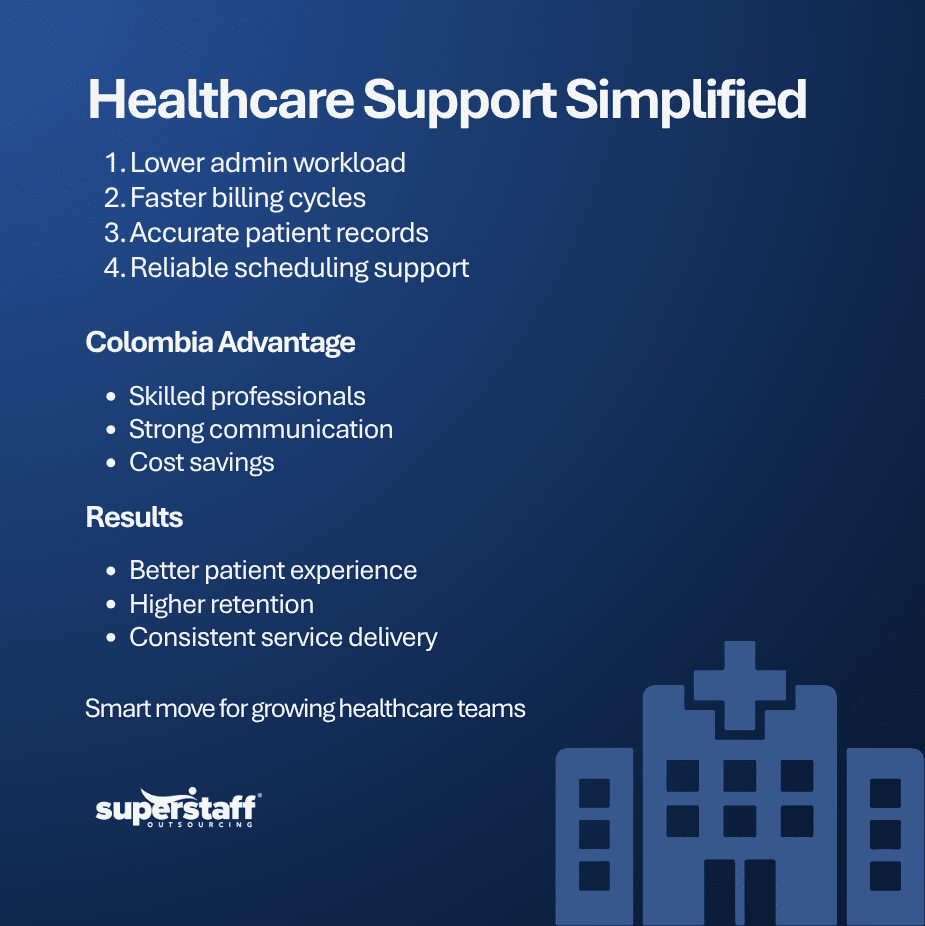
Colombia has a growing pool of trained healthcare support staff. These professionals can support medical processes such as billing, patient coordination, and administrative documentation. As a result, medical outsourcing solutions give healthcare organizations additional support for daily operations.
2. Strong Communication Skills
Clear communication supports effective healthcare operations. Companies can build teams based on the English and Spanish language skills required for their patients and internal staff. Because of this, medical outsourcing solutions can support communication across different healthcare functions.
3. Cost Savings Without Quality Loss
Healthcare providers need to control operational costs while maintaining service standards. Outsourcing gives organizations another staffing option to consider alongside local recruitment. Companies exploring healthcare outsourcing services can use external teams for selected administrative and patient support functions.
4. Stable Infrastructure
Reliable internet, communication platforms, and secure systems are important for outsourced healthcare operations. Providers should assess an outsourcing partner’s infrastructure, business continuity plans, security measures, and technology before transferring administrative responsibilities.
5. Cultural Compatibility
Healthcare support teams need to understand the communication standards and service expectations of the organizations they represent. Account-specific training allows outsourced professionals to become familiar with company processes, terminology, and patient communication requirements.
Administrative Tasks You Can Outsource
Healthcare providers can shift several time-consuming tasks to outsourced teams. This can reduce pressure on internal staff while keeping routine administrative work organized.
1. Medical Billing and Coding
Billing requires accuracy and attention to detail. Outsourced teams can support claims processing, billing documentation, payment posting, and related administrative work. Medical billing outsourcing can provide additional capacity for organizations managing large volumes of billing tasks.
2. Appointment Scheduling
Managing patient appointments can take up a large part of the day. Outsourced teams can handle scheduling, confirmations, rescheduling requests, and reminders based on approved procedures. This keeps calendars organized and gives patients a clear point of contact.
3. Insurance Verification
Verifying insurance information before appointments can reduce administrative issues later in the process. Trained staff can review available eligibility information and document details according to the healthcare provider’s procedures.
4. Data Entry and Record Management
Accurate patient records are important for healthcare operations. Outsourced teams can handle approved data entry, record updates, and documentation tasks. Defined quality checks can reduce errors and keep information organized.
5. Patient Support Services
Patients often need assistance with inquiries, scheduling, billing questions, and follow-ups. Outsourced support teams can manage approved interactions through phone, email, chat, or other channels. Medical outsourcing solutions give organizations additional capacity to respond to these requests.
Improving Operational Efficiency Through Outsourcing
Efficiency plays a key role in healthcare operations. Medical outsourcing solutions can give providers additional resources for routine administrative work.
1. Reduced Administrative Workload
Outsourcing shifts selected routine tasks away from internal employees. Clinical and administrative teams can then spend more time on responsibilities that require their direct attention.
2. Faster Task Completion
Dedicated outsourced teams focus on assigned processes throughout their shifts. Clear workflows, defined responsibilities, and proper training can reduce unnecessary delays in routine administrative work.
3. Better Resource Allocation
Healthcare providers can decide which responsibilities need to remain in-house and which can be handled externally. This allows organizations to allocate staff and budgets based on operational priorities.
4. Scalable Operations
Administrative demand can change as patient volumes grow or fluctuate. Medical outsourcing solutions provide another way to adjust support capacity without relying entirely on local hiring.
5. Consistent Service Quality
Documented procedures and performance standards give outsourced teams clear expectations. Regular quality reviews can identify errors, training needs, and areas where processes require improvement.
Enhancing Patient Experience With Administrative Support
Administrative processes affect many parts of the patient experience. Medical outsourcing solutions can provide additional support for communication, scheduling, and other non-clinical interactions.
1. Shorter Wait Times
Dedicated support teams can respond to administrative inquiries while in-house staff manage other responsibilities. Additional capacity can reduce pressure on phone, email, and scheduling queues.
2. Organized Scheduling
Accurate scheduling keeps appointment information organized. Outsourced teams can manage calendars, reminders, and approved changes while following the provider’s scheduling policies.
3. Clear Communication
Patients need accurate information about appointments, billing, and administrative requirements. Trained support teams can follow approved scripts and procedures to provide consistent information.
4. Reliable Follow-Ups
Administrative follow-ups can include appointment reminders, scheduling requests, and other approved communications. Dedicated teams can manage these activities based on the healthcare organization’s processes.
5. Smooth Administrative Processes
Efficient back-office support can reduce administrative delays that affect patients and staff. Outsourced teams can manage selected processes while internal healthcare professionals focus on their primary responsibilities.
Steps to Implement Medical Outsourcing Solutions
Healthcare providers need a structured approach when adopting medical outsourcing solutions. Data security, compliance, training, and accountability should be considered before transferring healthcare-related administrative tasks.
1. Assess Administrative Needs
Start by identifying processes that consume significant staff time. Determine which activities can be performed externally and which require direct internal or clinical oversight.
2. Select a Reliable Partner
Choose a provider with relevant healthcare support experience. Healthcare organizations handling protected health information should also evaluate applicable privacy and security requirements. The U.S. Department of Health and Human Services HIPAA resources provide official information on HIPAA requirements for covered entities and business associates.
3. Define Processes and Expectations
Set clear responsibilities, access controls, escalation procedures, quality standards, and performance measures. These guidelines give both internal and outsourced teams a clear operating structure.
4. Provide Training and Onboarding
Share approved workflows, systems, terminology, and communication standards with outsourced teams. Training should also address applicable privacy, security, and compliance requirements.
5. Monitor and Improve Performance
Regular reviews help healthcare organizations track quality, response times, accuracy, and other relevant measures. Findings can guide additional training and process improvements.
Long-Term Value of Medical Outsourcing Solutions
Medical outsourcing solutions can support healthcare providers as administrative workloads change. By assigning selected tasks to external teams, organizations can expand their support capacity without placing every new responsibility on internal employees.
The value of outsourcing depends on the provider, team structure, training, security controls, and processes in place. Healthcare organizations should regularly review these areas to ensure outsourced services continue to meet their operational and compliance requirements.
Reliable Healthcare Support Starts With the Right Partner
SuperStaff provides outsourcing solutions for healthcare organizations that need additional administrative and customer support capacity. Dedicated teams can support functions such as scheduling, billing administration, patient communication, and back-office processes based on each organization’s requirements.
Ready to explore medical outsourcing solutions for your healthcare organization? Contact SuperStaff to discuss your administrative support needs.