Long-term care providers are under growing pressure to manage higher patient volumes, tighter reimbursement models, and rising expectations for coordination. Many leaders are now turning to nearshore teams to stabilize operations and improve patient support. In this environment, support services in healthcare give organizations a more sustainable way to strengthen care delivery while controlling costs and improving continuity.
Nearshore teams do more than fill open roles. They reinforce the entire care ecosystem. They help frontline teams focus on patient needs while maintaining accuracy and compliance across administrative functions. This shift matters for organizations working to protect quality, safety, and the patient experience.
Why Long-Term Care Needs a Stronger Operational Backbone
Facilities across the continuum of care face persistent administrative strain. Leaders see the impact every day. Clinical teams lose hours to phone-based follow-ups. Billing teams face backlogs that delay revenue. Families wait longer for updates. These pressures create risks across the patient journey.
Nearshore support services in healthcare help organizations stabilize these workflows. They provide trained specialists who ensure that essential administrative tasks stay consistent. They also help teams scale during seasonal surges without putting more work on already strained staff.
Where Nearshore Teams Strengthen Day-to-Day Care Delivery
Nearshore professionals bring structure to many process-heavy tasks. These healthcare back-office support services affect quality, experience, and revenue. When they run smoothly, care teams move faster, and patients receive more reliable support.
Key areas of impact include:
- Appointment scheduling and patient communications
- Care coordination and health record updates
- Insurance eligibility and prior authorization processing
- Claims assistance and billing follow-ups
- Medication and equipment coordination
- After-hours patient inquiries and message triage
Support services in healthcare reinforce these workflows with consistency. They also reduce gaps that often lead to frustration for patients and families.
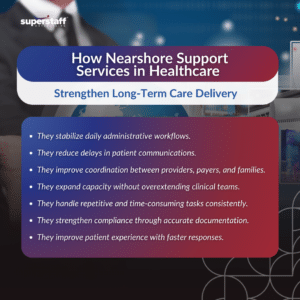
How Nearshore Teams Improve Communication Across the Care Journey
Communication remains one of the most sensitive points in long-term care. Families want timely updates. Providers need clear documentation. Payers require accurate submissions. Many organizations struggle to maintain fast response times.
Nearshore support teams help streamline these interactions. They manage patient messages, coordinate with clinics, and document conversations. Each of these actions reduces delays. It also improves accuracy, which helps minimize back-and-forth between departments.
Support services in healthcare create smoother touchpoints for patients. They help families feel informed, which increases satisfaction and trust.
Adding Capacity Without Overextending Clinical Teams
Many healthcare leaders hesitate to hire more full-time staff because of rising labor costs. They also worry about burnout. BPO services for healthcare give facilities a flexible, reliable way to increase capacity without stretching in-house teams further.
Examples of added capacity include:
- Managing daily call volumes
- Processing high numbers of authorizations
- Handling repetitive patient intake tasks
- Monitoring inboxes and portals
- Supporting back-office insurance functions
Support services in healthcare keep these tasks moving. They also help prevent delays that often impact patient safety and care quality.
Ensuring Compliance and Documentation Accuracy
Regulatory compliance depends on accurate documentation and timely processing. When workflows break down, risks increase. These issues also slow reimbursement and raise operational costs.
Nearshore teams strengthen compliance by keeping documentation current and precise. They support HIPAA-aligned processes and follow strict data handling protocols. Their consistency gives leaders confidence that critical information stays up to date.
Support services in healthcare reinforce the structure that long-term care organizations need to operate safely and responsibly.
Reducing Administrative Burden to Improve the Patient Experience
Patients and families expect clarity. They want their questions answered quickly. They want financial transparency. They want smooth coordination between their provider, insurer, and care team. These expectations continue to rise as healthcare becomes more consumer-driven.
Nearshore teams help organizations meet these expectations. They reduce response times. They follow up on pending items. They guide patients through next steps. Their work supports a more predictable experience for those navigating long-term care.
Support services in healthcare create a foundation where patient interactions feel more personalized and organized.
Driving Revenue Stability Through Stronger Billing Processes
Billing remains one of the most critical functions for long-term care organizations. Backlogs, errors, and delays limit revenue and increase administrative strain.
Nearshore teams help:
- Verify eligibility
- Process claims
- Monitor denials
- Manage resubmissions
- Communicate with payers
- Track outstanding balances
Support services in healthcare protect revenue by keeping these workflows efficient. They help prevent bottlenecks that impact financial performance.
Flexibility for Organizations Adapting to Changing Demands
Healthcare leaders face constantly shifting workloads. Seasonal illness spikes, regulatory changes, and payer updates affect everything from staffing levels to call volumes.
Nearshore teams offer built-in flexibility. They can scale support based on daily needs. They also help organizations pivot during unexpected changes. This flexibility strengthens resilience across care delivery.
Support services in healthcare give leaders options. They provide an operational buffer that keeps care teams steady.
Why the Nearshore Model Aligns With U.S. Healthcare Priorities
Time zone alignment, cultural compatibility, and strong English proficiency make nearshore teams ideal for patient-facing and administrative roles. Organizations benefit from real-time collaboration and smoother handoffs between in-house and offshore teams.
This model supports long-term care providers working to:
- Improve access
- Strengthen coordination
- Reduce bottlenecks
- Protect staff bandwidth
- Maintain financial health
Support services in healthcare bring reliability to these goals. They help organizations build a more stable system of care.
A Partnership That Builds Long-Term Value
Nearshore support is not a temporary staffing fix. It is a long-term operational strategy. It gives healthcare organizations the structure to maintain consistent care for growing patient populations. It enables providers to focus on clinical decision-making while trained specialists manage the administrative engine behind the scenes.
Support services in healthcare become part of the care ecosystem. They reinforce every stage of the patient journey.
Turn to SuperStaff for Nearshore Support Services in Healthcare
Long-term care organizations need sustainable operational support to keep pace with rising expectations. Nearshore teams offer a strong, scalable approach to strengthening daily workflows, improving communication, and protecting revenue. With the right partner, support services in healthcare become a foundation for long-term stability and better patient experiences.
SuperStaff helps healthcare providers build these dependable systems with trained teams ready to support complex administrative and patient coordination tasks.
Are you thinking of reducing administrative burden in long-term care with outsourcing? Connect with SuperStaff today to explore how our nearshore healthcare solutions can strengthen your operations.