Customers expect quick updates, clear answers, and reliable support when they track shipments or manage deliveries. Because of this, many companies now outsource logistics customer service to stay consistent and responsive. Colombia has become a strong choice for this strategy. It offers access to skilled talent, nearshore support, and working hours that align closely with North America. As a result, businesses can strengthen customer service while managing operating costs.
At the same time, Colombia’s outsourcing sector continues to support companies across logistics, e-commerce, customer service, and other industries. Businesses that outsource logistics customer service can build dedicated teams for tracking inquiries, delivery concerns, customer communication, and other support functions.
Strong Workforce for Customer Support
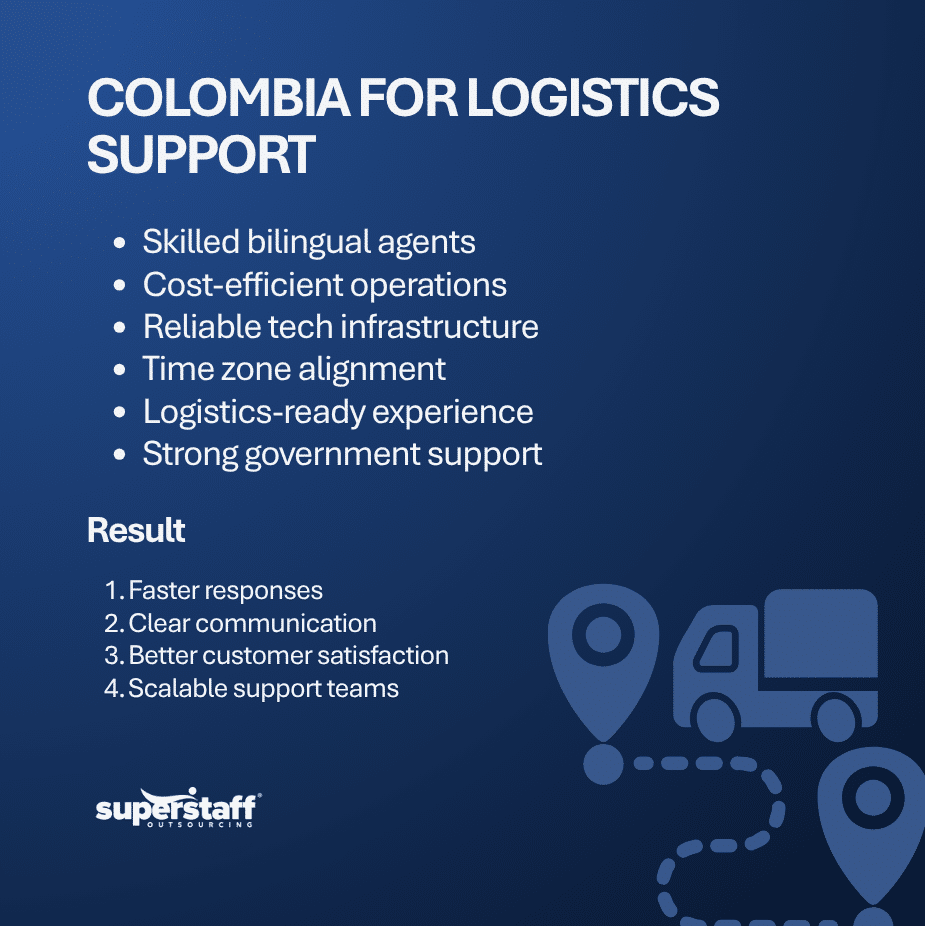
Colombia has built a workforce that supports the needs of international businesses. Many professionals have experience in customer-facing roles and can receive account-specific training for logistics operations.
1. Skilled English-Speaking Agents
Companies can recruit Colombian professionals based on the English proficiency and communication skills required for each role. Businesses that outsource logistics customer service can also train agents on company terminology, customer expectations, and communication standards.
2. Customer-Focused Service
Clear and professional communication matters when customers are waiting for a shipment or dealing with a delivery problem. Colombian support teams can follow defined service standards while adapting their communication to different customer situations.
3. Continuous Training
Regular training keeps agents familiar with company processes, technology, shipping policies, and customer service requirements. This preparation is especially useful when logistics processes or systems change.
4. Experience in Logistics Support
Some outsourcing providers already support transportation, e-commerce, and supply chain operations. SuperStaff’s guide to transport and logistics CX outsourcing explains how nearshore teams in Colombia can support logistics functions such as real-time dispatching and customer communication.
5. Structured Performance Standards
Service providers can establish performance targets for response times, resolution rates, quality scores, attendance, and other relevant measures. Clear standards give both internal and outsourced teams a consistent way to evaluate performance.
Cost Efficiency Without Sacrificing Quality
Companies often look for ways to control customer service costs while maintaining clear performance requirements. Colombia gives businesses another staffing market to consider when building support teams.
1. Competitive Labor Costs
Labor expenses can vary significantly between markets. Companies that outsource logistics customer service to Colombia can compare nearshore staffing costs with the expenses involved in recruiting and maintaining larger domestic teams.
2. Lower Operational Requirements
Building an internal support department may require additional office space, technology, recruitment, HR administration, and management resources. Depending on the outsourcing model, providers can manage some of these requirements.
3. Value Beyond Staffing
The value of outsourcing is not limited to labor costs. Experienced providers may also offer recruitment, training, quality assurance, workforce management, reporting, and operational support.
4. Flexible Staffing Models
Logistics volumes can change during holidays, sales events, product launches, or other busy periods. Outsourcing can provide additional flexibility when companies need to adjust their support capacity.
5. Reduced Recruitment Workload
Recruitment requires time for sourcing, interviews, screening, and onboarding. When businesses outsource logistics customer service, the provider can manage defined parts of this process based on the service agreement.
Reliable Infrastructure and Technology
Technology plays an important role in logistics customer service. Agents may need access to tracking systems, customer records, communication platforms, and other tools to answer questions accurately.
1. Reliable Connectivity
Stable connectivity allows support agents to manage calls, chats, emails, and system-based tasks. Businesses should review a provider’s connectivity and backup capabilities before selecting an outsourcing partner.
2. Suitable Work Environments
Outsourcing facilities can provide workstations, communication systems, and other resources required for customer support. Companies should confirm that the provider’s setup matches their technology and security requirements.
3. Access to Customer Service Tools
Outsourced agents can work with approved CRM, ticketing, communication, and logistics platforms. Businesses that outsource logistics customer service should provide suitable training and access permissions so teams can use these systems correctly.
4. Data Security Measures
Logistics teams may work with customer names, addresses, order details, and other business information. Security controls, access management, staff training, and documented procedures should form part of the outsourcing arrangement.
5. Digital Development
Colombia continues to develop its digital economy and technology sector. Businesses considering the country can review information from ProColombia, the country’s official investment and export promotion organization, when researching Colombia’s business environment.
Strategic Location and Time Zone Advantage
Location can affect communication between outsourced agents, internal teams, carriers, and customers. Colombia’s proximity to North America is one reason it has become a notable nearshore outsourcing location.
1. Alignment With North American Time Zones
Colombia operates during hours that overlap closely with U.S. business hours. This allows internal and outsourced employees to communicate in real time rather than waiting for another region to begin its workday.
2. Easier Coordination With Teams
Logistics operations involve frequent updates between customer service, dispatch, warehouses, carriers, and other functions. Shared working hours can make these conversations easier to manage.
3. Support for Logistics Operations
Customer service teams may need to coordinate delivery updates, tracking information, returns, and other logistics concerns. Colombia’s role in broader logistics outsourcing extends beyond traditional call center work. SuperStaff’s article on Colombia e-commerce outsourcing covers functions such as track-and-trace support, inventory management, and returns handling. SuperStaff
4. Access to Major Outsourcing Hubs
Cities such as Bogotá and Medellín provide access to large talent markets. Outsourcing providers can recruit professionals for customer service, back-office, technical support, and other business functions.
5. Collaboration With International Teams
Account-specific training allows Colombian professionals to understand client workflows, terminology, service expectations, and communication requirements. This preparation can make collaboration easier across locations.
Supportive Business Environment for Outsourcing
Colombia’s established outsourcing sector gives international businesses several options when looking for customer service and operational support.
1. Access to Business Services
International companies can evaluate Colombian providers based on their staffing capabilities, technology, industry experience, security, and service models. Comparing these factors can help businesses find a partner suited to their requirements.
2. Established Outsourcing Industry
Colombia already supports international companies across customer service and other business functions. This gives businesses access to providers familiar with managing outsourced operations for overseas clients.
3. Focus on Workforce Skills
Recruitment and training remain important parts of successful outsourcing. Businesses should assess how potential providers select agents, develop their skills, and prepare them for client-specific processes.
4. Defined Business Requirements
Companies should review contracts, employment arrangements, data protection requirements, and other applicable rules before establishing an outsourced operation. Legal and compliance requirements may vary based on the type of service and information being handled.
5. Growth in Nearshore Outsourcing
Colombia’s location, workforce, and overlapping hours with North America support its role as a nearshore destination. Companies that outsource logistics customer service can use this model to maintain closer communication between U.S.-based and outsourced teams.
Build Reliable Support With the Right Partner
Colombia gives logistics companies access to nearshore professionals who can support tracking inquiries, delivery concerns, customer communication, and other service needs. Businesses that outsource logistics customer service can build teams around their customer volumes, service channels, working hours, and operational requirements.
SuperStaff provides outsourcing solutions for logistics, transportation, customer service, and back-office operations. Companies can build dedicated teams based on their workflows and customer support requirements.
Ready to strengthen your logistics customer service operation? Contact SuperStaff to discuss your needs and explore a support model that fits your business.