
Every company aims to grow sales while maintaining consistent product quality. However, balancing both goals can be difficult when resources are limited or internal teams are already stretched. Businesses need an effective sales process to attract customers and a reliable quality assurance (QA) process to deliver products that meet expectations. By using QA testing outsourcing and sales outsourcing services, companies can access specialized skills, manage workloads, and focus on business growth.
These strategies address two important areas of business performance. Sales professionals identify prospects, build customer relationships, and support revenue growth, while QA specialists test products and identify issues before release. When managed well, these functions allow businesses to improve efficiency, reduce avoidable costs, and provide consistent customer experiences.
The Value of Outsourcing for Business Competitiveness
Outsourcing gives businesses access to specialized talent without requiring them to build every team from scratch. Companies that outsource sales and QA testing can adjust their resources based on changing workloads, project needs, and growth plans.
1. Sales Drives Revenue Growth
Sales teams attract new customers and maintain existing client relationships. With sales outsourcing services, businesses can delegate prospecting, lead qualification, follow-ups, and sales support to trained professionals. This gives internal teams more time to focus on planning, product development, and other priorities. A well-defined process also keeps customer outreach organized and sales activities aligned with business goals.
2. QA Testing Protects Product Quality
Software defects can affect usability, customer satisfaction, and business operations. Through QA testing outsourcing, companies can work with specialists who test applications, websites, and software for errors and performance issues. Early testing gives development teams time to address problems before they affect users. Different testing methods can also check whether new updates interfere with existing features.
3. Better Resource Allocation
Managing sales and quality assurance internally requires hiring, training, equipment, and supervision. Outsourcing selected tasks allows businesses to direct internal resources toward their main goals while external professionals handle agreed responsibilities. This approach is especially useful when internal teams lack the capacity to manage new projects without delaying existing work.
4. Scalability and Flexibility
Business needs change as companies launch products, enter new markets, or experience seasonal demand. Outsourcing makes it easier to adjust team capacity without relying entirely on permanent hiring. Companies can scale support according to project requirements, timelines, and available budgets.
5. Access to Specialized Skills
QA testing outsourcing can provide access to manual testers, automation specialists, and professionals with experience in different testing methods. External sales teams can bring knowledge of prospect research, customer communication, and sales processes. Businesses should assess each provider’s experience and capabilities before choosing a partner.
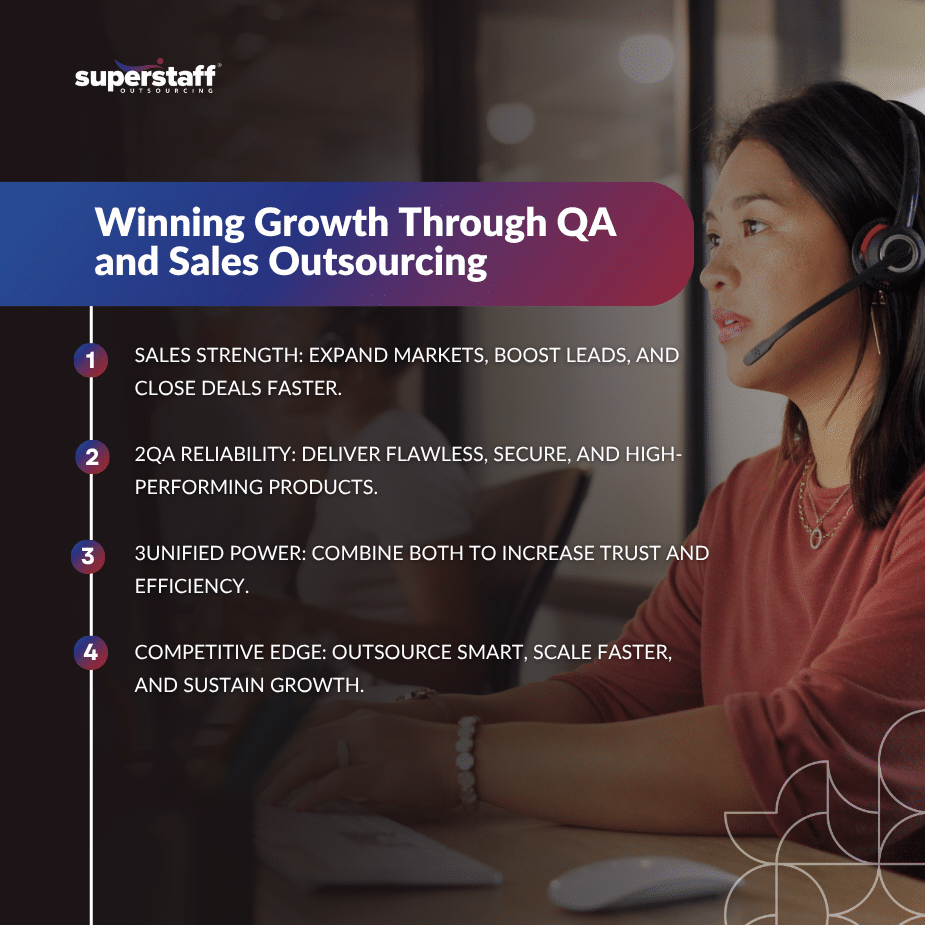
How QA Testing Outsourcing Improves Product Quality
Product quality affects customer satisfaction, retention, and brand reputation. A structured testing process identifies issues before they reach end users. QA testing outsourcing allows businesses to bring in additional testing resources when internal teams lack the time or expertise to cover every requirement.
1. Early Detection of Bugs
QA specialists test software during development and before release to identify defects. Finding problems early can reduce the time and expense associated with fixing them after launch. Detailed test reports also give developers clear information about the affected features and the steps needed to reproduce an issue.
2. A Better User Experience
Testing checks whether applications and websites work as expected across different devices, browsers, and user scenarios. This can reveal problems with navigation, forms, loading times, and other features that affect how customers use a product.
3. Security and Compliance Checks
Depending on the project scope, QA teams can test security controls, access permissions, and data handling processes. Businesses in regulated industries should confirm that their testing partner understands relevant requirements and follows suitable data protection practices. Testing supports compliance efforts but does not guarantee compliance on its own.
4. Consistent Product Performance
Products need to remain reliable after updates and new feature releases. Regression testing checks whether changes have affected existing functions. Regular testing helps teams identify problems before they disrupt customers or business operations.
5. Better Control Over Testing Costs
Building a full in-house QA department can involve ongoing recruitment and training expenses. Outsourcing gives businesses another way to access testing expertise based on project needs. Costs depend on the scope, tools, testing methods, and level of support required.
A structured approach to QA outsourcing services can give businesses a clearer way to manage testing workloads, document defects, and maintain consistent quality checks.
How Sales Outsourcing Services Drive Business Growth
A well-managed sales process gives businesses a clear way to identify potential customers, maintain communication, and move qualified prospects toward a purchase. Sales outsourcing services provide additional support for these activities without requiring the company to manage every task internally.
1. Lead Generation and Qualification
Outsourced sales professionals research potential customers, identify suitable prospects, and qualify leads based on agreed criteria. This allows internal sales representatives to spend more time on opportunities that match the company’s target market. Clear qualification rules also help reduce time spent on prospects who are unlikely to become customers.
2. Consistent Customer Outreach
Regular follow-ups keep conversations active and give prospects the information they need to make decisions. External teams can manage outreach schedules, update customer records, and coordinate follow-ups according to the company’s sales process.
3. Market Expansion
Businesses entering new markets may need more sales capacity or experience with different customer groups. An outsourcing partner can provide additional staff for prospecting and customer engagement. Companies should still assess the team’s language skills, market knowledge, and ability to represent the brand.
4. Performance Tracking and Improvement
Sales reports can show how many leads become qualified opportunities, how often prospects respond, and where potential customers leave the sales process. Reviewing these results helps businesses identify weak points and adjust their approach.
5. Reduced Recruitment and Management Work
Recruiting, onboarding, and supervising an in-house sales team takes time. Outsourcing selected sales activities can reduce the internal workload associated with these tasks. Businesses should compare provider fees with expected results and the cost of managing the same functions internally.
The right sales outsourcing services can also provide support for lead management, follow-ups, and other tasks that keep the sales process moving.
Combining Sales and QA Testing Outsourcing for Better Results
Sales and QA serve different purposes, but both influence the customer experience. Sales teams communicate a product’s value, while QA teams help verify that the product performs according to its requirements. Coordinating these functions can support more consistent business results.
1. Aligning Sales Promises With Product Performance
Sales teams need accurate information about product features and limitations. QA findings can help identify known issues and confirm which features have been tested. Sharing this information helps sales professionals set realistic expectations with customers.
2. Supporting Product Launches
Before a product launch, QA teams can test key functions while sales teams prepare prospect lists, product information, and outreach plans. Coordinating timelines allows both teams to prepare for launch without overlooking testing or sales activities.
3. Improving Customer Feedback Processes
Sales professionals often hear questions and concerns directly from prospects and customers. QA teams can use relevant feedback to identify areas that need further testing. A clear process for sharing this information can help businesses prioritize improvements based on actual customer needs.
4. Scaling Without Overloading Internal Teams
When demand increases, companies may need more sales coverage and additional testing capacity. Outsourcing gives them the option to add resources to either function based on business priorities and project requirements.
5. Supporting Long-Term Business Growth
Reliable products can strengthen customer confidence, while effective sales processes help businesses reach suitable buyers. Combining both functions under clear performance standards can support customer retention, revenue growth, and more efficient operations.
Industries That Benefit From Sales and QA Outsourcing
Many industries can use outsourced sales and testing teams to address specific operational needs.
- Technology and software development: QA teams test applications and software releases, while sales professionals manage lead generation and customer outreach.
- E-commerce and retail: Testing teams check website functions and checkout processes, while sales teams support customer acquisition and promotional campaigns.
- Manufacturing and logistics: QA professionals assess software systems or defined product requirements, while outsourced sales teams build relationships with business clients.
- Financial services and insurance: QA teams test digital platforms and workflows, while sales teams support customer acquisition under established security and compliance rules.
- Telecommunications: Testing teams assess applications and service platforms, while sales professionals help businesses promote plans and reach new customers.
These industries can benefit from outsourcing when the services match their operational needs, quality standards, and customer expectations.
Best Practices for Outsourcing Sales and QA Testing
A successful outsourcing partnership needs clear goals, regular communication, and agreed ways to measure performance. Businesses should establish these requirements before work begins.
1. Set Clear Goals and Metrics
Define the expected outcomes for each team. Sales metrics may include qualified leads, conversion rates, and revenue contribution. QA metrics may include defect detection, test coverage, defect leakage, and testing turnaround time. Choose measures that reflect actual business goals rather than relying on numbers alone.
2. Maintain Open Communication
Schedule regular meetings between internal managers and external teams. Sales and QA staff should understand relevant product updates, customer feedback, release schedules, and changes in business priorities.
3. Provide the Right Tools and Guidelines
Give teams access to approved sales materials, testing environments, product documentation, and workflow instructions. Set access permissions based on each person’s responsibilities to protect sensitive business information.
4. Monitor Results and Review Performance
Review reports regularly to assess progress against agreed targets. Investigate recurring defects, low lead conversion, missed deadlines, or other performance gaps. Use these findings to update processes and training plans.
5. Encourage Collaboration
Create a clear process for sharing information between internal employees and outsourced teams. Sales professionals can report recurring customer questions, while QA specialists can explain product limitations or issues that may affect customer expectations. This exchange gives both teams better information for their daily work.
Building Agility Through Strategic Outsourcing
Outsourcing allows companies to add skills and capacity without managing every function internally. With QA testing outsourcing, businesses can bring in testing specialists to review products and identify defects. Sales outsourcing services provide additional capacity for lead generation, prospect communication, and sales support.
The key is to choose partners with relevant skills, clear processes, and measurable service standards. Businesses should establish data security requirements, define responsibilities, and review performance regularly. These steps make it easier to determine whether outsourcing is meeting expectations and where improvements are needed.
Companies should also consider how external teams will work with internal employees, share updates, and report results. A well-managed arrangement keeps responsibilities clear while allowing businesses to respond to changing demands.
Strengthen Your Business With Expert Outsourcing
Combining sales and QA support can give businesses more room to focus on product development, customer relationships, and growth. The right setup depends on the company’s workload, budget, quality requirements, and sales targets.
Businesses assessing their options can review SuperStaff’s outsourcing services to understand the types of operational support available. Before choosing a provider, compare its experience, staffing approach, security practices, and reporting process with your company’s requirements.
To discuss your business needs and determine which outsourcing arrangement may be suitable, contact SuperStaff.