
Talent shortages are no longer a temporary disruption. They have become a structural challenge for U.S. SMEs and midmarket firms. Leaders are competing for customer support agents, back office specialists, and operational talent in an increasingly tight labor market. For many executives, outsourced business services provide a practical path forward without slowing growth.
Rising wage expectations, extended hiring cycles, and high turnover rates strain internal teams. Customer experience suffers when roles stay open for months. At the same time, leadership cannot afford to overhire during uncertain economic conditions. Decision makers need flexibility without sacrificing service quality.
The Philippines offers a proven solution. With a strong BPO infrastructure and a large English-speaking workforce, it remains one of the most stable destinations for companies seeking reliable operational support.
The Talent Gap Is an Operational Risk
Workforce shortages do more than increase recruiting costs. They disrupt service levels and create internal bottlenecks. When support queues grow, customer satisfaction declines. When back office tasks fall behind, finance, compliance, and logistics functions lose momentum.
Midmarket companies feel this pressure acutely. Unlike enterprise organizations, they often lack deep bench strength. Hiring delays translate directly into missed revenue opportunities. Outsourced business services help stabilize these operations by ensuring roles are filled consistently and quickly.
Executives also gain predictability. Instead of navigating fluctuating domestic hiring conditions, they work with structured offshore teams built to scale.
Why the Philippines Continues to Lead
The Philippines has decades of experience supporting U.S. businesses. Its workforce understands American culture, business norms, and communication standards. That alignment reduces onboarding friction and improves customer interactions from day one.
Strong educational institutions supply graduates trained in business, IT, healthcare administration, and finance. As a result, outsourced business services in the Philippines extend beyond basic call handling. Companies can build teams across customer experience, technical support, revenue cycle management, and back office processing.
Time zone compatibility also supports real-time collaboration. Many Philippine teams operate on U.S. schedules, ensuring responsiveness and continuity.
How Outsourced Business Services Reduce Hiring Pressure
Leaders often hesitate to outsource because they assume it requires a complex transition. In reality, the right partner simplifies the process. Providers manage recruitment, HR compliance, infrastructure, and training.
This structure relieves internal HR departments from constant recruitment cycles. Instead of posting job ads and conducting dozens of interviews, executives can activate outsourced business services with clearly defined roles and KPIs.
Operational continuity improves immediately. Customer support lines remain staffed. Backlogs shrink. Internal leaders refocus on growth initiatives rather than staffing challenges.
Cost Discipline Without Compromising Quality
Labor costs in major U.S. cities continue to rise. Benefits, office space, and compliance requirements add further expense. Companies cannot always pass those costs to customers.
Outsourced business services in the Philippines allow firms to maintain strong service levels at sustainable cost structures. Savings do not come from cutting corners. They come from labor arbitrage, operational efficiency, and scale.
More importantly, predictable pricing models improve budgeting accuracy. CFOs gain clarity on monthly expenses while maintaining flexibility to scale up or down as demand shifts.
Strategic Scalability for Growing Firms
Growth creates pressure. Customer inquiries increase. Orders multiply. Billing complexity expands. Domestic hiring often lags behind demand, which places strain on existing teams.
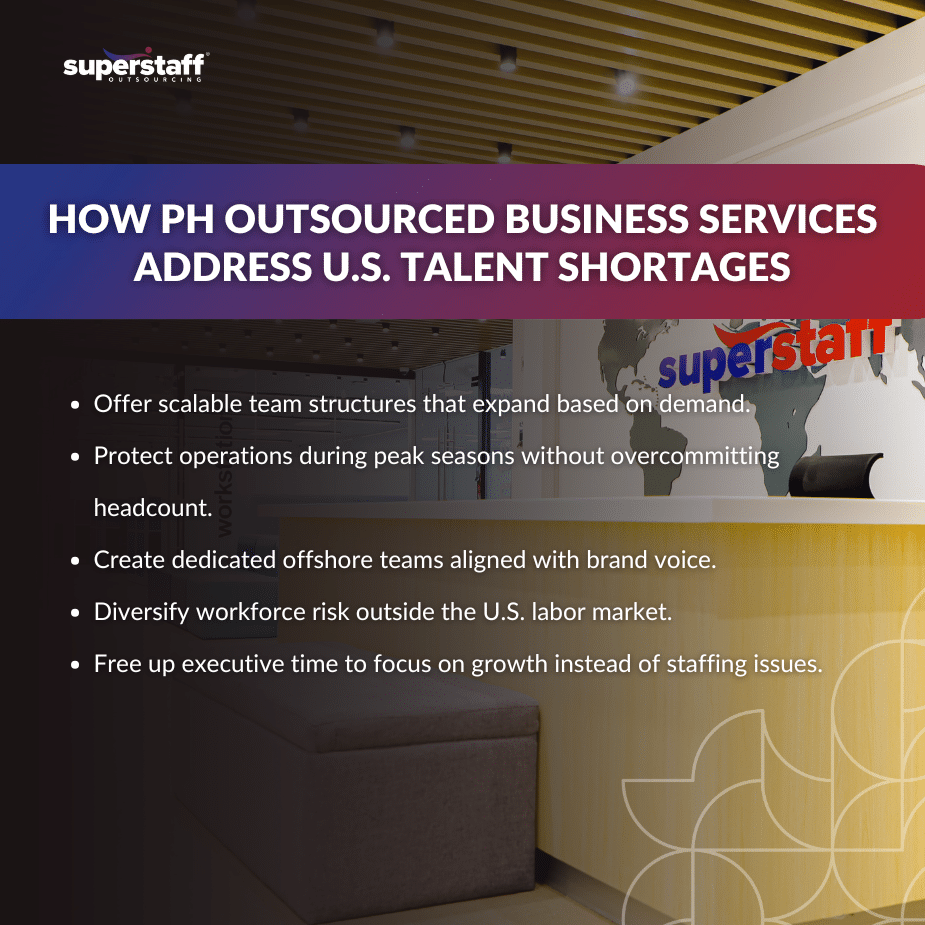
Outsourced business services provide elasticity. Companies can expand support capacity during peak seasons and adjust during slower periods. This responsiveness prevents burnout among core employees and maintains service consistency.
Leadership also avoids long-term headcount commitments during uncertain cycles. That flexibility supports smarter financial planning.
Operational Focus Returns to Leadership
When talent shortages dominate executive meetings, strategic thinking suffers. Leaders spend time reviewing hiring pipelines instead of refining product strategy or customer acquisition plans.
Outsourced business services shift operational responsibility to specialized teams. Service providers manage workforce performance, quality assurance, and technology infrastructure. Internal leaders regain time to concentrate on revenue generation and competitive positioning.
Clear service-level agreements ensure accountability. Regular reporting provides transparency. Oversight remains intact without daily operational stress.
Building Dedicated Teams Instead of Generic Support
Modern outsourcing models emphasize dedicated teams. Companies are no longer purchasing generic support pools. They are building structured offshore extensions of their own departments.
Outsourced business services in the Philippines allow firms to assign specific agents to their brand, processes, and customers. Training aligns with internal standards. Communication channels remain direct and collaborative.
This approach preserves brand voice and service consistency. Customers experience seamless support, regardless of geography.
Risk Mitigation Through Diversified Talent
Relying solely on domestic labor markets exposes companies to localized risk. Economic shifts, regulatory changes, or regional labor shortages can disrupt operations.
Outsourced business services create geographic diversification. Offshore teams provide continuity even when domestic markets tighten. Business continuity planning becomes stronger with distributed workforce models.
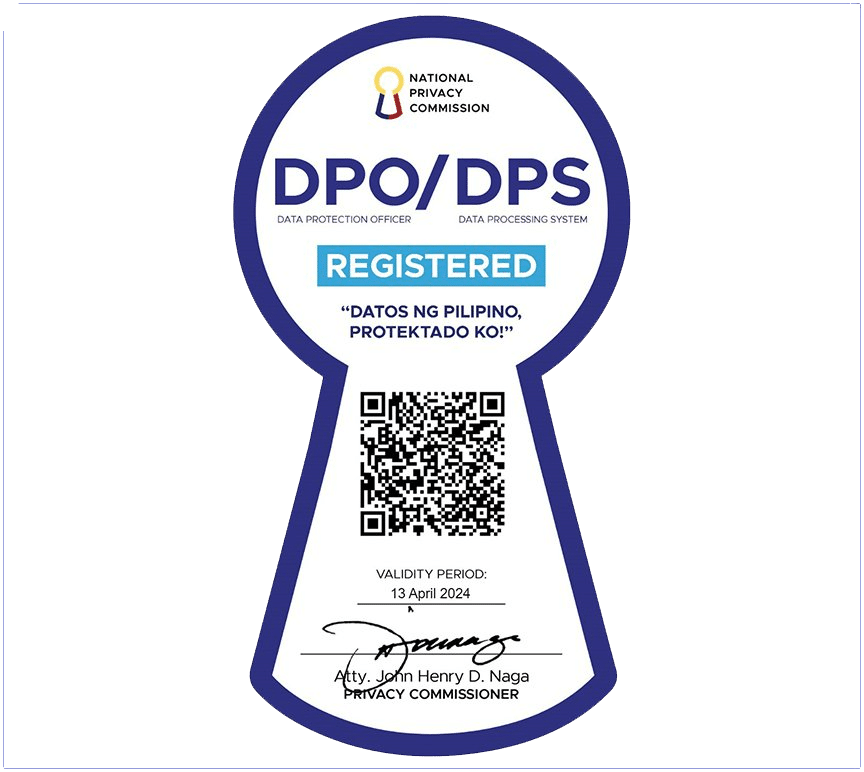
Additionally, reputable Philippine providers invest heavily in data security and compliance frameworks. This ensures operational resilience while protecting sensitive information.
What to Look for in a Philippine Partner
Choosing the right provider determines long-term success. Decision makers should evaluate:
- Recruitment capability and talent depth
- Transparent performance reporting
- Strong management structure
- Secure infrastructure and compliance practices
- Cultural alignment with U.S. business standards
Outsourced business services succeed when the partnership model emphasizes collaboration rather than simple task delegation. Clear communication channels and structured onboarding processes matter.
Leadership teams should also look for scalability options. A partner must support gradual expansion as business needs evolve.
A Practical Example of Relief
Consider a midmarket e-commerce firm struggling with prolonged hiring cycles. Customer inquiries doubled over six months, yet domestic recruitment lagged. Response times increased. Internal morale declined.
By transitioning a portion of its support operations to outsourced business services in the Philippines, the company stabilized service levels within weeks. Dedicated agents handled chat, email, and voice support. Domestic managers focused on product improvements and marketing expansion.
The result was operational balance without overextending internal teams.
Long-Term Workforce Strategy, Not a Short-Term Fix
Outsourcing is most effective when viewed as a long-term workforce strategy. Talent shortages will continue to fluctuate. Economic cycles will shift. Workforce expectations will evolve.
Outsourced business services provide structural stability. Companies gain access to skilled professionals while preserving financial discipline. Operational consistency improves, and leadership maintains flexibility.
This model does not replace internal teams. Instead, it complements them. Domestic leaders retain strategic control while offshore teams deliver reliable execution.
Address U.S. Talent Shortages Through Outsourced Business Services in the Philippines
Talent shortages demand decisive leadership. Companies cannot afford prolonged hiring gaps that compromise customer experience and operational efficiency. Outsourced business services offer a structured, scalable solution that strengthens resilience while supporting growth.
SuperStaff helps SMEs and midmarket firms build high-performing offshore teams in the Philippines. With experienced managers, secure infrastructure, and a people-centered culture, we deliver outsourced business services designed for long-term success.
If your organization is navigating hiring challenges or planning for scalable growth, explore how SuperStaff can support your operations. Connect with our team to design a workforce model that keeps your business moving forward.