
As healthcare organizations grow, the number of claims they handle can increase alongside patient demand, new services, and expanding provider networks. Each claim requires careful review, accurate information, and compliance with payer rules. When internal teams cannot keep up, backlogs grow, payment decisions take longer, and administrative costs rise.
An outsourced claims adjudication process gives healthcare organizations access to specialized support for reviewing claims and managing related administrative tasks. With the right partner, organizations can adjust capacity, improve processing consistency, and manage workloads without placing all the pressure on internal teams. This approach allows healthcare leaders to focus on operational growth while maintaining appropriate oversight of claims accuracy, data security, and compliance.
Why Efficient Claims Adjudication Matters
Claims adjudication is the process of reviewing a healthcare claim to determine whether a service is covered and how much should be paid under the applicable plan rules. It typically involves checking eligibility, benefits, coding, documentation, and payment requirements. Accurate decisions help payers and administrators manage claims consistently and reduce avoidable delays.
1. Claim Verification and Validation
Claims must contain complete and accurate information before a decision can be made. Reviewers check member details, provider information, service dates, procedure codes, and supporting documentation against applicable requirements. Missing or inconsistent information may require correction or further review.
2. Coding and Documentation Accuracy
Medical codes communicate information about diagnoses, procedures, and services. Errors or inconsistencies can lead to claim rejections, payment delays, or incorrect decisions. Trained personnel can review coding information and documentation to identify issues that need further attention.
3. Eligibility and Benefits Review
A claim must be assessed against the patient’s coverage and the terms of the applicable health plan. This includes reviewing eligibility, covered services, benefit limits, and other relevant requirements. Accurate checks reduce avoidable errors and support consistent decisions.
4. Payment Decisions and Claim Resolution
After review, a claim may be approved, partially paid, denied, or referred for additional information, depending on the applicable rules. Clear documentation of each decision makes it easier to explain outcomes, resolve discrepancies, and handle appeals when necessary.
5. Reporting and Compliance
Regular reporting allows healthcare organizations to monitor claim volumes, processing times, error rates, and denial patterns. The Centers for Medicare & Medicaid Services’ claims processing documentation outlines core claims functions, including validation, adjudication, analysis, and reporting.
Why Scalability Matters in Claims Management
As healthcare operations expand, claims teams must manage higher workloads without sacrificing accuracy or control. Growth can come from new patients, additional providers, changes in insurance coverage, or the introduction of new services.
1. Managing Fluctuating Claim Volumes
Claim volumes may change due to seasonal demand, organizational growth, or changes in coverage and billing activity. An outsourced team can provide additional processing capacity based on agreed workload requirements, helping organizations manage busy periods without relying entirely on permanent staffing increases.
2. Reducing Administrative Pressure
Internal staff may struggle to balance claim reviews, documentation checks, follow-ups, and reporting when workloads increase. Outsourcing suitable tasks gives internal teams more time to handle complex cases, resolve exceptions, and oversee performance.
3. Maintaining Accuracy During Growth
Higher claim volumes can increase the risk of data entry mistakes, incomplete reviews, and inconsistent decisions. Standard procedures, trained personnel, and quality checks can support more consistent processing as workloads grow.
4. Responding to Policy Changes
Healthcare claims must follow applicable payer policies, coding standards, and regulatory requirements. Organizations need processes for communicating changes, updating procedures, and training staff. Outsourcing partners should follow the client’s approved rules and escalate questions when requirements are unclear.
5. Supporting More Predictable Workflows
When claims are processed consistently, organizations can track backlogs, identify recurring problems, and plan staffing needs more accurately. Better visibility into workload trends also supports decisions about resource allocation and process improvements.
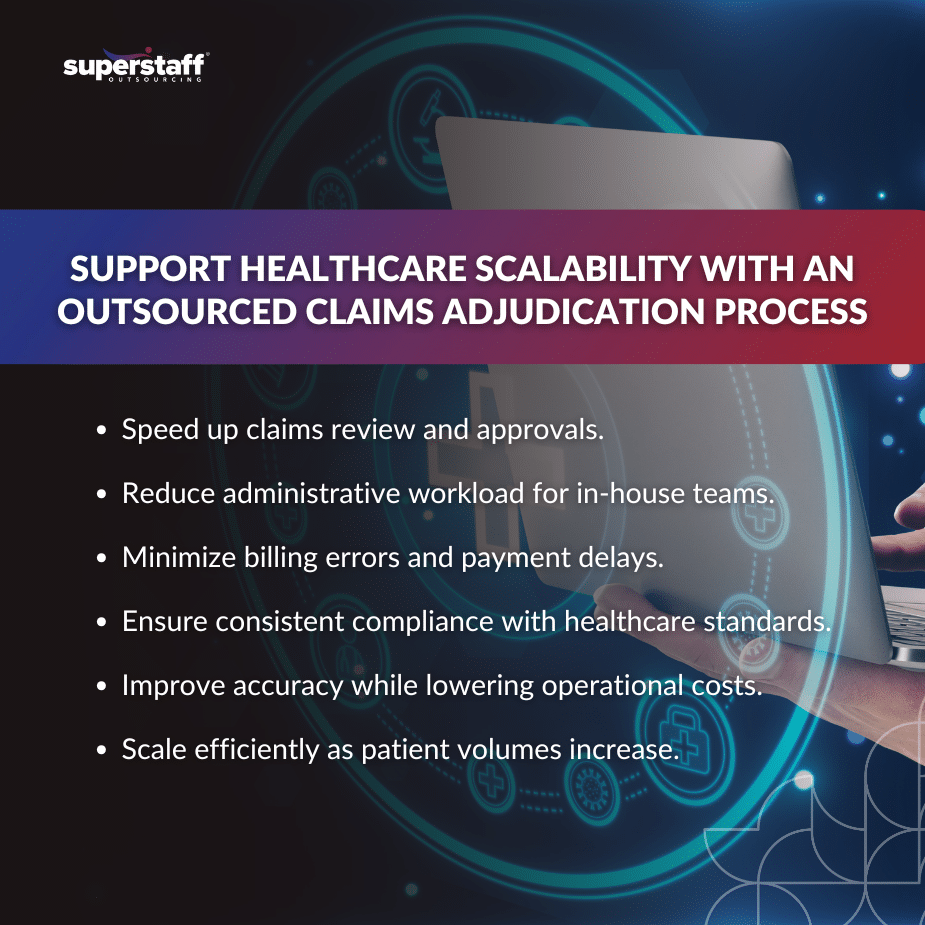
How Outsourced Claims Adjudication Services Improve Scalability
Outsourcing allows healthcare organizations to assign defined claims-related responsibilities to a specialized external team. The arrangement can cover selected administrative tasks or broader workflows, depending on the provider’s capabilities and the organization’s requirements.
1. Flexible Staffing Capacity
An outsourced team can adjust its staffing plan according to expected claim volumes and service requirements. This may reduce the need for internal teams to recruit and train additional employees every time workloads increase. Organizations should agree on staffing lead times and capacity limits before relying on this flexibility.
2. Access to Trained Professionals
Claims-related work requires attention to detail and familiarity with insurance procedures, coding information, documentation standards, and billing systems. An experienced provider can supply personnel with relevant skills and training for the assigned tasks.
3. Structured Processing Workflows
Defined procedures help teams follow the same steps when reviewing claims, recording findings, and escalating exceptions. Standard workflows also make it easier to measure performance and identify delays that require attention.
4. Technology and Process Support
Claims teams may use approved software, automated checks, and reporting tools to organize records and identify incomplete information. Automation can reduce repetitive work, but complex cases and final decisions should receive the level of human review required by the client’s policies and applicable rules.
5. Greater Focus on Core Responsibilities
By delegating suitable administrative tasks, healthcare organizations can give internal employees more time to manage complex claims, resolve disputes, oversee compliance, and improve service delivery. Outsourcing should support internal expertise rather than remove accountability for claims outcomes.
Key Benefits of an Outsourced Claims Adjudication Process
An outsourced claims adjudication process can support operational efficiency when the service is designed around clear requirements and measurable goals.
1. More Flexible Operations
Organizations can plan external support around changing workloads, new contracts, or expansion plans. This can make capacity planning easier than relying only on internal recruitment.
2. Better Control Over Administrative Costs
Outsourcing may reduce certain recruitment, training, and staffing expenses. Actual savings depend on service fees, workload, technology requirements, and the amount of oversight needed. Organizations should compare total costs rather than assume outsourcing will always be cheaper.
3. Consistent Quality Monitoring
A defined quality assurance process can track incomplete records, processing errors, turnaround times, and recurring exceptions. Regular reviews allow managers to address problems before they affect a larger volume of claims.
4. Improved Backlog Management
Additional processing capacity can help organizations address accumulated claims and manage incoming work. Results depend on claim complexity, available documentation, system access, and the provider’s staffing plan.
5. More Useful Performance Data
Structured reporting gives managers a clearer view of workload, processing times, error patterns, and unresolved cases. These insights can guide staffing decisions and identify opportunities to improve the claims process.
The Role of Skilled Claims Adjudication Teams
The quality of outsourced claims work depends on the people handling it, the procedures they follow, and the supervision available to them. Healthcare organizations should define which tasks an external team may perform and which decisions must remain with authorized personnel.
1. Knowledge of Claims Procedures
Team members need to understand the assigned workflow, documentation requirements, and relevant payer rules. Training should cover how to identify missing information and when to escalate a case.
2. Attention to Detail
Claims reviews involve multiple data points that must match across records and supporting documents. Careful review helps identify inconsistencies before they lead to processing errors or incorrect decisions.
3. Familiarity With Healthcare Systems
Personnel may need to work with claims platforms, electronic health records, billing applications, or other approved systems. Appropriate training and access controls are necessary to maintain accurate records and protect sensitive information.
4. Understanding of Payer Requirements
Different plans may have different coverage rules, documentation standards, and processing procedures. Teams need current instructions and a clear method for resolving questions about unusual or complex cases.
5. Commitment to Data Security
Healthcare claims often contain sensitive personal and financial information. Outsourcing arrangements should include appropriate access controls, secure data transfer, staff training, confidentiality requirements, and compliance with applicable privacy laws.
For a closer look at how external teams can support claims-related work, SuperStaff’s guide to claims outsourcing discusses common workflows, operational concerns, and the role of specialized personnel.
Healthcare Organizations That Can Benefit From Claims Support
Claims-related outsourcing can serve different organizations, but their requirements vary according to their role in the healthcare system.
1. Hospitals and Health Systems
Hospitals may need support with claim documentation, billing administration, status tracking, and follow-ups. Additional capacity can help internal teams manage administrative workloads while maintaining oversight of complex cases.
2. Health Insurance Companies
Insurers may require support with claims intake, document checks, data validation, and other approved processing tasks. Any delegated adjudication responsibilities must follow the insurer’s procedures, contractual requirements, and applicable regulations.
3. Clinics and Physician Practices
Smaller practices may have limited administrative resources for managing billing records, claim submissions, and payer follow-ups. Outsourcing related support tasks can reduce the workload placed on front-office and billing staff.
4. Third-Party Administrators
Third-party administrators may process claims or manage benefits on behalf of employers, insurers, or other organizations. External support can help them handle changing volumes while meeting client service requirements.
5. Telehealth Providers
Telehealth organizations may need support with claims documentation, billing records, coverage checks, and claim follow-ups. Clear procedures are particularly important when services involve different payers or coverage requirements.
SuperStaff provides healthcare support options that include claims processors, medical billing specialists, and other administrative roles. The healthcare and revenue cycle management services page outlines the types of support available to healthcare organizations.
Best Practices for Managing Outsourced Claims Teams
Outsourcing works best when both parties understand their responsibilities and follow agreed procedures. Healthcare organizations should establish clear operating rules before transferring claims-related tasks.
1. Define Responsibilities and Performance Targets
Document the tasks the external team will handle, required turnaround times, accuracy targets, escalation rules, and reporting schedules. Establish realistic service-level agreements that account for claim complexity and available information.
2. Protect Patient and Claims Data
Use approved systems, role-based access, secure connections, and documented procedures for handling sensitive information. Confirm the applicable legal and contractual requirements before granting external personnel access to claims or patient records.
3. Conduct Regular Quality Audits
Review a suitable sample of completed work to check accuracy, documentation, and adherence to procedures. Use the findings to identify recurring errors and provide targeted training.
4. Maintain Clear Communication
Assign contacts who can answer questions, approve process changes, and resolve escalated cases. Regular meetings and documented updates help keep the external team aligned with changing payer requirements and business priorities.
5. Monitor Performance and Compliance
Track relevant measures such as processing time, accuracy, unresolved cases, backlog size, and rework rates. Review results regularly and address problems through corrective actions, additional training, or process changes.
How Claims Outsourcing Supports Long-Term Healthcare Growth
Healthcare organizations need claims workflows that can adapt as operations expand. An outsourced claims adjudication process can provide additional capacity for defined tasks while internal teams retain control over policies, complex decisions, and compliance oversight.
The arrangement should be reviewed regularly to confirm that service quality, security, and operating costs meet expectations. Organizations should also maintain contingency plans in case of staffing shortages, system interruptions, or changes in claim volume.
Related workflows may include medical billing, claim submission, denial follow-ups, and payment posting. These tasks are connected, but they are not identical to adjudication. Clearly defining the scope helps both parties understand which responsibilities are outsourced and how success will be measured.
Support Healthcare Growth With Reliable Claims Management
An outsourced claims adjudication process can give healthcare organizations more flexibility when claim volumes rise. With defined workflows, trained personnel, secure systems, and regular quality reviews, organizations can manage administrative workloads while maintaining appropriate oversight.
SuperStaff provides healthcare outsourcing support for organizations seeking additional capacity across claims-related and other administrative functions. The right arrangement depends on your current workload, systems, compliance requirements, and long-term growth plans.
If your organization needs support managing claims-related workloads, contact SuperStaff to discuss your healthcare outsourcing needs. A clear plan can help identify suitable tasks, establish performance targets, and determine how external support can fit into your existing operations.